Spotted Deer: A Symbol of Balance in Nagarahole Tiger Reserve
Why in the News?
The spotted deer population in Nagarahole Tiger Reserve has shown a consistent rise in recent years. This growth highlights a healthy ecosystem with a stable prey-predator dynamic, making the reserve a crucial habitat for wildlife conservation.
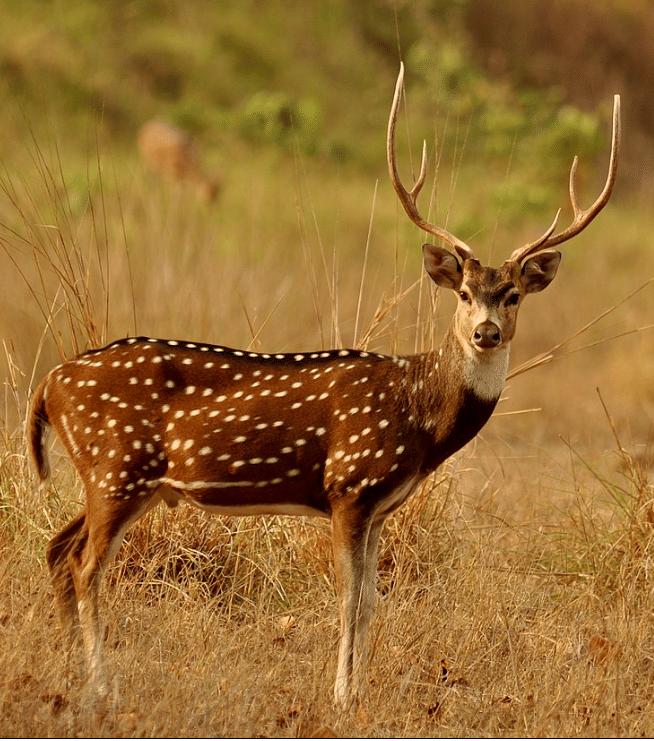
About Spotted Deer (Axis axis)
- Scientific Name: Axis axis
- The Spotted Deer, also known as Chital, is a deer species native to the Indian subcontinent.
- Name Origin: The name "Chital" is derived from the Sanskrit word "citrala," meaning "spotted" or "variegated."
Habitat and Distribution
- Habitat: These deer thrive in grasslands, deciduous forests, and scrublands, particularly near water sources.
- Geographical Range: Found across India, Nepal, Sri Lanka, and Bhutan.
Characteristics and Behavior
- Physical Appearance: The spotted deer is recognized by its reddish-brown coat adorned with white spots and a lighter-colored underside.
- Antlers: Only males possess antlers, which are shed and regrown annually.
- Social Structure: Spotted deer are social animals, forming herds of 10 to 30 individuals.
- Diet: They primarily feed on grass, leaves, and fruits and are diurnal, meaning they are active during the day.
- Defense Mechanism: Known for their distinctive alarm calls, these deer alert others when sensing danger, often from predators like tigers and leopards.
Threats to Spotted Deer
Despite their adaptability, spotted deer face several threats, including:
- Habitat Loss: Expanding agriculture and deforestation are diminishing their natural habitats.
- Poaching: They are hunted for their antlers and hide, posing a significant conservation challenge.
Conservation Status
- IUCN Status: Least Concern
- India's Wildlife Protection Act: Listed under Schedule III, offering moderate legal protection.
Conclusion
The growing population of spotted deer in Nagarahole Tiger Reserve underscores the importance of preserving their habitats and ensuring balanced ecosystems. With continued conservation efforts, these graceful animals will remain a key species in the biodiversity of the Indian subcontinent.
Download the PREPP App and attempt FREE IAS Exam Mock Tests and get complete study material!
*The article might have information for the previous academic years, please refer the official website of the exam.
How likely are you to recommend Prepp.in to a friend or a colleague?
Not so likely
Highly likely
UPSC CSE (IAS) 2027 Prelims Mock Test Series
Live Quizzes
Quizzes
Live Tests

• Live
Live Test : UPSC CSE Prelims CSAT (Paper-II) (Oct 08 - 11)
120 Minutes
80 Questions
200 Marks
English, Hindi
MEDIUM
Test will end in 16:41:11
Full Tests
Full Test - 04: UPSC CSE Prelims CSAT (Paper-II)
120 Minutes
80 Questions
200 Marks
English, Hindi
MEDIUM
Attempted by 18 aspirants in 12 hours
Full Test - 03: UPSC CSE Prelims CSAT (Paper-II)
120 Minutes
80 Questions
200 Marks
English, Hindi
MEDIUM
Attempted by 19 aspirants in 12 hours
Previous Year Papers
UPSC CSE Prelims 2026 GS Paper 1 Question Paper (24-May-2026)
120 Minutes
100 Questions
200 Marks
2,978 Attempted
English, Hindi
MEDIUM
Attempted by 12 aspirants in 12 hours
UPSC CSE Prelims 2026 CSAT Paper 2 Question Paper (24-May-2026)
120 Minutes
80 Questions
200 Marks
3,156 Attempted
English, Hindi
MEDIUM
Attempted by 12 aspirants in 12 hours
Videos

17 February 2025 | The Hindu Must Read Articles | Current Affairs
7,202 Views
•4
•7 months ago

16 February 2026 | The Hindu Must Read Articles | Current Affairs
6,962 Views
•4
•7 months ago

13 February 2026 | The Hindu Must Read Articles | Current Affairs
8,765 Views
•5
•7 months ago

12 February 2026 | The Hindu Must Read Articles | Current Affairs
5,788 Views
•4
•7 months ago






Also Check
IAS Exam Overview
IAS Exam Admit Card
IAS Exam Question Paper 2026
IAS Exam Mains Syllabus
IAS Exam Application Process
IAS Exam Eligibility
IAS Exam Result
IAS Exam Exam Pattern
IAS Exam CSAT Syllabus
IAS Exam Answer Key
IAS Exam Previous Year Paper
IAS Exam Current Affairs
IAS Exam Mains Question Paper
IAS Exam IAS Courses
IAS Exam UPSC Study Notes
IAS Exam Foundation Course 2024
IAS Exam Prelims Question Paper
IAS Exam Exam Center
IAS Exam Foundation Course 2025
IAS Exam Notification 2026
IAS Exam IAS Success Stories
IAS Exam Salary
IAS Exam Cutoff
IAS Exam Mock Tests
IAS Exam News


Comments