Rooppur Nuclear Project Investigation: Alleged Financial Irregularities and Impact on Bangladesh’s Energy Future
Why in the News?
Bangladesh's Anti-Corruption Commission (ACC) has launched a significant investigation into the $12.65 billion Rooppur Nuclear Power Project, which has been built with Russian assistance. The probe comes amid allegations of financial irregularities and corruption, drawing national and international attention.
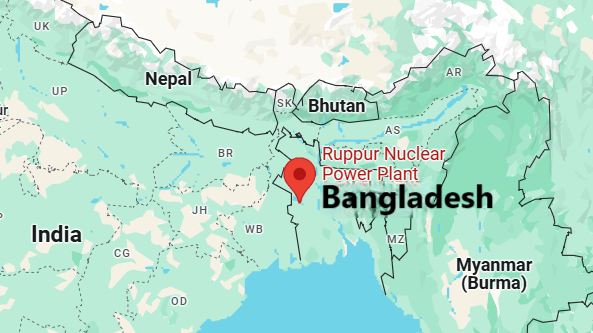
Key Highlights of the Rooppur Nuclear Project Investigation
- Financial Irregularities: The ACC claims to have uncovered approximately $5 billion in alleged financial irregularities linked to the Rooppur project.
- Corruption Accusations: Former Prime Minister Sheikh Hasina, her son Sajeeb Wazed Joy, and her niece Tulip Siddiq are accused of embezzling funds through offshore accounts.
- International Scrutiny: Tulip Siddiq, a UK Labour MP, faces additional scrutiny in the UK for allegedly laundering funds tied to the Rooppur project.
About the Rooppur Nuclear Power Plant: Bangladesh’s First Nuclear Facility
The Rooppur Nuclear Power Plant marks a historic achievement for Bangladesh, being the country's first-ever nuclear energy facility. Located in Ishwardi Upazila, Pabna District, the plant is set to provide a substantial boost to the nation's energy sector.
Key Features:
- Plant Capacity: The facility will feature two VVER-1200 reactors, with a total capacity of 2,400 MW and is expected to generate over 16 billion units of electricity annually.
- Historical Context: Initial plans for a nuclear plant in East Pakistan date back to 1961. However, political and technical challenges delayed the project for decades.
- Development Timeline: Official agreements between Bangladesh and Russia were signed in 2009 and 2010, with construction officially beginning in 2017.
The Significance of the Rooppur Nuclear Project for Bangladesh
- Energy Independence: The Rooppur plant plays a critical role in diversifying Bangladesh’s energy sources, reducing reliance on fossil fuels and enhancing energy security.
- Economic Growth: By providing a reliable source of electricity, the plant could support industrial growth and stimulate economic development in the region.
Controversies and Criticisms Surrounding the Rooppur Nuclear Project
- High Costs: Critics argue that the Rooppur Nuclear Project is significantly more expensive than similar projects worldwide.
- Safety Concerns: Organizations like Transparency International have raised concerns over the safety of the plant, citing Bangladesh’s limited experience with nuclear energy.
- The Rooppur Pillow Scandal: Allegations of mismanagement surfaced during the project’s development, including the overpricing of basic items, which have been linked to broader issues of inefficiency.
Addressing the Criticisms: Economic and Practical Realities
- Cost Justification: Despite criticisms of the plant's cost, research suggests that the Levelized Cost of Electricity (LCOE) from the plant is comparable to or lower than global averages, pointing to its long-term economic viability.
- Progress Amid Challenges: Despite the financial and political challenges, the Rooppur Nuclear Power Plant project remains on track, with the completion of the first unit expected by 2025.
Conclusion: The Future of the Rooppur Nuclear Power Plant
The Rooppur Nuclear Project stands as a pivotal project in Bangladesh’s energy future, offering both challenges and significant opportunities. While concerns about financial irregularities and safety remain, the potential for the plant to contribute to the nation’s economic growth and energy independence cannot be understated.
Download the PREPP App and attempt FREE IAS Exam Mock Tests and get complete study material!

Live Test : UPSC CSE Prelims CSAT (Paper-II) (Oct 08 - 11)
Full Test - 04: UPSC CSE Prelims CSAT (Paper-II)
Full Test - 03: UPSC CSE Prelims CSAT (Paper-II)
UPSC CSE Prelims 2026 GS Paper 1 Question Paper (24-May-2026)
UPSC CSE Prelims 2026 CSAT Paper 2 Question Paper (24-May-2026)

17 February 2025 | The Hindu Must Read Articles | Current Affairs

16 February 2026 | The Hindu Must Read Articles | Current Affairs

13 February 2026 | The Hindu Must Read Articles | Current Affairs









Comments