Rediscovering Namdapha National Park: Conservation and Biodiversity
Why in the News?
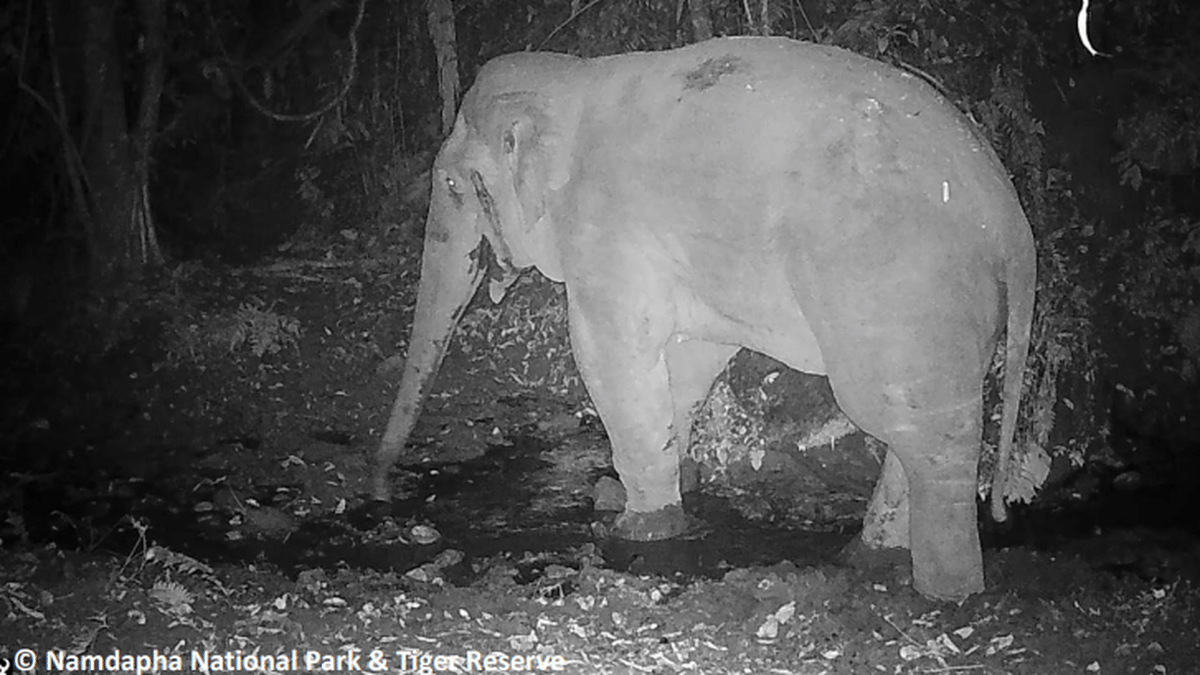
In a remarkable discovery, an adult male elephant was camera-trapped in the northwestern Kathan region of Namdapha National Park, marking the first sighting in over 12 years. This event offers vital insights into the park's biodiversity and elephant movement patterns, reinforcing the importance of conservation efforts.
Significance of the Sighting
- Elephant Migration: Historically, elephants migrated between the Namsai area of Arunachal Pradesh and Myanmar through Namdapha. However, encroachments have disrupted their traditional routes.
- Conservation Efforts: The sighting highlights the urgent need to restore elephant corridors and protect wildlife habitats. Authorities are calling on local communities to collaborate in conservation initiatives.
Namdapha National Park: An Overview
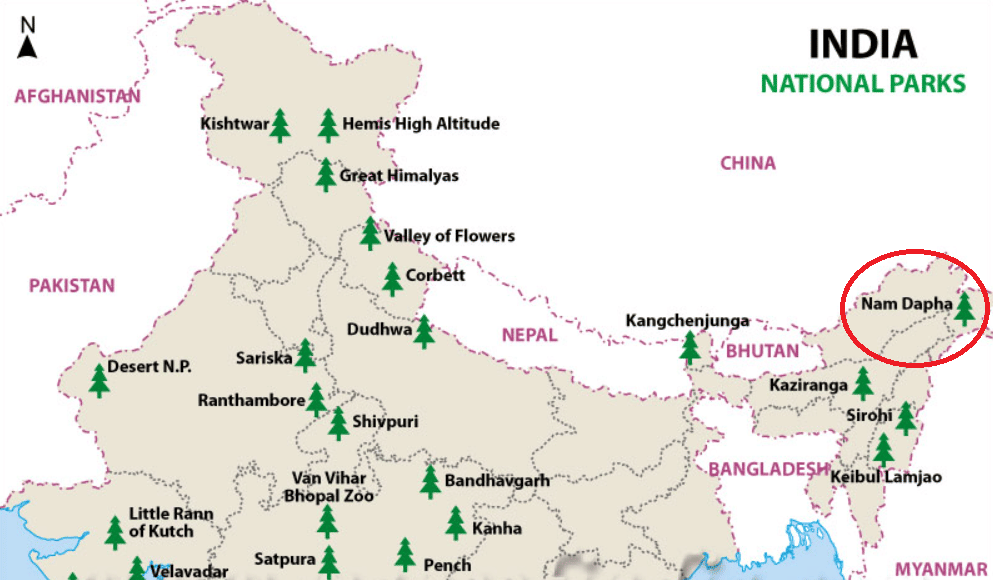
- Location: Namdapha National Park is located in the Changlang district of Arunachal Pradesh, near the Indo-Myanmar international border.
- Geographical Features:
- Area: Spanning 1,985 km² (766 sq mi), it includes a core area of 1,808 km² (698 sq mi) and a buffer zone of 177 km² (68 sq mi).
- Mountain Ranges: The park lies between the Mishmi Hills and the Patkai range.
- Name Origin: Derived from the Singpho words "nam" (water) and "dapha" (origin), referencing the Dapha Bum glaciers where the Noa Dihing River originates.
- River System: The Noa Dihing River traverses the park, supporting its lush vegetation and diverse wildlife.
Historical Background
- 1972: Initially declared a wildlife sanctuary.
- 1983: Upgraded to a national park and tiger reserve under Project Tiger.
Ecological Diversity
Forest Types:
- Namdapha National Park features diverse forest ecosystems, including:
- Tropical evergreen forests
- Temperate broadleaf forests
- Snow-covered regions above 2,700 meters during winter
Flora:
- The park is home to over 1,000 floral species, including rare plants such as: Sapria himalayana and Balanophora.
Fauna:
- Namdapha supports a wide variety of animal species, including:
- Big Cats: Tiger, leopard, snow leopard, and clouded leopard
- Large Mammals: Elephants, gaur, Asiatic black bears, and Malayan sun bears
- Endemic Species: The critically endangered Namdapha flying squirrel (Biswamoyopterus biswasi), found exclusively in this park
Call to Action: Preserving Namdapha's Legacy
The recent elephant sighting underscores the critical need for conservation. Reopening blocked elephant corridors and fostering community participation are essential steps to ensure the long-term preservation of Namdapha's unique biodiversity.
Namdapha National Park stands as a testament to the rich natural heritage of Arunachal Pradesh and India. Protecting this ecological treasure is not just a regional responsibility but a global imperative.
Download the PREPP App and attempt FREE IAS Exam Mock Tests and get complete study material!
Live Test : UPSC IAS : GS - Indian Geography - Subject Knowledge Test

Live Test : UPSC CSE Prelims CSAT (Paper-II) (Oct 08 - 11)
Full Test - 04: UPSC CSE Prelims CSAT (Paper-II)
Full Test - 03: UPSC CSE Prelims CSAT (Paper-II)
UPSC CSE Prelims 2026 GS Paper 1 Question Paper (24-May-2026)
UPSC CSE Prelims 2026 CSAT Paper 2 Question Paper (24-May-2026)

17 February 2025 | The Hindu Must Read Articles | Current Affairs

16 February 2026 | The Hindu Must Read Articles | Current Affairs

13 February 2026 | The Hindu Must Read Articles | Current Affairs









Comments