Reang Tribe (Bru)
Why in news
- Government Commitment: Tripura government is committed to developing all languages to prevent extinction, emphasizing the importance of promoting mother tongues.
- Reang Community Demands: The Reang community requests recognition of their language, Kaubru, and a holiday on Hojagiri Day to honor their traditional dance.
- Previous Initiatives: An expert committee for Kaubru was established in March 2022 to evaluate the language's recognition.
- Support: Parliamentary Affairs Minister Ratan Lal Nath and Chief Minister Dr. Manik Saha support the recognition of Kaubru and promotion of Reang culture.
- Government Schemes: The state government announced housing and basic facilities for the Reang community under the PM JANMAN scheme.
![bru]()
About Reang Tribe
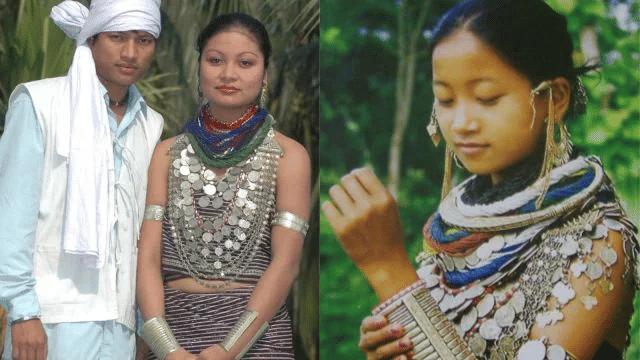
- Identity and Name: The Reang Tribe, also known as Bru, is the second-largest indigenous tribal community in Tripura after the Tripuri community. They are also found in the neighboring states of Mizoram and Assam.
- Population: As per the 2011 Census of India, the Reang tribe has a population of around 1,88,080 people. The Reang tribe is recognized as a Particularly Vulnerable Tribal Group (PVTG) in Tripura, highlighting their socio-economic vulnerability.
- Origins: The Reang people are believed to have migrated from the Shan State of Myanmar (Burma) in multiple waves, with some groups entering Tripura via Assam and Mizoram during the 18th century.
- Language: The Reangs speak Kaubru, a dialect of the Kok-Borok language, which belongs to the Tibeto-Burmese language family. The language has a tonal influence from the Kuki language, making it unique among the tribal languages of Northeast India.
- Social Structure: The Reang tribe is divided into two major clans: Meska and Molsoi. They have a well-structured, self-governing system, with a rigid community organization that plays a key role in tribal decision-making and governance.
- Economy: Traditionally, the Reang tribe practiced Jhum cultivation (shifting cultivation). However, they have increasingly adopted modern agricultural practices, including wet rice cultivation, which is more sustainable.
- Religion: The majority of the Reang people follow Hinduism. Their religious beliefs include worshipping various deities such as Buraha, Bonirao, Songragma, Jampira, and Lampra.
- Cultural Significance: The Hojagiri dance of the Reang tribe is globally recognized for its unique and graceful movements. It has become an important symbol of Reang culture and is celebrated during festivals and cultural events.
- Challenges: The Reang tribe faces challenges such as language preservation, cultural assimilation, and economic development. These issues require focused efforts from both the government and community to ensure their survival and prosperity.
- Government Support and Recognition: As a Particularly Vulnerable Tribal Group (PVTG), the Reang tribe receives special attention and welfare measures under various government schemes aimed at improving their socio-economic conditions.
What are PVTGs?
|
Download the PREPP App and attempt FREE IAS Exam Mock Tests and get complete study material!
*The article might have information for the previous academic years, please refer the official website of the exam.
How likely are you to recommend Prepp.in to a friend or a colleague?
Not so likely
Highly likely
UPSC CSE (IAS) 2027 Prelims Mock Test Series
Live Quizzes
Quizzes
Live Tests

• Live
Live Test : UPSC CSE Prelims CSAT (Paper-II) (Oct 08 - 11)
120 Minutes
80 Questions
200 Marks
English, Hindi
MEDIUM
Test will end in 09:34:29
Full Tests
Full Test - 04: UPSC CSE Prelims CSAT (Paper-II)
120 Minutes
80 Questions
200 Marks
English, Hindi
MEDIUM
Attempted by 18 aspirants in 12 hours
Full Test - 03: UPSC CSE Prelims CSAT (Paper-II)
120 Minutes
80 Questions
200 Marks
English, Hindi
MEDIUM
Attempted by 20 aspirants in 12 hours
Previous Year Papers
UPSC CSE Prelims 2026 GS Paper 1 Question Paper (24-May-2026)
120 Minutes
100 Questions
200 Marks
2,986 Attempted
English, Hindi
MEDIUM
Attempted by 12 aspirants in 12 hours
UPSC CSE Prelims 2026 CSAT Paper 2 Question Paper (24-May-2026)
120 Minutes
80 Questions
200 Marks
3,163 Attempted
English, Hindi
MEDIUM
Attempted by 13 aspirants in 12 hours
Videos

17 February 2025 | The Hindu Must Read Articles | Current Affairs
7,202 Views
•4
•7 months ago

16 February 2026 | The Hindu Must Read Articles | Current Affairs
6,962 Views
•4
•7 months ago

13 February 2026 | The Hindu Must Read Articles | Current Affairs
8,765 Views
•5
•7 months ago

12 February 2026 | The Hindu Must Read Articles | Current Affairs
5,788 Views
•4
•7 months ago






Also Check
IAS Exam Overview
IAS Exam Admit Card
IAS Exam Question Paper 2026
IAS Exam Mains Syllabus
IAS Exam Application Process
IAS Exam Eligibility
IAS Exam Result
IAS Exam Exam Pattern
IAS Exam CSAT Syllabus
IAS Exam Answer Key
IAS Exam Previous Year Paper
IAS Exam Current Affairs
IAS Exam Mains Question Paper
IAS Exam IAS Courses
IAS Exam UPSC Study Notes
IAS Exam Foundation Course 2024
IAS Exam Prelims Question Paper
IAS Exam Exam Center
IAS Exam Foundation Course 2025
IAS Exam Notification 2026
IAS Exam IAS Success Stories
IAS Exam Salary
IAS Exam Cutoff
IAS Exam Mock Tests
IAS Exam News


Comments