Polavaram Project: A Critical Analysis
Why in news?
The Biju Janata Dal (BJD) has recently intensified its efforts to highlight the potential adverse impacts of the Polavaram Dam project.
Introduction
- The Polavaram Project is a multi-purpose irrigation and hydroelectric project being constructed on the Godavari River in Andhra Pradesh.
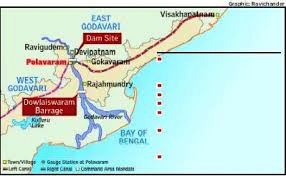
- It has been granted National Project status by the Government of India.
- The project aims to benefit the water-scarce regions of Andhra Pradesh, Telangana, and other southern states.
- However, it has sparked controversy due to its interstate impact, particularly concerning water-sharing disputes and environmental concerns.
Project Overview
- Location: The Polavaram Dam is located in the Eluru and East Godavari districts of Andhra Pradesh, affecting the Sabari River side, which extends up to 115 km into Chhattisgarh and Odisha.
- National Project Status: The project has been designated as a National Project by the Central Government, signaling its importance for national development.
- Reservoir Impact: The reservoir will impact the Papikonda National Park, raising environmental concerns, particularly regarding biodiversity and wildlife conservation.
- Future Use: The project holds the potential for large-scale river linking initiatives such as Godavari-Penna and Godavari-Krishna river linking. This could prevent surplus water from flowing into the sea and help alleviate water shortages in deficit regions.
Interstate Water Disputes
- The Polavaram project has led to disputes between Andhra Pradesh, Telangana, Odisha, and Chhattisgarh over water sharing and submergence levels.
- The matter is currently under the scrutiny of the Supreme Court, which is addressing the concerns raised by these states.
- BJD’s Concerns: The Biju Janata Dal (BJD) of Odisha has raised several issues related to the project, notably:
- Backwater Study: The Central Water Commission (CWC) has reportedly refused to conduct a backwater study despite the concerns of Odisha and expert recommendations. This has raised doubts about the potential flooding risks in Odisha, particularly for tribal populations living near the Godavari basin.
- Submergence Levels: Different studies have presented varying flood submergence estimates. A 2009 report by Andhra Pradesh indicated that a 50-lakh cusec flood could cause submergence up to 216 feet in Odisha, which exceeds the originally agreed maximum level of 174.22 feet. A 2019 IIT Roorkee study projected an even higher submergence level of 232.28 feet in Odisha for a 58-lakh cusec flood.
Current Status
- Completion Timeline: Andhra Pradesh CM N. Chandrababu Naidu has set a target to complete the Polavaram project by 2027.
- Union Government Support: The central government has allocated ₹15,000 crore in the budget to expedite the completion of the project.
- Environmental and Safety Concerns: The BJD and other stakeholders continue to express concerns over the environmental impact, safety risks, and the adequacy of flood submergence studies.
- Ongoing Disputes: Water-sharing disagreements between the states remain unresolved, with the matter pending before the Supreme Court.
Conclusion
- The Polavaram Project is a crucial infrastructure initiative aimed at addressing water scarcity and boosting irrigation in the southern states of India.
- However, it faces significant opposition due to concerns about environmental degradation, interstate water disputes, and inadequate studies on flood submergence.
- It is essential for all concerned parties to engage in constructive dialogue, backed by scientific studies and legal processes, to ensure the project’s benefits outweigh its potential risks.
Download the PREPP App and attempt FREE IAS Exam Mock Tests and get complete study material!
*The article might have information for the previous academic years, please refer the official website of the exam.
How likely are you to recommend Prepp.in to a friend or a colleague?
Not so likely
Highly likely
UPSC CSE (IAS) 2027 Prelims Mock Test Series
Live Quizzes
Quizzes
Live Tests

• Live
Live Test : UPSC CSE Prelims CSAT (Paper-II) (Oct 08 - 11)
120 Minutes
80 Questions
200 Marks
English, Hindi
MEDIUM
Test will end in 05:31:05
Full Tests
Full Test - 04: UPSC CSE Prelims CSAT (Paper-II)
120 Minutes
80 Questions
200 Marks
English, Hindi
MEDIUM
Attempted by 19 aspirants in 12 hours
Full Test - 03: UPSC CSE Prelims CSAT (Paper-II)
120 Minutes
80 Questions
200 Marks
English, Hindi
MEDIUM
Attempted by 20 aspirants in 12 hours
Previous Year Papers
UPSC CSE Prelims 2026 GS Paper 1 Question Paper (24-May-2026)
120 Minutes
100 Questions
200 Marks
2,989 Attempted
English, Hindi
MEDIUM
Attempted by 12 aspirants in 12 hours
UPSC CSE Prelims 2026 CSAT Paper 2 Question Paper (24-May-2026)
120 Minutes
80 Questions
200 Marks
3,167 Attempted
English, Hindi
MEDIUM
Attempted by 13 aspirants in 12 hours
Videos

17 February 2025 | The Hindu Must Read Articles | Current Affairs
7,202 Views
•4
•7 months ago

16 February 2026 | The Hindu Must Read Articles | Current Affairs
6,962 Views
•4
•7 months ago

13 February 2026 | The Hindu Must Read Articles | Current Affairs
8,765 Views
•5
•7 months ago

12 February 2026 | The Hindu Must Read Articles | Current Affairs
5,788 Views
•4
•7 months ago






Also Check
IAS Exam Overview
IAS Exam Admit Card
IAS Exam Question Paper 2026
IAS Exam Mains Syllabus
IAS Exam Application Process
IAS Exam Eligibility
IAS Exam Result
IAS Exam Exam Pattern
IAS Exam CSAT Syllabus
IAS Exam Answer Key
IAS Exam Previous Year Paper
IAS Exam Current Affairs
IAS Exam Mains Question Paper
IAS Exam IAS Courses
IAS Exam UPSC Study Notes
IAS Exam Foundation Course 2024
IAS Exam Prelims Question Paper
IAS Exam Exam Center
IAS Exam Foundation Course 2025
IAS Exam Notification 2026
IAS Exam IAS Success Stories
IAS Exam Salary
IAS Exam Cutoff
IAS Exam Mock Tests
IAS Exam News


Comments