Pangolins: A Detailed Look at the World's Most Trafficked Mammals
Why in the News?
A recent anti-wildlife trafficking operation in Nigeria has resulted in the seizure of approximately 2.18 tonnes of pangolin scales, representing about 1,100 pangolins. This highlights the ongoing crisis surrounding the illegal trade of these unique mammals.
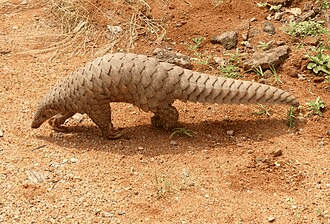
What Are Pangolins?
Taxonomy
- Pangolins belong to the family Manidae and comprise eight surviving species.
- The Indian Pangolin (Manis crassicaudata) is a prominent species in Asia.
Unique Features
- Pangolins are the only mammals covered in protective keratin scales, which serve as armor against predators.
Habitat and Distribution
- Habitat
- Pangolins thrive in diverse environments, including tropical forests, grasslands, and savannas.
- Geographical Range
- They are native to tropical regions across Asia and Africa, with populations in countries like India, China, South Africa, and Nigeria.
Characteristics and Behavior
- Diet
- Often called "scaly anteaters," pangolins are insectivorous, primarily feeding on ants and termites with their long, sticky tongues.
- Defense Mechanism
- When threatened, pangolins roll into a tight ball, using their scales as natural armor.
- Other Behavioral Traits
- They are solitary, nocturnal creatures equipped with powerful claws for digging burrows and breaking into ant mounds.
Threats to Pangolins
- Illegal Wildlife Trade
- Pangolins are the most trafficked mammals globally, primarily for their scales and meat.
- Habitat Loss
- Deforestation and urbanization are causing significant disruptions to their natural habitats.
- Disease Vulnerability
- Pangolins are susceptible to zoonotic diseases, especially due to illegal wildlife trade practices.
Why Are Pangolins Poached?
- Medicinal Myths
- Keratin scales are falsely believed to cure ailments like arthritis, asthma, and cancer in traditional medicine, especially in China and Vietnam.
- Exotic Meat
- Pangolin meat is considered a luxury delicacy in some regions, symbolizing wealth and status.
Conservation Efforts and Legal Protections
IUCN Red List Status
- All eight pangolin species are listed between Vulnerable and Critically Endangered, depending on population size and threat levels.
- The Indian Pangolin (Manis crassicaudata) is classified as Endangered, while the Chinese Pangolin (Manis pentadactyla) is Critically Endangered.
Legislation and Agreements
- India: Pangolins are protected under Schedule I of the Wildlife (Protection) Act, 1972, offering them the highest level of protection.
- CITES: All pangolin species are included in Appendix I, prohibiting international trade.
Conclusion
Pangolins are an irreplaceable part of our global biodiversity. Despite their critical role in ecosystems, they face unprecedented threats due to human activities. Combating illegal trade, raising awareness, and enforcing conservation laws are essential to ensuring their survival.
Download the PREPP App and attempt FREE IAS Exam Mock Tests and get complete study material!
*The article might have information for the previous academic years, please refer the official website of the exam.
How likely are you to recommend Prepp.in to a friend or a colleague?
Not so likely
Highly likely
UPSC CSE (IAS) 2027 Prelims Mock Test Series
Live Quizzes
Quizzes
Live Tests

• Live
Live Test : UPSC CSE Prelims CSAT (Paper-II) (Oct 08 - 11)
120 Minutes
80 Questions
200 Marks
English, Hindi
MEDIUM
Test will end in 13:18:44
Full Tests
Full Test - 04: UPSC CSE Prelims CSAT (Paper-II)
120 Minutes
80 Questions
200 Marks
English, Hindi
MEDIUM
Attempted by 18 aspirants in 12 hours
Full Test - 03: UPSC CSE Prelims CSAT (Paper-II)
120 Minutes
80 Questions
200 Marks
English, Hindi
MEDIUM
Attempted by 20 aspirants in 12 hours
Previous Year Papers
UPSC CSE Prelims 2026 GS Paper 1 Question Paper (24-May-2026)
120 Minutes
100 Questions
200 Marks
2,982 Attempted
English, Hindi
MEDIUM
Attempted by 12 aspirants in 12 hours
UPSC CSE Prelims 2026 CSAT Paper 2 Question Paper (24-May-2026)
120 Minutes
80 Questions
200 Marks
3,159 Attempted
English, Hindi
MEDIUM
Attempted by 13 aspirants in 12 hours
Videos

17 February 2025 | The Hindu Must Read Articles | Current Affairs
7,202 Views
•4
•7 months ago

16 February 2026 | The Hindu Must Read Articles | Current Affairs
6,962 Views
•4
•7 months ago

13 February 2026 | The Hindu Must Read Articles | Current Affairs
8,765 Views
•5
•7 months ago

12 February 2026 | The Hindu Must Read Articles | Current Affairs
5,788 Views
•4
•7 months ago






Also Check
IAS Exam Overview
IAS Exam Admit Card
IAS Exam Question Paper 2026
IAS Exam Mains Syllabus
IAS Exam Application Process
IAS Exam Eligibility
IAS Exam Result
IAS Exam Exam Pattern
IAS Exam CSAT Syllabus
IAS Exam Answer Key
IAS Exam Previous Year Paper
IAS Exam Current Affairs
IAS Exam Mains Question Paper
IAS Exam IAS Courses
IAS Exam UPSC Study Notes
IAS Exam Foundation Course 2024
IAS Exam Prelims Question Paper
IAS Exam Exam Center
IAS Exam Foundation Course 2025
IAS Exam Notification 2026
IAS Exam IAS Success Stories
IAS Exam Salary
IAS Exam Cutoff
IAS Exam Mock Tests
IAS Exam News


Comments