Painted Stork: Habitat, Characteristics, and Conservation
Why in the News?
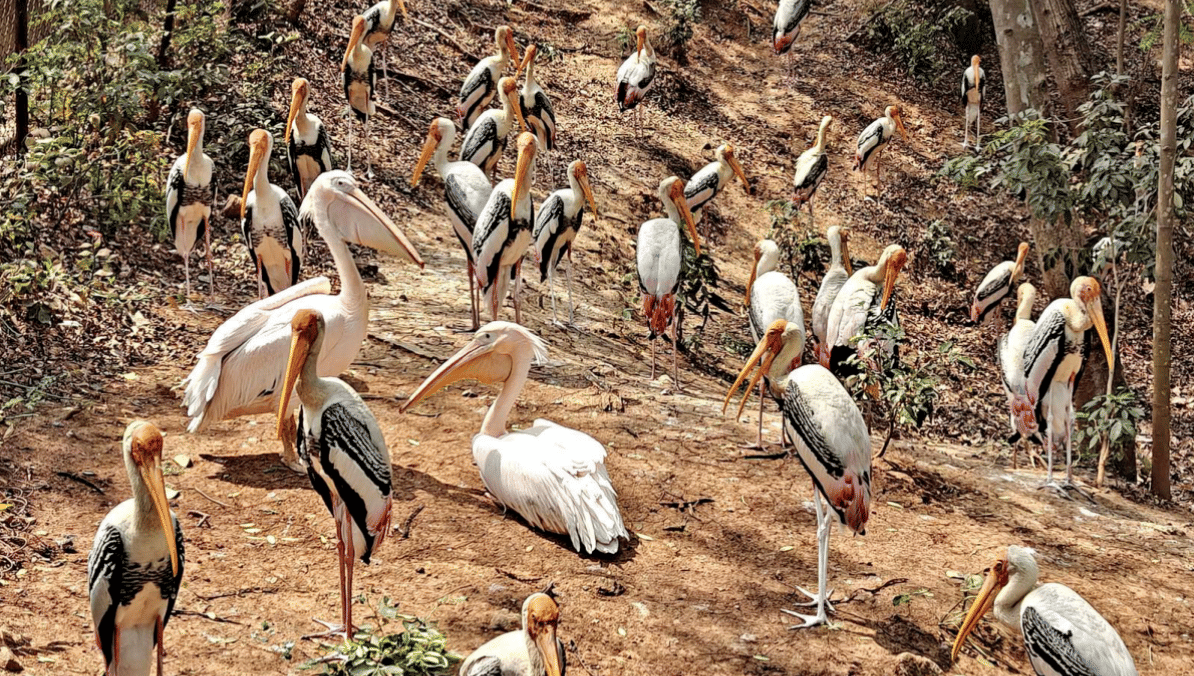
In 2014, Cyclone Hudhud caused severe damage to the bird enclosure at Indira Gandhi Zoological Park in Visakhapatnam. As a result, painted storks and pelicans began to roam freely within the zoo premises, adapting to their new environment.
About Painted Stork
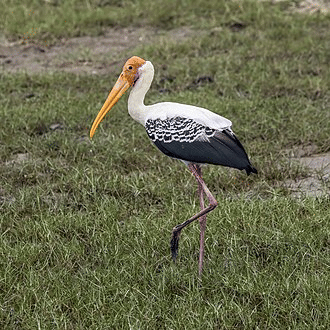
The painted stork (Mycteria leucocephala) is a large wading bird known for its striking plumage and distinctive feeding behavior. The species name leucocephala is derived from Greek, meaning "white-headed."
Habitat and Distribution
Habitat
- Prefers freshwater wetlands, lakes, and irrigation canals.
- Often found in shallow water bodies with abundant fish populations.
Distribution
- Found south of the Himalayas in India, Sri Lanka, Pakistan, Bangladesh, and parts of Southeast Asia.
- Frequently seen in protected wetlands and national parks.
Characteristics and Behavior
- Size: Medium-sized stork, 93–102 cm tall, with a distinctive yellow, down-curved beak.
- Sexual Dimorphism: Males are slightly larger than females but have similar plumage.
- Feeding: Uses a unique sweeping technique, immersing its beak in shallow water to detect and catch fish.
- Nesting: Forms large colonies, often nesting with other waterbirds like pelicans.
- Sounds: Mostly silent, but may produce low moans and bill-clattering sounds during the breeding season.
- Cooling Mechanism: Exhibits urohidrosis, a process where it defecates on its legs to regulate body temperature in hot weather.
Threats to the Painted Stork
The painted stork faces several challenges that threaten its survival:
- Habitat Destruction: Wetland drainage, urbanization, and pollution have led to habitat loss.
- Human Disturbances: Nesting sites are often disrupted due to tourism and human activity.
- Illegal Wildlife Trade: Particularly prevalent in Pakistan, where the species is trafficked.
Conservation Status
Despite these threats, the painted stork is still classified under:
- IUCN Red List: Least Concern
- Wildlife Protection Act (India): Schedule II
- CITES: Appendix II
Conclusion
The painted stork plays a crucial role in maintaining wetland ecosystems. Conservation efforts, including wetland protection, stricter laws, and awareness programs, are essential to ensure its survival. Preserving their habitats will help maintain the ecological balance and protect other wetland-dependent species.
Download the PREPP App and attempt FREE IAS Exam Mock Tests and get complete study material!
Live Test : UPSC IAS : GS - Indian Geography - Subject Knowledge Test

Live Test : UPSC CSE Prelims CSAT (Paper-II) (Oct 08 - 11)
Full Test - 04: UPSC CSE Prelims CSAT (Paper-II)
Full Test - 03: UPSC CSE Prelims CSAT (Paper-II)
UPSC CSE Prelims 2026 GS Paper 1 Question Paper (24-May-2026)
UPSC CSE Prelims 2026 CSAT Paper 2 Question Paper (24-May-2026)

17 February 2025 | The Hindu Must Read Articles | Current Affairs

16 February 2026 | The Hindu Must Read Articles | Current Affairs

13 February 2026 | The Hindu Must Read Articles | Current Affairs









Comments