Offshore Mining in India: Impact, Legal Framework & Future Prospects
Why in the News?
Offshore mining in India has sparked strong opposition from coastal communities, particularly in Kerala, due to its potential environmental and socio-economic impacts. The recent amendment to the Offshore Areas Mineral (Development and Regulation) Act, 2002, allowing private sector participation, has intensified protests. This article explores the concerns of fishing communities, environmental risks, legal provisions, and the potential benefits of offshore mining in India.
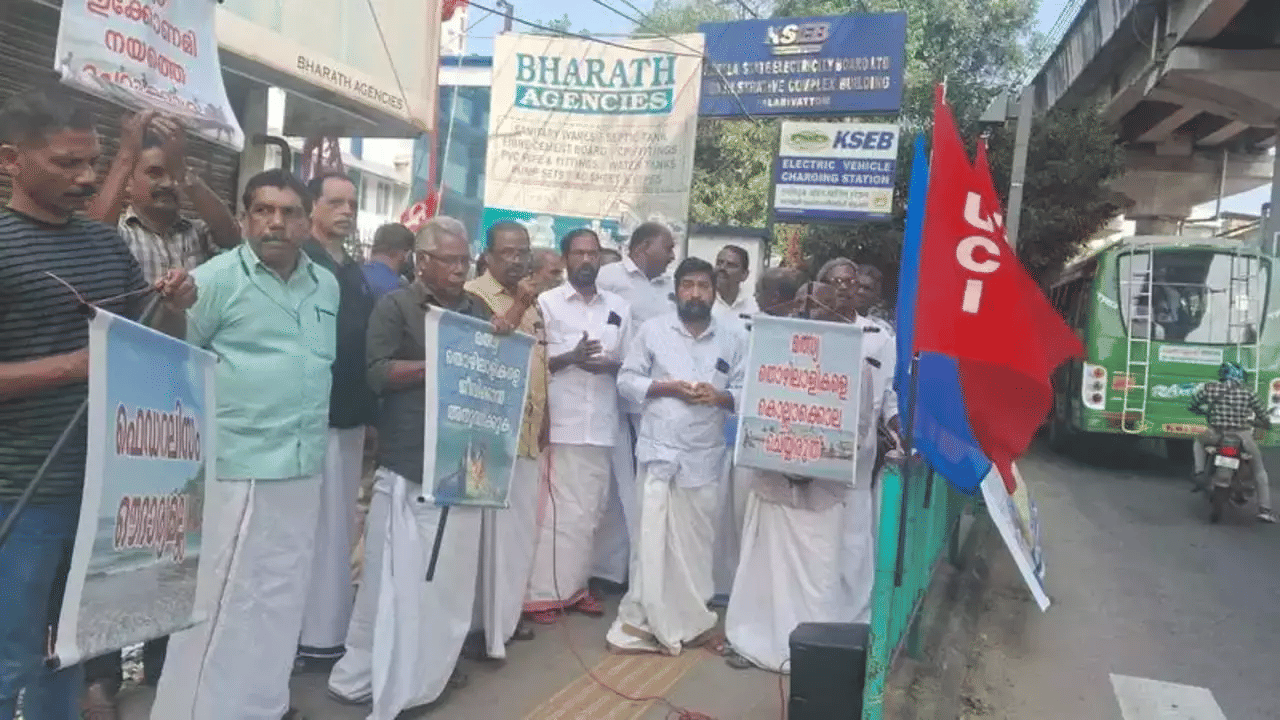
Fishing Communities’ Concerns
Coastal communities fear that offshore mining could disrupt marine ecosystems and threaten their livelihoods. Key concerns include:
- Depletion of Fish Stocks: Mining can disturb seabed habitats, leading to reduced fish populations.
- Destruction of Marine Ecosystems: Coral reefs, breeding grounds, and food chains may be severely impacted.
- Conflicts Between Fishing Sectors: Traditional fishers may face increased competition from mechanized fishing due to habitat destruction.
Environmental Risks of Offshore Mining
Scientific studies highlight the environmental hazards of offshore mining, including:
- Water Quality Deterioration: Mining activities can increase sedimentation and pollution.
- Coral Habitat Destruction: Damage to fragile marine ecosystems could have long-term effects on biodiversity.
- Marine Food Chain Disruption: The loss of seabed organisms can impact fish populations and dependent industries.
Offshore Mining in India: An Overview
Definition
- Offshore mining refers to the extraction of minerals from the seabed within India’s Exclusive Economic Zone (EEZ), covering resources such as construction sand, lime mud, and polymetallic nodules.
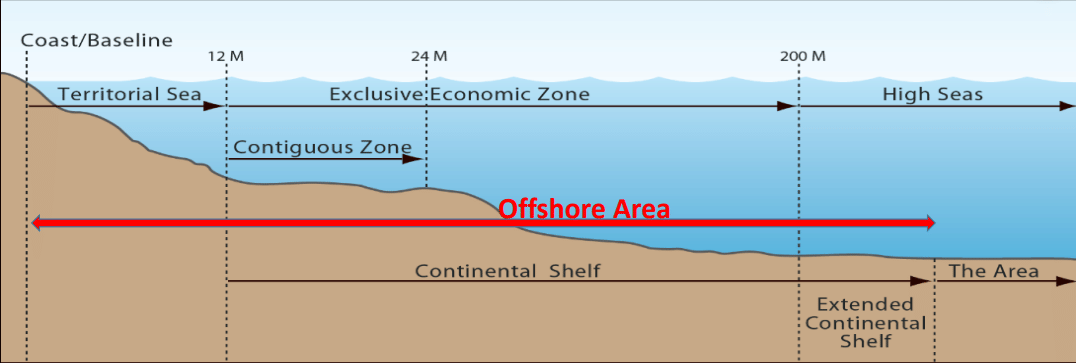
Extent of India’s EEZ
- Over 2 million sq. km of EEZ.
- 8,000 km coastline spanning nine coastal states and four Union Territories.
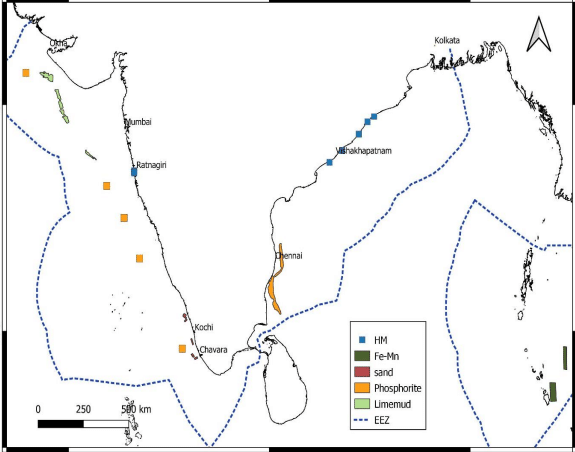
Major Offshore Mineral Deposits
- Lime Mud: Found off Gujarat and Maharashtra (~153,996 million tonnes).
- Construction-Grade Sand: Significant deposits (~745 million tonnes) off Kerala.
- Heavy Mineral Placers: Located off Odisha, Andhra Pradesh, Kerala, Tamil Nadu, and Maharashtra.
- Polymetallic Nodules & Crusts: Found in the Andaman Sea and Lakshadweep Sea.
Mining Blocks in Tranche 1
- The Indian government has identified 13 offshore areas for mining:
- 3 blocks of lime mud off Gujarat.
- 3 blocks of construction sand off Kerala.
- 7 blocks of polymetallic nodules near Great Nicobar Island.
Legal and Constitutional Provisions
Article 297(1) of the Indian Constitution
- States that all lands, minerals, and valuable resources in the territorial waters, continental shelf, and EEZ belong to the Union government.
Offshore Areas Mineral (Development and Regulation) Act, 2002 (OAMDR Act)
- Regulates mineral resource development in offshore areas.
- Excludes mineral oils and hydrocarbons from its scope.
- Became effective on January 15, 2010, but mining remained inactive until recent amendments.
2023 Amendment to OAMDR Act
- Introduced an auction-based system for granting production leases and composite licenses.
- Allowed private sector participation in offshore mining, sparking concerns among fishers and environmentalists.
Potential Benefits of Offshore Mining
Despite the controversies, offshore mining offers several advantages:
1. Industrial Growth
Provides essential raw materials for cement, steel, chemical, and electronics industries.
2. Employment Generation
Creates job opportunities in exploration, extraction, processing, logistics, and marine technology.
3. Infrastructure Development
Enhances port facilities, transportation networks, and local processing industries.
4. Economic Diversification
Reduces reliance on agriculture and tourism, promoting marine-based industries.
5. Environmental Management
The Offshore Areas Mineral Trust will fund impact mitigation, disaster relief, and fisher welfare programs.
6. Export Potential
Strengthens India's position in global markets for critical minerals, attracting foreign investment.
7. Technological Advancement
Encourages innovation in mining technology and knowledge exchange with global players.
Conclusion
Offshore mining in India presents both opportunities and challenges. While it can boost industrial growth and economic diversification, its potential impact on marine ecosystems and fishing communities cannot be ignored. A balanced approach, integrating sustainable environmental practices, strict regulations, and stakeholder engagement, is essential to ensure responsible resource utilization.
Download the PREPP App and attempt FREE IAS Exam Mock Tests and get complete study material!

Live Test : UPSC CSE Prelims CSAT (Paper-II) (Oct 08 - 11)
Full Test - 04: UPSC CSE Prelims CSAT (Paper-II)
Full Test - 03: UPSC CSE Prelims CSAT (Paper-II)
UPSC CSE Prelims 2026 GS Paper 1 Question Paper (24-May-2026)
UPSC CSE Prelims 2026 CSAT Paper 2 Question Paper (24-May-2026)

17 February 2025 | The Hindu Must Read Articles | Current Affairs

16 February 2026 | The Hindu Must Read Articles | Current Affairs

13 February 2026 | The Hindu Must Read Articles | Current Affairs









Comments