New Feather Mite Species Discovered: Trouessartia thalassina and Proterothrix sibillae
Why in the News?
A Romanian-led research team, collaborating with an Indian scientist from Shillong, has unveiled two new species of feather mites: Trouessartia thalassina and Proterothrix sibillae. This groundbreaking discovery underscores the rich biodiversity of Meghalaya’s East Khasi Hills.
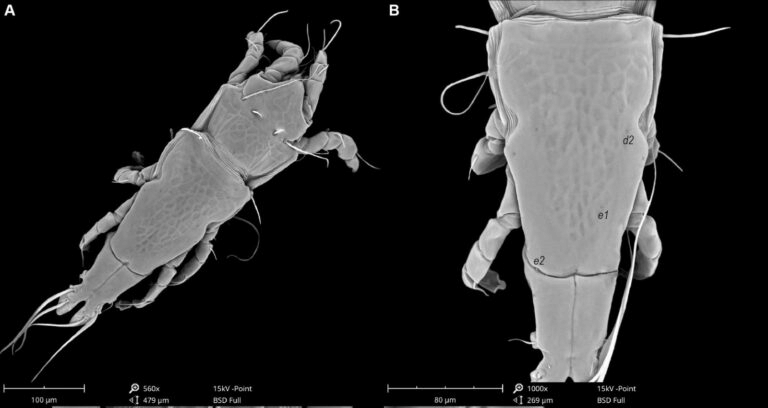
Key Details of the Discovery
- Location: East Khasi Hills, Meghalaya, India.
- Hosts Identified:
- Trouessartia thalassina was found on the Verditer Flycatcher (Eumyias thalassinus), known for its vibrant sea-green plumage.
- Proterothrix sibillae was identified on the Small Niltava (Niltava macgrigoriae), a species with striking coloration.
What Are Feather Mites?
Feather mites are microscopic arachnids that inhabit bird feathers. They play a crucial role in avian ecosystems, feeding on:
- Feather oils.
- Skin flakes.
- Organic debris.
These arachnids belong to the Arachnida class, which also includes spiders, ticks, scorpions, and harvestmen. Unlike insects, adult arachnids have eight legs, though some species have sensory adaptations in their front legs.
Symbiotic Role
Feather mites generally share a symbiotic relationship with their bird hosts by maintaining feather health. However, under stress, this relationship can shift, making them parasitic.
Global Distribution
Feather mites are found worldwide, spreading through close contact between birds, especially during nesting. Their diversity often reflects the overall health of bird populations and ecosystems.
Etymology of the New Species
- Trouessartia thalassina
- Derived from the Latin word thalassina meaning "sea-green," referencing the vibrant plumage of its host, the Verditer Flycatcher.
- Proterothrix sibillae
- Named in honor of Maria Sibylla Merian, a pioneering German naturalist and illustrator celebrated for her contributions to insect taxonomy and natural history.
Why This Discovery Matters
- Biodiversity Insight
- Highlights the hidden intricacies of Meghalaya’s wildlife, emphasizing the region's ecological significance.
- Ecological Indicator
- Feather mites are critical for monitoring the health of bird populations and habitats, offering valuable insights for conservation efforts.
- Global Collaboration
- This discovery showcases the success of international research partnerships in advancing biodiversity conservation.
Download the PREPP App and attempt FREE IAS Exam Mock Tests and get complete study material!

Live Test : UPSC CSE Prelims CSAT (Paper-II) (Oct 08 - 11)
Full Test - 04: UPSC CSE Prelims CSAT (Paper-II)
Full Test - 03: UPSC CSE Prelims CSAT (Paper-II)
UPSC CSE Prelims 2026 GS Paper 1 Question Paper (24-May-2026)
UPSC CSE Prelims 2026 CSAT Paper 2 Question Paper (24-May-2026)

17 February 2025 | The Hindu Must Read Articles | Current Affairs

16 February 2026 | The Hindu Must Read Articles | Current Affairs

13 February 2026 | The Hindu Must Read Articles | Current Affairs









Comments