National Health Policy (NHP) 2017: Achievements, Challenges, and Future Roadmap
Why in the News?
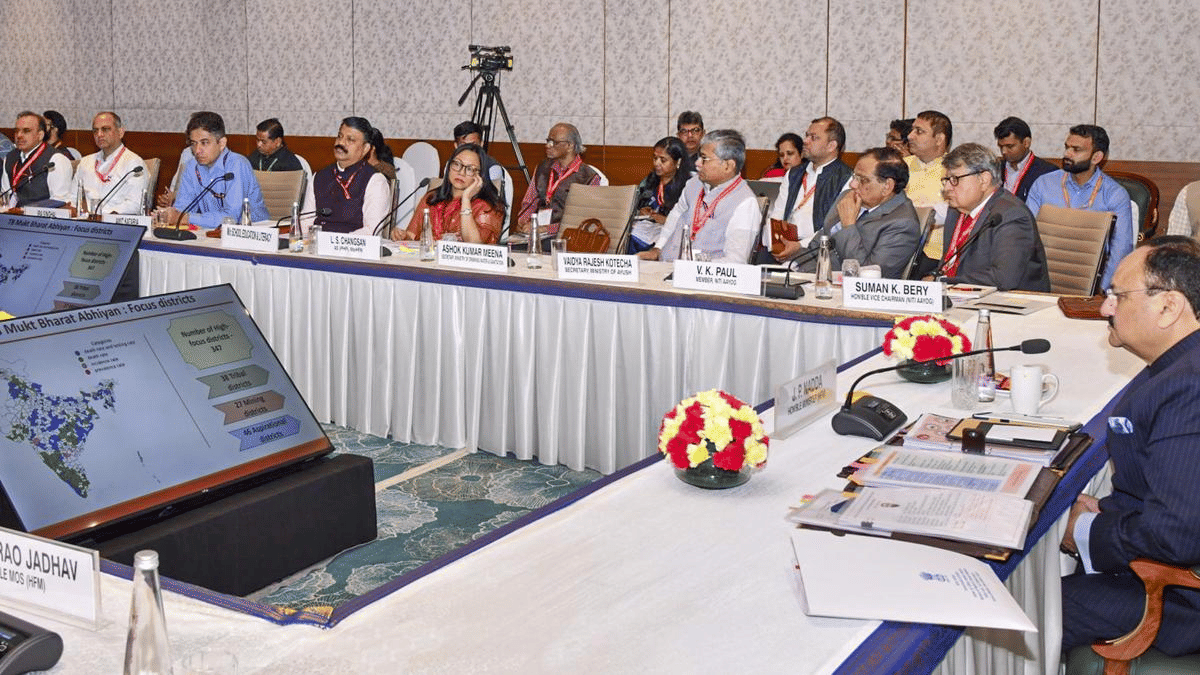
Union Health Minister J.P. Nadda recently announced that India has successfully met the National Health Policy (NHP) target of reducing the maternal mortality rate (MMR) to 100 deaths per one lakh live births.
Key Achievements in Public Health
Decline in Maternal and Child Mortality Rates
- Maternal Mortality Rate (MMR): India recorded an 83% decline in MMR from 1990 to 2020, significantly outperforming the global decline.
- Infant Mortality Rate (IMR): A 69% reduction in IMR was observed, compared to the global decline of 55%.
- Under-Five Mortality Rate: A 75% decrease in India, surpassing the global decline of 58%.
Role of National Health Mission (NHM)
- Strengthening healthcare infrastructure and improving maternal and child health indicators.
- Empowering healthcare workers, including ASHA workers, to enhance healthcare quality at the grassroots level.
National Health Policy (NHP) 2017: Objectives and Focus Areas
Historical Evolution of NHP
- First introduced in 1983, revised in 2002, and updated in 2017 to address emerging health challenges.
- Focus on universal healthcare access, disease prevention, and financial protection for citizens.
Key Focus Areas
- Human resource development and medical pluralism.
- Financial protection strategies and healthcare assurance.
- Strengthening regulations to ensure quality healthcare services.
Specific Targets of NHP 2017
Health Status and Programme Impact
- Increase Life Expectancy: Raise life expectancy at birth from 67.5 to 70 years by 2025.
- Maternal Mortality Reduction: Reduce MMR to 100 per lakh live births by 2020.
- Under-Five Mortality: Reduce under-five mortality rate to 23 per 1,000 live births by 2025.
- Infant Mortality Rate: Decrease IMR to 28 per 1,000 live births by 2019.
Disease Control and Prevention
- HIV/AIDS: Achieve the 90-90-90 target for HIV/AIDS treatment and viral suppression.
- Tobacco Use Reduction: Cut tobacco use prevalence by 15% by 2020 and 30% by 2025.
- Stunting Reduction: Decrease stunting prevalence among children under five by 40% by 2025.
Healthcare Coverage Expansion
- Increase utilization of public healthcare facilities by 50% by 2025.
- Antenatal care and skilled birth attendance above 90%.
- Newborn Immunization: Ensure 90% of newborns are fully immunized by one year of age.
Health Finance
- Government Health Expenditure: Increase spending from 1.15% to 2.5% of GDP by 2025.
- State Sector Spending: Increase state health budgets to more than 8% by 2020.
Challenges in Implementing NHP 2017
Healthcare Infrastructure and Workforce Shortages
- Shortage of healthcare professionals—doctors, nurses, and paramedics, particularly in rural areas.
- Unequal distribution of healthcare facilities, with urban areas having better access.
Financial Constraints
- Low public health spending—despite plans to increase funding, India's spending is still low compared to global standards.
- High out-of-pocket expenses, leading to financial distress among low-income families.
Emerging Health Threats
- Rise in Non-Communicable Diseases (NCDs) like diabetes and hypertension.
- Pandemic preparedness, with COVID-19 exposing healthcare weaknesses.
- Antimicrobial Resistance (AMR) due to the overuse of antibiotics.
Awareness and Behavioral Barriers
- Low awareness levels about health interventions and preventive measures.
- Vaccine hesitancy affecting immunization programs.
Major Government Initiatives for Health Improvement
- Ayushman Bharat – PMJAY: Free healthcare for vulnerable families.
- National Digital Health Mission (NDHM): Creating a digital health ecosystem.
- Poshan Abhiyaan: Reducing malnutrition.
- National AYUSH Mission: Integrating traditional medicine.
- Mission Indradhanush: Strengthening immunization coverage.
- BHISHM Initiative: Using technology to improve healthcare quality.
Way Forward: Strengthening Healthcare in India
Investment in Rural Healthcare
- Increasing funding for rural health centers.
- Ensuring essential medical facilities in underserved areas.
Expanding Digital Healthcare and Telemedicine
- Utilizing telemedicine for remote consultations and improving healthcare access.
- Training healthcare workers to enhance service delivery.
Making Healthcare Affordable and Accessible
- Expanding Universal Health Coverage (UHC) through schemes like PMJAY.
- Price control for essential medicines to make healthcare affordable.
- Community engagement in vaccination to combat misinformation.
Policy Reforms and Governance
- Strengthening Public-Private Partnerships (PPPs) to enhance healthcare delivery.
- Implementing robust health data management systems for better planning.
- Addressing social determinants of health, including sanitation, nutrition, and education.
Conclusion
The National Health Policy (NHP) 2017 has driven significant improvements in India's healthcare system, including reducing maternal and infant mortality rates. However, challenges such as healthcare accessibility, workforce shortages, financial constraints, and emerging diseases need urgent attention. Moving forward, increased investments, digital health expansion, and policy reforms will be critical in achieving universal healthcare for all Indians.
Download the PREPP App and attempt FREE IAS Exam Mock Tests and get complete study material!

Live Test : UPSC CSE Prelims CSAT (Paper-II) (Oct 08 - 11)
Full Test - 04: UPSC CSE Prelims CSAT (Paper-II)
Full Test - 03: UPSC CSE Prelims CSAT (Paper-II)
UPSC CSE Prelims 2026 GS Paper 1 Question Paper (24-May-2026)
UPSC CSE Prelims 2026 CSAT Paper 2 Question Paper (24-May-2026)

17 February 2025 | The Hindu Must Read Articles | Current Affairs

16 February 2026 | The Hindu Must Read Articles | Current Affairs

13 February 2026 | The Hindu Must Read Articles | Current Affairs









Comments