Nangiarkoothu: Reviving Kerala’s Ancient Artform
Why in the News?
Nangiarkoothu, an ancient and intricate artform from Kerala, India, recently captivated audiences during a performance in Thiruvananthapuram. This classical solo performance art holds a significant place in India’s cultural heritage but faces the risk of fading into obscurity. Here’s everything you need to know about this timeless tradition.
What is Nangiarkoothu?
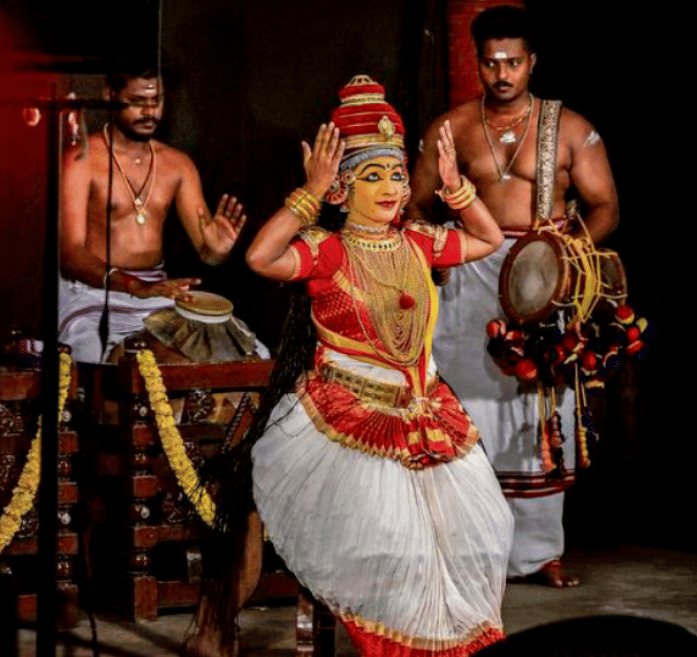
Nangiarkoothu (or Nangyar Koothu) is a classical solo performance art form deeply rooted in Kerala’s cultural and spiritual traditions. Originating as an offshoot of Kutiyattam, an ancient Sanskrit theatre tradition, this art form showcases the creative expression of women performers.
Key Features of Nangiarkoothu
Historical Significance
- Nangiarkoothu boasts a history spanning over 1,500 years, making it one of the oldest art forms in India.
- It evolved as a unique platform for female solo performances, traditionally performed by women of the Ambalavasi Nambiar community. Today, the art form is open to all female performers.
- The stories performed are primarily drawn from the Sree Krishna Charitam, which narrates the life and exploits of Lord Krishna.
Performance Elements
- The art form masterfully combines mime, dance, and storytelling.
- Performers use mudras (hand gestures), intricate facial expressions, and graceful body movements, all derived from the Natyasastra, the ancient treatise on drama and dance.
- Verses are sung during the performance, with their meanings interpreted through gestures and movements, engaging audiences in a mesmerizing interplay of narrative and expression.
Accompaniment and Instruments
- Mizhavu: The primary percussion instrument, a pot drum, adds rhythm and depth to the performance.
- Ilathalam: Cymbals that provide a melodious accompaniment.
- Music and rhythm play a pivotal role, enhancing the narrative and heightening the audience’s emotional connection.
Traditional Venues for Nangiarkoothu
Historically, Nangiarkoothu performances were held in sacred spaces known as Koothambalam or Koothupura (temple theatres). These venues create an atmosphere of spiritual and artistic sanctity, integral to the art form’s essence.
Some of the prominent temples where Nangiarkoothu is traditionally staged include:
- Vadakkunnatha Temple, Thrissur
- Sri Krishna Temple, Ambalappuzha
- Koodal Manickyam Temple, Irinjalakkuda
- Kumaranalloor Temple, Kottayam
Preserving a Dying Artform
Despite its historical and cultural significance, Nangiarkoothu faces challenges in gaining widespread recognition and support. Efforts to revive and popularize this art form through performances, workshops, and educational programs are crucial for its survival.
Conclusion
Nangiarkoothu is more than just an art form; it is a vibrant testament to Kerala’s rich cultural heritage and the expressive power of storytelling. By supporting and promoting this tradition, we ensure that future generations can experience and appreciate its timeless beauty.
Download the PREPP App and attempt FREE IAS Exam Mock Tests and get complete study material!

Live Test : UPSC CSE Prelims CSAT (Paper-II) (Oct 08 - 11)
Full Test - 04: UPSC CSE Prelims CSAT (Paper-II)
Full Test - 03: UPSC CSE Prelims CSAT (Paper-II)
UPSC CSE Prelims 2026 GS Paper 1 Question Paper (24-May-2026)
UPSC CSE Prelims 2026 CSAT Paper 2 Question Paper (24-May-2026)

17 February 2025 | The Hindu Must Read Articles | Current Affairs

16 February 2026 | The Hindu Must Read Articles | Current Affairs

13 February 2026 | The Hindu Must Read Articles | Current Affairs









Comments