Microcontrollers in EVMs: Ensuring Integrity in India’s Electoral Process
Why in the News?
A petition urging the Election Commission of India (ECI) to establish guidelines for verifying the original burnt memory/microcontroller of Electronic Voting Machines (EVMs) has reached the Chief Justice of India (CJI) for review. This issue underscores the critical role of EVM microcontrollers in maintaining the transparency and security of India’s electoral system.
Case Details and Background
Petitioner’s Argument
- The petitioner contends that the original burnt memory/microcontroller in EVM components such as the control unit, ballot unit, VVPAT, and symbol loading unit should be preserved and not deleted. This is crucial for verifying electoral integrity and ensuring that the election process remains fair and transparent.
Custody Demand
- To safeguard the credibility of the electoral process, the petition highlights the importance of keeping EVMs and VVPATs under secure custody. This measure is essential to prevent any potential tampering or misuse.
Microcontrollers in EVMs
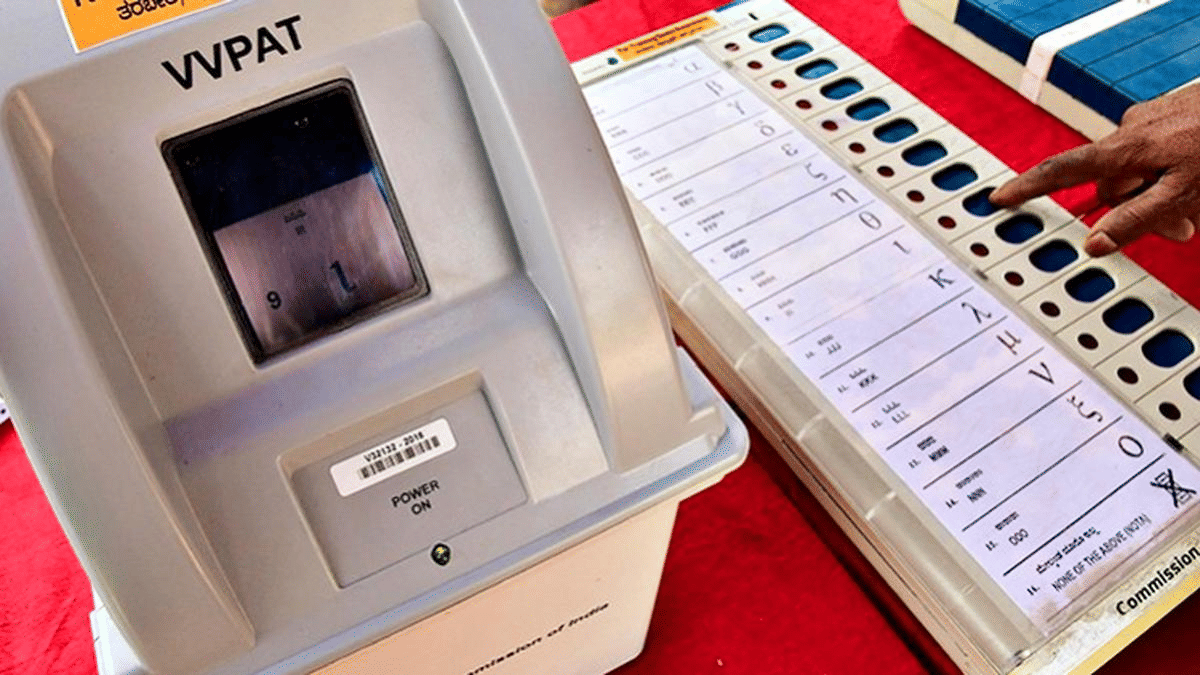
Microcontrollers are the backbone of EVMs, functioning as small, programmable integrated circuits. They manage key tasks, such as recording votes and interfacing with components like the control unit, ballot unit, and VVPAT.
- One-Time Programmable: These microcontrollers are configured during the manufacturing stage and cannot be reprogrammed, ensuring their integrity and security.
- Tamper-Proof Design: Physical access to microcontrollers is restricted, further bolstering their reliability in elections.
Supreme Court’s April 2024 Judgment
Judgment Overview
- In April 2024, the Supreme Court reaffirmed its trust in the EVM system, dismissing calls to revert to paper ballots. The court emphasized the importance of trust in institutions and highlighted the reliability of EVMs.
Verification Procedure
- To address concerns about tampering, the court mandated a verification process for the burnt memory of 5% of EVMs in every Assembly segment, under specific conditions:
- Initiation: Verification must be requested in writing by second or third-place candidates within seven days of the election results.
- Execution: Engineers from EVM manufacturers oversee the verification process.
- Expense: Applicants bear the cost of verification, which is refundable if tampering is confirmed.
Technical Observations
- Agnostic Microcontrollers: The court noted that EVM microcontrollers are programmed to recognize button presses, not political parties or candidates.
- Non-Reprogrammable Design: The ECI assured that the microcontrollers are one-time programmable and physically inaccessible post-manufacturing.
About EVMs
Development and Usage
- EVMs, developed by Electronics Corporation of India and Bharat Electronics, have been integral to Indian elections since the late 1990s. They represent a significant technological advancement over traditional paper ballots.
Advantages of EVMs
- Cost Efficiency: Reduced election costs compared to paper ballots.
- Expedited Counting: Faster vote counting processes.
- Fraud Prevention: Eliminates practices such as pre-filled fake ballots and booth capturing.
Key Features
- Standalone Operation: Battery-powered and self-contained, EVMs lack networking capabilities, safeguarding against hacking.
- Security Protocols: EVMs feature write-once-read-many memory and undergo rigorous pre-election testing in the presence of polling agents.
- VVPAT Integration: Since 2019, EVMs have been paired with Voter Verifiable Paper Audit Trails (VVPATs), providing a verifiable paper trail. Random verification of 2% of VVPATs further strengthens trust in the system.
Conclusion
EVMs, powered by secure microcontrollers, have revolutionized the electoral process in India by enhancing efficiency, reliability, and transparency. While the ongoing petition raises valid concerns about verifying microcontroller memory, the Supreme Court’s directives and ECI’s stringent protocols underscore the robustness of the current system. The focus remains on maintaining public trust in the electoral process while ensuring that any potential vulnerabilities are addressed effectively.
Download the PREPP App and attempt FREE IAS Exam Mock Tests and get complete study material!

Live Test : UPSC CSE Prelims CSAT (Paper-II) (Oct 08 - 11)
Full Test - 04: UPSC CSE Prelims CSAT (Paper-II)
Full Test - 03: UPSC CSE Prelims CSAT (Paper-II)
UPSC CSE Prelims 2026 GS Paper 1 Question Paper (24-May-2026)
UPSC CSE Prelims 2026 CSAT Paper 2 Question Paper (24-May-2026)

17 February 2025 | The Hindu Must Read Articles | Current Affairs

16 February 2026 | The Hindu Must Read Articles | Current Affairs

13 February 2026 | The Hindu Must Read Articles | Current Affairs









Comments