M.F. Husain: Legal Controversies and Legacy of India’s Iconic Artist
Why in the News?
A Delhi court has reserved its decision on whether to register an FIR against the Delhi Art Gallery (DAG) for displaying allegedly offensive paintings by M.F. Husain. This development reignites debates around the intersection of art, religion, and law in India.
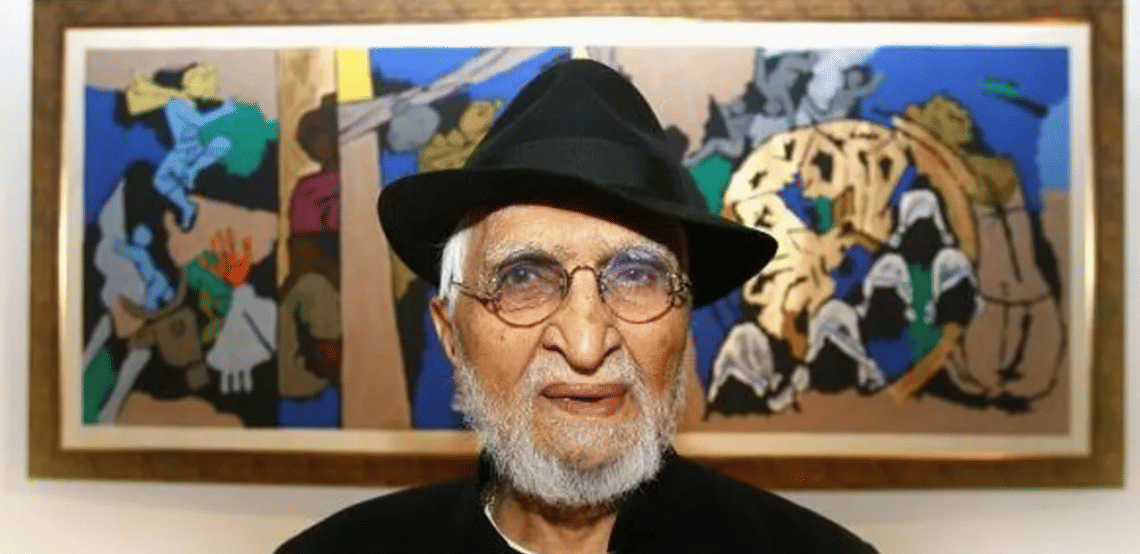
Understanding the Case
- Allegations of Offensive Imagery
- The paintings reportedly depicted Hindu gods Hanuman and Ganesha in inappropriate contexts, leading to a complaint alleging a deliberate insult to religious sentiments.
- Legal Basis
- The complainant invoked Section 299 of the Bharatiya Nagarik Suraksha Sanhita (BNSS) Act, accusing the gallery of violating cultural and religious sensitivities.
- Gallery’s Defense
- The Delhi Art Gallery (DAG) argued that the paintings were displayed in a private space, showcasing original works by renowned artists, including M.F. Husain.
- Police Action
- Following the complaint, the Delhi Police were ordered to seize the paintings and present a report by January 22, 2025.
About M.F. Husain: The Painter and the Controversies
Early Life and Career
- Birth and Background: Maqbool Fida Husain (1915–2011) was a celebrated Indian painter, filmmaker, and modernist.
- Artistic Style: Husain’s narrative artworks combined a modified Cubist style with Indian themes, making his creations unique and globally recognized.
Contributions to Indian Art
- Founding Member of Modern Art: As a founding member of the Bombay Progressive Artists’ Group, Husain spearheaded India’s modern art movement in the 1940s.
- Diverse Themes: His artworks covered a wide range of subjects, including Indian epics (Ramayana and Mahabharata), Gandhi, Mother Teresa, and both urban and rural life.
Controversies Surrounding His Work
- Depictions of Hindu Deities: Husain’s later works, featuring nude portrayals of Hindu gods and Bharat Mata, sparked outrage and legal challenges from right-wing groups.
- Legal Fallout and Exile: Accusations of hurting religious sentiments forced him into self-imposed exile in 2006. In 2010, he accepted Qatari citizenship, living abroad until his death in 2011.
Legacy and Achievements
- Awards and Recognition
- National Film Award (1967): For his experimental film Through the Eyes of a Painter.
- Padma Vibhushan (1991): India’s second-highest civilian award.
- Cinematic Contributions
- Husain directed Meenaxi: A Tale of Three Cities (2004), which premiered at the Cannes Film Festival.
- Impact on Modern Indian Art
- Despite controversies, Husain remains one of the most influential figures in Indian art, known for bridging traditional and contemporary styles.
Conclusion
The case against M.F. Husain's artworks at DAG underscores ongoing tensions between creative freedom and cultural sensitivities. While Husain’s legacy as a pioneer of modern Indian art is undisputed, debates about his controversial depictions continue to shape his complex narrative.
Download the PREPP App and attempt FREE IAS Exam Mock Tests and get complete study material!
*The article might have information for the previous academic years, please refer the official website of the exam.
How likely are you to recommend Prepp.in to a friend or a colleague?
Not so likely
Highly likely
UPSC CSE (IAS) 2027 Prelims Mock Test Series
Live Quizzes
Quizzes
Live Tests

• Live
Live Test : UPSC CSE Prelims CSAT (Paper-II) (Oct 08 - 11)
120 Minutes
80 Questions
200 Marks
English, Hindi
MEDIUM
Test will end in 05:28:56
Full Tests
Full Test - 04: UPSC CSE Prelims CSAT (Paper-II)
120 Minutes
80 Questions
200 Marks
English, Hindi
MEDIUM
Attempted by 19 aspirants in 12 hours
Full Test - 03: UPSC CSE Prelims CSAT (Paper-II)
120 Minutes
80 Questions
200 Marks
English, Hindi
MEDIUM
Attempted by 20 aspirants in 12 hours
Previous Year Papers
UPSC CSE Prelims 2026 GS Paper 1 Question Paper (24-May-2026)
120 Minutes
100 Questions
200 Marks
2,989 Attempted
English, Hindi
MEDIUM
Attempted by 12 aspirants in 12 hours
UPSC CSE Prelims 2026 CSAT Paper 2 Question Paper (24-May-2026)
120 Minutes
80 Questions
200 Marks
3,167 Attempted
English, Hindi
MEDIUM
Attempted by 13 aspirants in 12 hours
Videos

17 February 2025 | The Hindu Must Read Articles | Current Affairs
7,202 Views
•4
•7 months ago

16 February 2026 | The Hindu Must Read Articles | Current Affairs
6,962 Views
•4
•7 months ago

13 February 2026 | The Hindu Must Read Articles | Current Affairs
8,765 Views
•5
•7 months ago

12 February 2026 | The Hindu Must Read Articles | Current Affairs
5,788 Views
•4
•7 months ago






Also Check
IAS Exam Overview
IAS Exam Admit Card
IAS Exam Question Paper 2026
IAS Exam Mains Syllabus
IAS Exam Application Process
IAS Exam Eligibility
IAS Exam Result
IAS Exam Exam Pattern
IAS Exam CSAT Syllabus
IAS Exam Answer Key
IAS Exam Previous Year Paper
IAS Exam Current Affairs
IAS Exam Mains Question Paper
IAS Exam IAS Courses
IAS Exam UPSC Study Notes
IAS Exam Foundation Course 2024
IAS Exam Prelims Question Paper
IAS Exam Exam Center
IAS Exam Foundation Course 2025
IAS Exam Notification 2026
IAS Exam IAS Success Stories
IAS Exam Salary
IAS Exam Cutoff
IAS Exam Mock Tests
IAS Exam News


Comments