Malayan Night Heron: A Rare Sighting in Madurai
Why in the News?
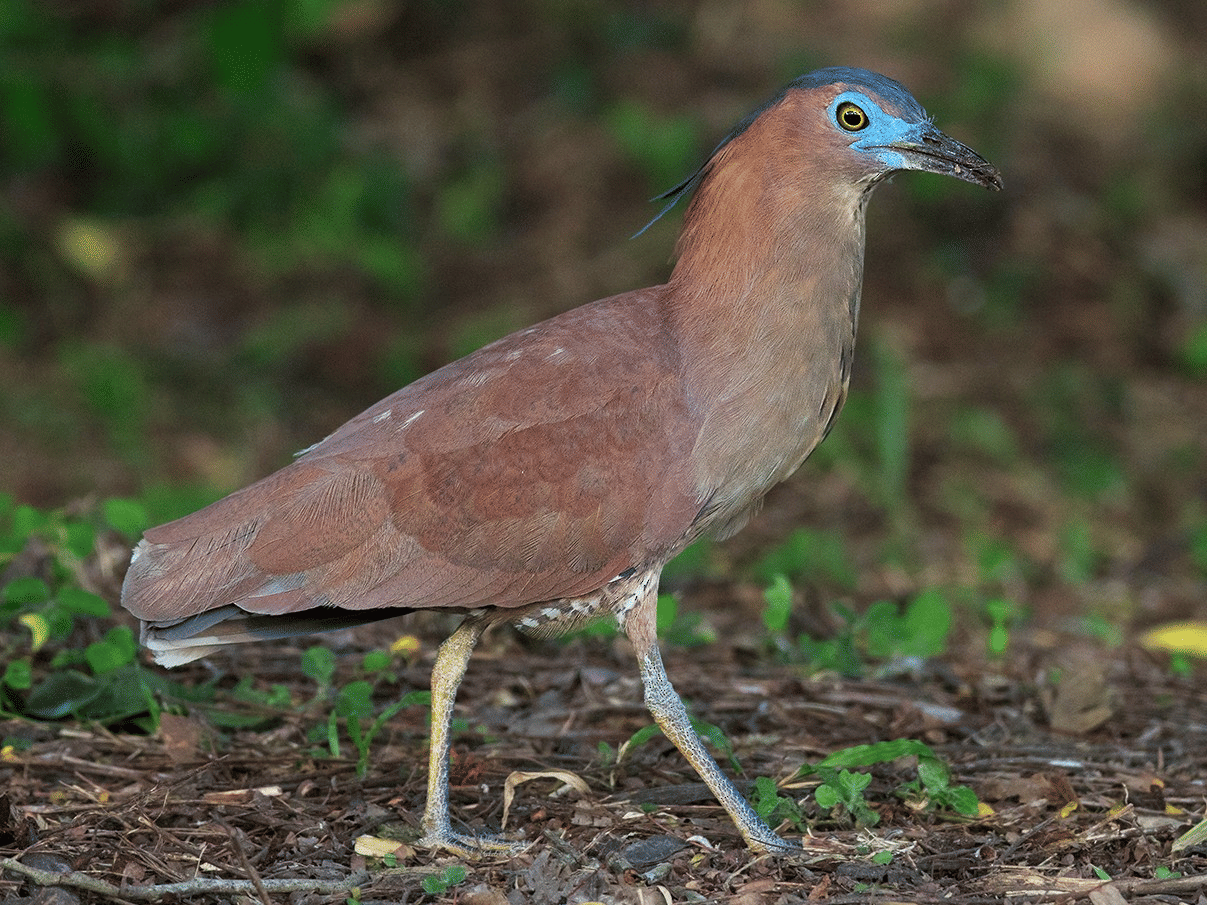
The Malayan Night Heron has been officially documented for the first time in Madurai, near the Alagar Kovil Hills, Tamil Nadu. This rare occurrence has garnered significant attention from ornithologists and bird enthusiasts alike.
Possible Cause: Experts suggest that Cyclone Fengal may have disrupted the bird’s usual migration route, leading to this unexpected appearance.
About the Malayan Night Heron
- Scientific Name: Gorsachius melanolophus
- Common Names: Malaysian Night Heron, Tiger Bittern
- Family: Ardeidae
This medium-sized heron is known for its unique features and solitary behavior.
Habitat and Distribution
- Habitat: The Malayan Night Heron thrives in forests, streams, and marshes, particularly in undisturbed regions.
- Distribution: Native to Southeast Asia, including countries like Myanmar, Thailand, Malaysia, and China. It also migrates to parts of India, Sri Lanka, and occasionally reaches areas as far as Australia.
Characteristics and Behavior
- Size: Medium-sized, measuring about 48 cm in length with a wingspan of 86 cm.
- Appearance: Distinctive chestnut upperparts, black crown, yellow eyes, blue lores near the eyes, and a greenish beak.
- Behavior: Solitary and highly territorial. Unlike other herons, it nests individually rather than in colonies.
- Diet: Feeds on earthworms, frogs, snails, insects, and other small prey.
Threats to Survival
- Habitat Loss: Rapid deforestation and urban expansion are major threats to the bird’s natural habitat.
- Human Disturbance: Activities in nesting and feeding areas can severely affect its breeding cycles.
Conservation Status
- IUCN Status: Least Concern (LC)
- Wildlife Protection Act: Schedule IV
Efforts to protect its habitat and monitor sightings are essential to ensuring the species' long-term survival.
Download the PREPP App and attempt FREE IAS Exam Mock Tests and get complete study material!
*The article might have information for the previous academic years, please refer the official website of the exam.
How likely are you to recommend Prepp.in to a friend or a colleague?
Not so likely
Highly likely
UPSC CSE (IAS) 2027 Prelims Mock Test Series
Live Quizzes
Quizzes
Live Tests

• Live
Live Test : UPSC CSE Prelims CSAT (Paper-II) (Oct 08 - 11)
120 Minutes
80 Questions
200 Marks
English, Hindi
MEDIUM
Test will end in 05:30:44
Full Tests
Full Test - 04: UPSC CSE Prelims CSAT (Paper-II)
120 Minutes
80 Questions
200 Marks
English, Hindi
MEDIUM
Attempted by 19 aspirants in 12 hours
Full Test - 03: UPSC CSE Prelims CSAT (Paper-II)
120 Minutes
80 Questions
200 Marks
English, Hindi
MEDIUM
Attempted by 20 aspirants in 12 hours
Previous Year Papers
UPSC CSE Prelims 2026 GS Paper 1 Question Paper (24-May-2026)
120 Minutes
100 Questions
200 Marks
2,989 Attempted
English, Hindi
MEDIUM
Attempted by 12 aspirants in 12 hours
UPSC CSE Prelims 2026 CSAT Paper 2 Question Paper (24-May-2026)
120 Minutes
80 Questions
200 Marks
3,167 Attempted
English, Hindi
MEDIUM
Attempted by 13 aspirants in 12 hours
Videos

17 February 2025 | The Hindu Must Read Articles | Current Affairs
7,202 Views
•4
•7 months ago

16 February 2026 | The Hindu Must Read Articles | Current Affairs
6,962 Views
•4
•7 months ago

13 February 2026 | The Hindu Must Read Articles | Current Affairs
8,765 Views
•5
•7 months ago

12 February 2026 | The Hindu Must Read Articles | Current Affairs
5,788 Views
•4
•7 months ago






Also Check
IAS Exam Overview
IAS Exam Admit Card
IAS Exam Question Paper 2026
IAS Exam Mains Syllabus
IAS Exam Application Process
IAS Exam Eligibility
IAS Exam Result
IAS Exam Exam Pattern
IAS Exam CSAT Syllabus
IAS Exam Answer Key
IAS Exam Previous Year Paper
IAS Exam Current Affairs
IAS Exam Mains Question Paper
IAS Exam IAS Courses
IAS Exam UPSC Study Notes
IAS Exam Foundation Course 2024
IAS Exam Prelims Question Paper
IAS Exam Exam Center
IAS Exam Foundation Course 2025
IAS Exam Notification 2026
IAS Exam IAS Success Stories
IAS Exam Salary
IAS Exam Cutoff
IAS Exam Mock Tests
IAS Exam News


Comments