Makhana: The Superfood Revolutionizing Health and Economy
Why in news?
Makhana Will Take Over the World of Superfoods, Says Shivraj Chouhan.
Introduction
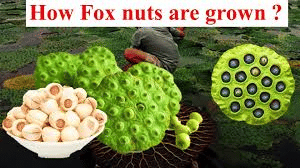
- Makhana, also known as foxnut or lotus seed, is a highly nutritious aquatic crop with immense health benefits and economic potential.
- It is cultivated in stagnant perennial water bodies such as ponds, swamps, and oxbow lakes, thriving in tropical and subtropical climates.
- Due to its medicinal properties, high nutritional value, and sustainable farming, Makhana is gaining recognition as a global superfood.
Makhana Cultivation and Distribution
- Ideal Growing Conditions:
- Temperature: 20°C to 35°C
- Relative Humidity: 50%–90%
- Annual Rainfall: 100 cm–250 cm
- Soil Type: Smooth loamy soil
- Geographical Distribution in India:
- Cultivated in Bihar, West Bengal, Manipur, Tripura, Assam, Odisha, Rajasthan, Madhya Pradesh, Uttar Pradesh, and Jammu & Kashmir.
- Bihar dominates production, contributing over 80% of India’s total Makhana output.
Nutritional Value of Makhana
- Makhana is a low-calorie, high-protein superfood, making it an ideal healthy snack. Key nutrients include:
- High Protein & Fiber – Aids digestion, muscle growth, and metabolism.
- Rich in Antioxidants – Helps in reducing oxidative stress and prevents aging.
- Low in Calories & Fat – Supports weight loss and heart health.
- Excellent Source of Calcium – Strengthens bones, teeth, and joints.
- Essential Minerals – Magnesium, phosphorus, and potassium help regulate body functions.
Economic and Trade Potential of Makhana
- Government Support through ODOP Scheme – Makhana is recognized under the One District One Product (ODOP) scheme, with subsidies for branding, marketing, and infrastructure development.
- Rising Global Demand – Increasingly popular in health-conscious markets like the USA, Europe, and Southeast Asia.
- Export Opportunities – High demand for processed Makhana in snack food, confectionery, and health food industries.
- Employment Generation – Provides jobs in farming, processing, packaging, and export sectors.
- Sustainable Farming – Requires no chemical fertilizers, making it an eco-friendly and profitable crop.
Conclusion
- Makhana is rapidly emerging as a global superfood with exceptional health benefits and economic potential.
- With increasing government support, export demand, and sustainable farming practices, India is poised to become a leading supplier in the global Makhana market.
Download the PREPP App and attempt FREE IAS Exam Mock Tests and get complete study material!
*The article might have information for the previous academic years, please refer the official website of the exam.
How likely are you to recommend Prepp.in to a friend or a colleague?
Not so likely
Highly likely
UPSC CSE (IAS) 2027 Prelims Mock Test Series
Live Quizzes
Quizzes
Live Tests

• Live
Live Test : UPSC CSE Prelims CSAT (Paper-II) (Oct 08 - 11)
120 Minutes
80 Questions
200 Marks
English, Hindi
MEDIUM
Test will end in 12:53:07
Full Tests
Full Test - 04: UPSC CSE Prelims CSAT (Paper-II)
120 Minutes
80 Questions
200 Marks
English, Hindi
MEDIUM
Attempted by 18 aspirants in 12 hours
Full Test - 03: UPSC CSE Prelims CSAT (Paper-II)
120 Minutes
80 Questions
200 Marks
English, Hindi
MEDIUM
Attempted by 20 aspirants in 12 hours
Previous Year Papers
UPSC CSE Prelims 2026 GS Paper 1 Question Paper (24-May-2026)
120 Minutes
100 Questions
200 Marks
2,982 Attempted
English, Hindi
MEDIUM
Attempted by 12 aspirants in 12 hours
UPSC CSE Prelims 2026 CSAT Paper 2 Question Paper (24-May-2026)
120 Minutes
80 Questions
200 Marks
3,160 Attempted
English, Hindi
MEDIUM
Attempted by 13 aspirants in 12 hours
Videos

17 February 2025 | The Hindu Must Read Articles | Current Affairs
7,202 Views
•4
•7 months ago

16 February 2026 | The Hindu Must Read Articles | Current Affairs
6,962 Views
•4
•7 months ago

13 February 2026 | The Hindu Must Read Articles | Current Affairs
8,765 Views
•5
•7 months ago

12 February 2026 | The Hindu Must Read Articles | Current Affairs
5,788 Views
•4
•7 months ago






Also Check
IAS Exam Overview
IAS Exam Admit Card
IAS Exam Question Paper 2026
IAS Exam Mains Syllabus
IAS Exam Application Process
IAS Exam Eligibility
IAS Exam Result
IAS Exam Exam Pattern
IAS Exam CSAT Syllabus
IAS Exam Answer Key
IAS Exam Previous Year Paper
IAS Exam Current Affairs
IAS Exam Mains Question Paper
IAS Exam IAS Courses
IAS Exam UPSC Study Notes
IAS Exam Foundation Course 2024
IAS Exam Prelims Question Paper
IAS Exam Exam Center
IAS Exam Foundation Course 2025
IAS Exam Notification 2026
IAS Exam IAS Success Stories
IAS Exam Salary
IAS Exam Cutoff
IAS Exam Mock Tests
IAS Exam News


Comments