Lion-Tailed Macaque: Endangered Species of the Western Ghats
Why in the News?
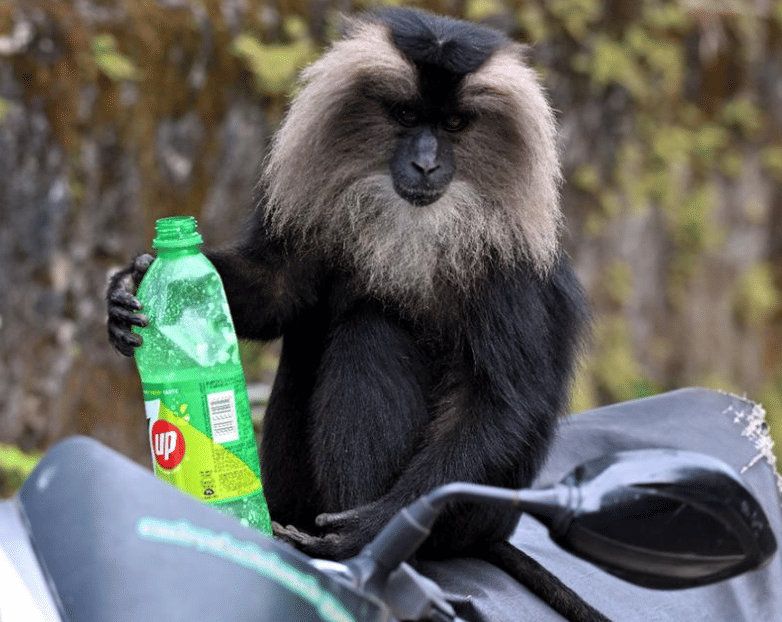
A recent study underscores how human interactions, particularly food provisioning, are putting the endangered lion-tailed macaque at risk. This rare primate is endemic to the Western Ghats of India.
About the Lion-Tailed Macaque
- Scientific Name: Macaca silenus
- Also known as the wanderoo, this species belongs to the Old World monkeys, the largest primate family with 138 recognized species.
Habitat and Distribution
- Habitat: Tropical moist evergreen and monsoon forests.
- Geographical Range:
- Silent Valley National Park
- Neyyar Wildlife Sanctuary
- Anaimalai Tiger Reserve
Physical Characteristics and Behavior
- Appearance:
- Black fur with a distinctive silver-gray mane encircling its face.
- Small in size, weighing 2–10 kg and measuring 42–61 cm.
- Known for its lion-like tufted tail.
- Diet: Omnivorous, consuming fruits, seeds, insects, and small vertebrates.
- Behavior:
- Highly territorial, communicating through vocalizations, gestures, and body language.
Threats to Survival
The lion-tailed macaque faces numerous challenges, including:
- Habitat Loss: Fragmentation due to logging, agriculture, and human settlements.
- Human-Wildlife Conflicts: Increased inbreeding, road accidents, and electrocution by power lines.
- Human Interactions: Hunting, trapping, and conflicts when macaques encroach on human habitats.
Conservation Status
- IUCN Red List: Endangered
- Wildlife (Protection) Act, 1972: Schedule I
- CITES: Appendix I
Call to Action
Protecting the lion-tailed macaque requires addressing habitat destruction and minimizing human-wildlife conflict. Conservation efforts in the Western Ghats play a critical role in safeguarding this species for future generations.
Download the PREPP App and attempt FREE IAS Exam Mock Tests and get complete study material!
*The article might have information for the previous academic years, please refer the official website of the exam.
How likely are you to recommend Prepp.in to a friend or a colleague?
Not so likely
Highly likely
UPSC CSE (IAS) 2027 Prelims Mock Test Series
Live Quizzes
Quizzes
Live Tests

• Live
Live Test : UPSC CSE Prelims CSAT (Paper-II) (Oct 08 - 11)
120 Minutes
80 Questions
200 Marks
English, Hindi
MEDIUM
Test will end in 19:53:48
Full Tests
Full Test - 04: UPSC CSE Prelims CSAT (Paper-II)
120 Minutes
80 Questions
200 Marks
English, Hindi
MEDIUM
Attempted by 20 aspirants in 12 hours
Full Test - 03: UPSC CSE Prelims CSAT (Paper-II)
120 Minutes
80 Questions
200 Marks
English, Hindi
MEDIUM
Attempted by 21 aspirants in 12 hours
Previous Year Papers
UPSC CSE Prelims 2026 GS Paper 1 Question Paper (24-May-2026)
120 Minutes
100 Questions
200 Marks
2,975 Attempted
English, Hindi
MEDIUM
Attempted by 13 aspirants in 12 hours
UPSC CSE Prelims 2026 CSAT Paper 2 Question Paper (24-May-2026)
120 Minutes
80 Questions
200 Marks
3,153 Attempted
English, Hindi
MEDIUM
Attempted by 14 aspirants in 12 hours
Videos

17 February 2025 | The Hindu Must Read Articles | Current Affairs
7,202 Views
•4
•7 months ago

16 February 2026 | The Hindu Must Read Articles | Current Affairs
6,962 Views
•4
•7 months ago

13 February 2026 | The Hindu Must Read Articles | Current Affairs
8,765 Views
•5
•7 months ago

12 February 2026 | The Hindu Must Read Articles | Current Affairs
5,788 Views
•4
•7 months ago






Also Check
IAS Exam Overview
IAS Exam Admit Card
IAS Exam Question Paper 2026
IAS Exam Mains Syllabus
IAS Exam Application Process
IAS Exam Eligibility
IAS Exam Result
IAS Exam Exam Pattern
IAS Exam CSAT Syllabus
IAS Exam Answer Key
IAS Exam Previous Year Paper
IAS Exam Current Affairs
IAS Exam Mains Question Paper
IAS Exam IAS Courses
IAS Exam UPSC Study Notes
IAS Exam Foundation Course 2024
IAS Exam Prelims Question Paper
IAS Exam Exam Center
IAS Exam Foundation Course 2025
IAS Exam Notification 2026
IAS Exam IAS Success Stories
IAS Exam Salary
IAS Exam Cutoff
IAS Exam Mock Tests
IAS Exam News


Comments