Legislative Council: Structure, Composition, and Powers
Why in the News?
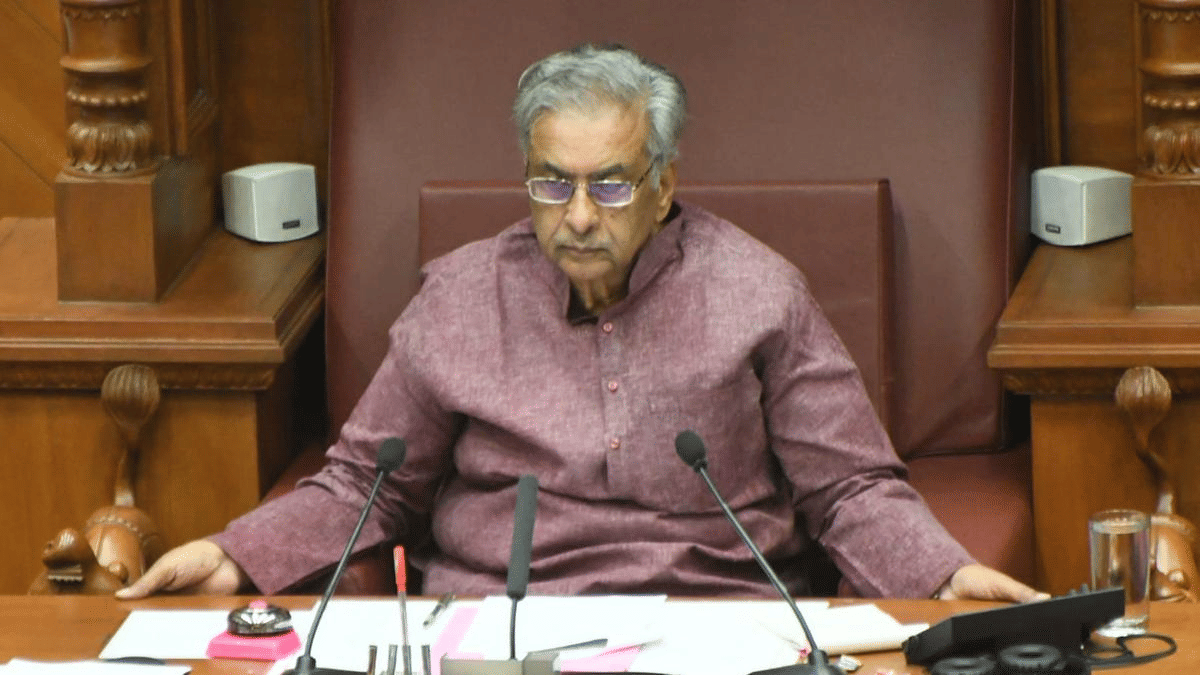
Basavaraj Horatti, Chairman of the Karnataka Legislative Council, recently expressed concern over the declining quality of debates in the legislature. This statement highlights the importance of understanding the role and significance of the Legislative Council in India.
About Legislative Councils
Upper House in Bicameral Legislatures
- The State Legislative Council, or Vidhan Parishad, serves as the upper house in Indian states with a bicameral legislative system.
Constitutional Basis
- Governed by Article 169 of the Indian Constitution.
States with Legislative Councils
- Currently, only six states have Legislative Councils: Andhra Pradesh, Karnataka, Telangana, Maharashtra, Bihar, and Uttar Pradesh.
Formation and Abolition
- Creation: A State Legislative Council can be established if the Legislative Assembly passes a resolution with a special majority, followed by parliamentary approval.
- Abolition: The process mirrors its creation, requiring a state assembly resolution and Parliament’s consent.
- Controversial Status: Legislative Councils are often politically debated, with some states advocating for their re-establishment and others opposing their existence.
Composition of the Legislative Council
Size of the Council
- The strength of the Legislative Council cannot exceed one-third of the total strength of the State Legislative Assembly and must have a minimum of 40 members.
Election and Nomination Breakdown
Members are chosen through a combination of elections and nominations:
- One-third elected by local bodies such as municipalities and panchayats.
- One-third elected by the Legislative Assembly members, excluding sitting MLAs.
- One-sixth nominated by the Governor from experts in fields like literature, science, arts, cooperative movement, or social service.
- One-twelfth elected by graduates with at least three years of residence in the state.
- One-twelfth elected by teachers with a minimum of three years of teaching experience in institutions not below the secondary school level.
Members of the Legislative Council (MLCs)
Eligibility Criteria
- Citizen of India.
- Minimum age: 30 years.
- Mentally sound and not insolvent.
- Must be an enrolled voter in the state.
Disqualifications
- Cannot simultaneously serve as a Member of Parliament or Member of the State Legislative Assembly.
- Must not hold an office of profit under the central or state government.
Tenure of Members
- The term is six years, with one-third of the members retiring every two years, similar to the Rajya Sabha.
Powers and Functions
Limited Legislative Power
- The Council does not have the authority to form or dissolve a government.
No Role in Money Bills
- Money bills are exclusively introduced and passed in the Legislative Assembly.
Overriding Powers of the Assembly
- Under Article 197 of the Constitution, if a bill passed by the Assembly is rejected by the Council but reintroduced and passed again by the Assembly, it becomes law.
Conclusion
The Legislative Council plays a consultative and revisory role in the legislative process. However, its limited powers and controversial status make it a topic of ongoing political and public debate.
Download the PREPP App and attempt FREE IAS Exam Mock Tests and get complete study material!
*The article might have information for the previous academic years, please refer the official website of the exam.
How likely are you to recommend Prepp.in to a friend or a colleague?
Not so likely
Highly likely
UPSC CSE (IAS) 2027 Prelims Mock Test Series
Live Quizzes
Quizzes
Live Tests

• Live
Live Test : UPSC CSE Prelims CSAT (Paper-II) (Oct 08 - 11)
120 Minutes
80 Questions
200 Marks
English, Hindi
MEDIUM
Test will end in 14:33:02
Full Tests
Full Test - 04: UPSC CSE Prelims CSAT (Paper-II)
120 Minutes
80 Questions
200 Marks
English, Hindi
MEDIUM
Attempted by 18 aspirants in 12 hours
Full Test - 03: UPSC CSE Prelims CSAT (Paper-II)
120 Minutes
80 Questions
200 Marks
English, Hindi
MEDIUM
Attempted by 19 aspirants in 12 hours
Previous Year Papers
UPSC CSE Prelims 2026 GS Paper 1 Question Paper (24-May-2026)
120 Minutes
100 Questions
200 Marks
2,981 Attempted
English, Hindi
MEDIUM
Attempted by 12 aspirants in 12 hours
UPSC CSE Prelims 2026 CSAT Paper 2 Question Paper (24-May-2026)
120 Minutes
80 Questions
200 Marks
3,158 Attempted
English, Hindi
MEDIUM
Attempted by 13 aspirants in 12 hours
Videos

17 February 2025 | The Hindu Must Read Articles | Current Affairs
7,202 Views
•4
•7 months ago

16 February 2026 | The Hindu Must Read Articles | Current Affairs
6,962 Views
•4
•7 months ago

13 February 2026 | The Hindu Must Read Articles | Current Affairs
8,765 Views
•5
•7 months ago

12 February 2026 | The Hindu Must Read Articles | Current Affairs
5,788 Views
•4
•7 months ago






Also Check
IAS Exam Overview
IAS Exam Admit Card
IAS Exam Question Paper 2026
IAS Exam Mains Syllabus
IAS Exam Application Process
IAS Exam Eligibility
IAS Exam Result
IAS Exam Exam Pattern
IAS Exam CSAT Syllabus
IAS Exam Answer Key
IAS Exam Previous Year Paper
IAS Exam Current Affairs
IAS Exam Mains Question Paper
IAS Exam IAS Courses
IAS Exam UPSC Study Notes
IAS Exam Foundation Course 2024
IAS Exam Prelims Question Paper
IAS Exam Exam Center
IAS Exam Foundation Course 2025
IAS Exam Notification 2026
IAS Exam IAS Success Stories
IAS Exam Salary
IAS Exam Cutoff
IAS Exam Mock Tests
IAS Exam News


Comments