Kurdistan: History, Geography, and the Ongoing Kurdish Struggle
Why in the News?
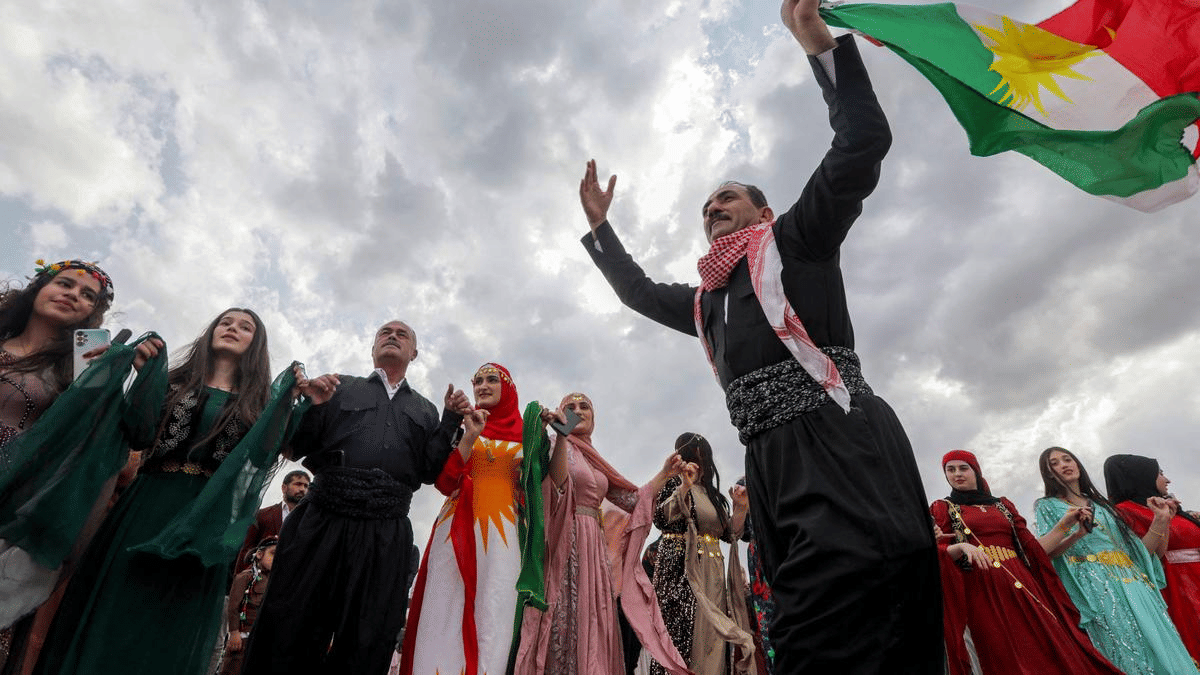
During the Nowruz festival at the Darashakran refugee camp in Iraq, people proudly waved the Kurdistan flag, symbolizing the enduring spirit and cultural identity of the Kurdish people.
What is Kurdistan?
Kurdistan refers to a geo-cultural region in West Asia where the Kurdish ethnic group forms the majority. It spans multiple countries and is home to a rich cultural and political history marked by aspirations for autonomy and independence.
Geographical Spread of Kurdistan
- Northern Kurdistan – Southeastern Turkey
- Southern Kurdistan – Northern Iraq
- Eastern Kurdistan – Northwestern Iran
- Western Kurdistan – Northern Syria

Cultural Identity
- The region is known for the Kurdish language, unique traditions, and nationalistic sentiments.
- Kurdistan is often featured in discussions about stateless nations, cultural suppression, and ethnic minority rights.
Disputed Boundaries
The boundaries of Kurdistan are not officially recognized, and the region remains politically and geographically contested.
Historical Background of Kurdistan
Early References
- The term "Kurdistan" first appeared in 11th-century Seljuk chronicles.
- Between the 8th and 19th centuries, several Kurdish principalities and emirates thrived across the region.
20th Century Statehood Efforts
- Treaty of Sèvres (1920): Proposed autonomy for Kurds post-WWI, but was never implemented.
- Short-lived Kurdish States:
- Kingdom of Kurdistan (1921–1924)
- Republic of Ararat (1927–1930)
- Republic of Mahabad (1946)
Kurdish Repression and Resistance
Turkish Crackdown on Kurdish Identity
- In early Republican Turkey, policies under Mustafa Kemal Atatürk suppressed Kurdish identity.
- Kurdish language, publications, and organizations were banned.
- Major Kurdish uprisings, including those led by Sheikh Said (1925) and in Mount Ararat (1928–1930), were violently suppressed.
Emergence of Kurdish Movements
- Post-1946 liberalization in Turkey enabled a Kurdish cultural revival.
- The Kurdistan Workers' Party (PKK), founded in 1978 by Abdullah Öcalan, launched an armed struggle based on Marxist-Leninist ideology.
Kurdish Demands and Aspirations
Key Demands of the Kurdish People:
- Autonomy or Independence – Calls for statehood or self-rule within current national borders.
- Cultural Recognition – Official status for the Kurdish language and heritage.
- Political Representation – Greater voice in national governance.
- Human Rights and Security – Protection from state violence, arbitrary arrests, and ethnic discrimination.
The Current Situation in Kurdistan
Turkey
- On March 1, 2025, the PKK announced a ceasefire, responding to a message from Abdullah Öcalan suggesting the group be dissolved.
- However, Kurdish activism remains heavily restricted.
Iraq
- The Kurdistan Regional Government (KRG) operates semi-autonomously under Iraq’s 2005 Constitution.
- A 2017 independence referendum was met with military and political pushback from Baghdad.
Syria
- Kurdish forces established the Autonomous Administration of North and East Syria (Rojava) during the Syrian civil war.
- The Syrian Democratic Forces (SDF), key allies in the fight against ISIS, are supported by the U.S. but viewed by Turkey as PKK affiliates.
Iran
- While Iran has a Kurdistan Province, it lacks autonomy.
- Kurdish political activism is tightly monitored and suppressed by the Iranian regime.
Conclusion
Kurdistan remains a symbol of an enduring ethnic identity and political struggle spanning across several nation-states. Despite decades of suppression, failed statehood, and ongoing conflict, the Kurdish people continue to fight for recognition, rights, and a place of their own on the global stage.
Download the PREPP App and attempt FREE IAS Exam Mock Tests and get complete study material!

Live Test : UPSC CSE Prelims CSAT (Paper-II) (Oct 08 - 11)
Full Test - 04: UPSC CSE Prelims CSAT (Paper-II)
Full Test - 03: UPSC CSE Prelims CSAT (Paper-II)
UPSC CSE Prelims 2026 GS Paper 1 Question Paper (24-May-2026)
UPSC CSE Prelims 2026 CSAT Paper 2 Question Paper (24-May-2026)

17 February 2025 | The Hindu Must Read Articles | Current Affairs

16 February 2026 | The Hindu Must Read Articles | Current Affairs

13 February 2026 | The Hindu Must Read Articles | Current Affairs









Comments