Koch Rajbongshi Demand for ST Status Ahead of Amit Shah’s Assam Visit
Why in the News?
The Koch-Rajbongshi community has once again raised its long-standing demand for Scheduled Tribe (ST) status ahead of Union Home Minister Amit Shah’s visit to Assam. This demand has been a critical socio-political issue for decades, as the community seeks constitutional recognition and benefits.
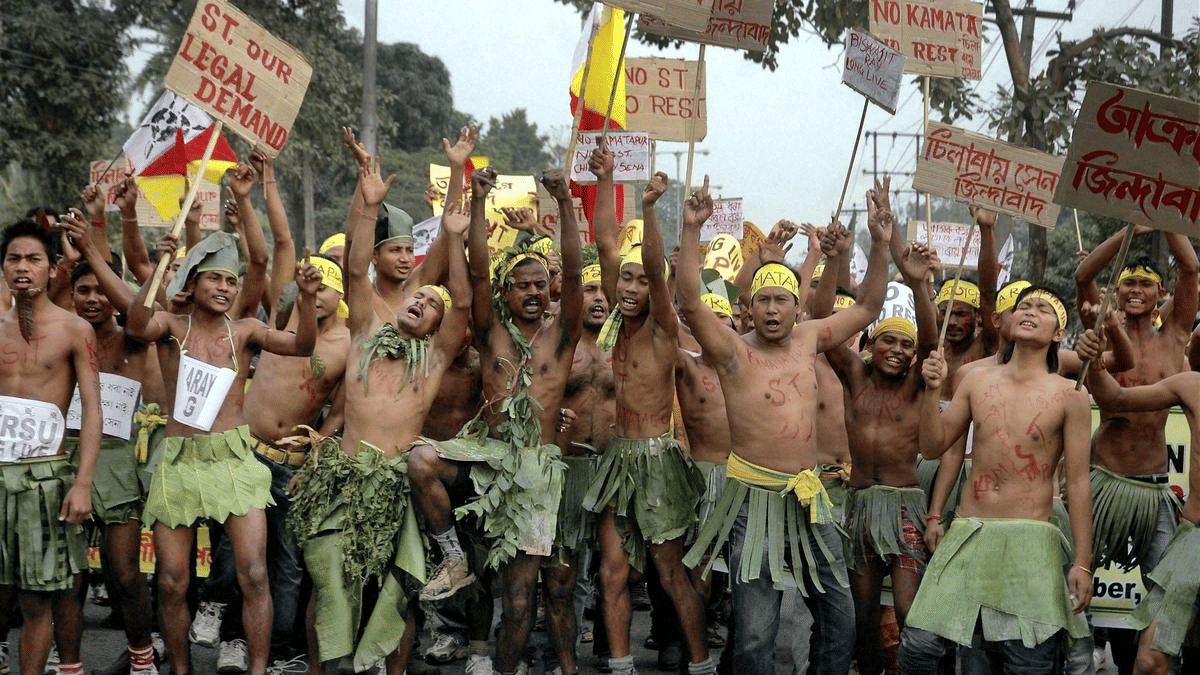
Key Demands of the Koch Rajbongshi Community
- ST Status: Official inclusion in the Scheduled Tribe category to ensure educational and employment benefits.
- Re-establishment of Kamatapur State: A demand for the restoration of the historic Kamatapur kingdom.
- Chilarai Regiment Formation: Honoring the legendary warrior Chilarai by creating a dedicated regiment in the Indian Army.
Historical Background
- In 1996, the Koch-Rajbongshis were granted ST status, but it was revoked after six months due to concerns about its impact on existing ST groups.
- The Kamatapur Autonomous Council was established in Assam in 2020 to safeguard the community’s socio-political rights.
Who Are the Koch Rajbongshis?
The Koch-Rajbongshi people are an ethnic community predominantly found in Assam, West Bengal, Bihar, Eastern Nepal, and Northern Bangladesh. They have a distinct cultural and historical identity, closely linked to the Koch dynasty.
Linguistic and Cultural Identity
- Primary Language: Kamatapuri (an Indo-Aryan language), though historical influences suggest links to Tibeto-Burman languages.
- Cultural Affiliation: While linked to the Koch dynasty, they are distinct from the ethnic Koch people of Meghalaya and Upper Assam.
- Current Classification:
- OBC in Assam and Bihar
- SC in West Bengal
- Plains Janjati in Nepal
Etymology and Social Mobility
- Originally known as Koch, the term ‘Rajbanshi’ (meaning “of royal lineage”) was adopted in 1891.
- This renaming was part of a larger movement aimed at social elevation to the Kshatriya status within Hindu society.
Historical Significance
- The Koch-Rajbongshis were historically part of the ancient Kamarupa kingdom.
- Traditionally, their primary occupation has been agriculture, with some members owning land and others working as sharecroppers.
Rich Cultural Heritage of Koch Rajbongshis
Music and Dance
- The community has a vibrant musical tradition, including genres like Bhawaiyya, Chatka, Chorchunni, and Lahankari.
- Traditional instruments include:
- Dotora (string instrument)
- Khol (percussion)
- Sanai (wind instrument)
Religious Practices
- Primarily influenced by Hindu traditions, with a blend of animistic and folk elements.
Handicrafts and Traditional Art
- Renowned for weaving and other traditional crafts that reflect their unique artistic heritage.

Conclusion
The demand for Scheduled Tribe (ST) status for the Koch-Rajbongshi community remains a critical issue. With Amit Shah’s visit to Assam, the renewed push for recognition highlights the community’s aspirations for socio-political and economic upliftment. The decision regarding their ST status will have a profound impact on their future, preserving their rich cultural legacy while addressing their long-standing grievances.
Download the PREPP App and attempt FREE IAS Exam Mock Tests and get complete study material!

Live Test : UPSC CSE Prelims CSAT (Paper-II) (Oct 08 - 11)
Full Test - 04: UPSC CSE Prelims CSAT (Paper-II)
Full Test - 03: UPSC CSE Prelims CSAT (Paper-II)
UPSC CSE Prelims 2026 GS Paper 1 Question Paper (24-May-2026)
UPSC CSE Prelims 2026 CSAT Paper 2 Question Paper (24-May-2026)

17 February 2025 | The Hindu Must Read Articles | Current Affairs

16 February 2026 | The Hindu Must Read Articles | Current Affairs

13 February 2026 | The Hindu Must Read Articles | Current Affairs









Comments