Kaziranga National Park: A UNESCO World Heritage Site in Assam
Why in the News?
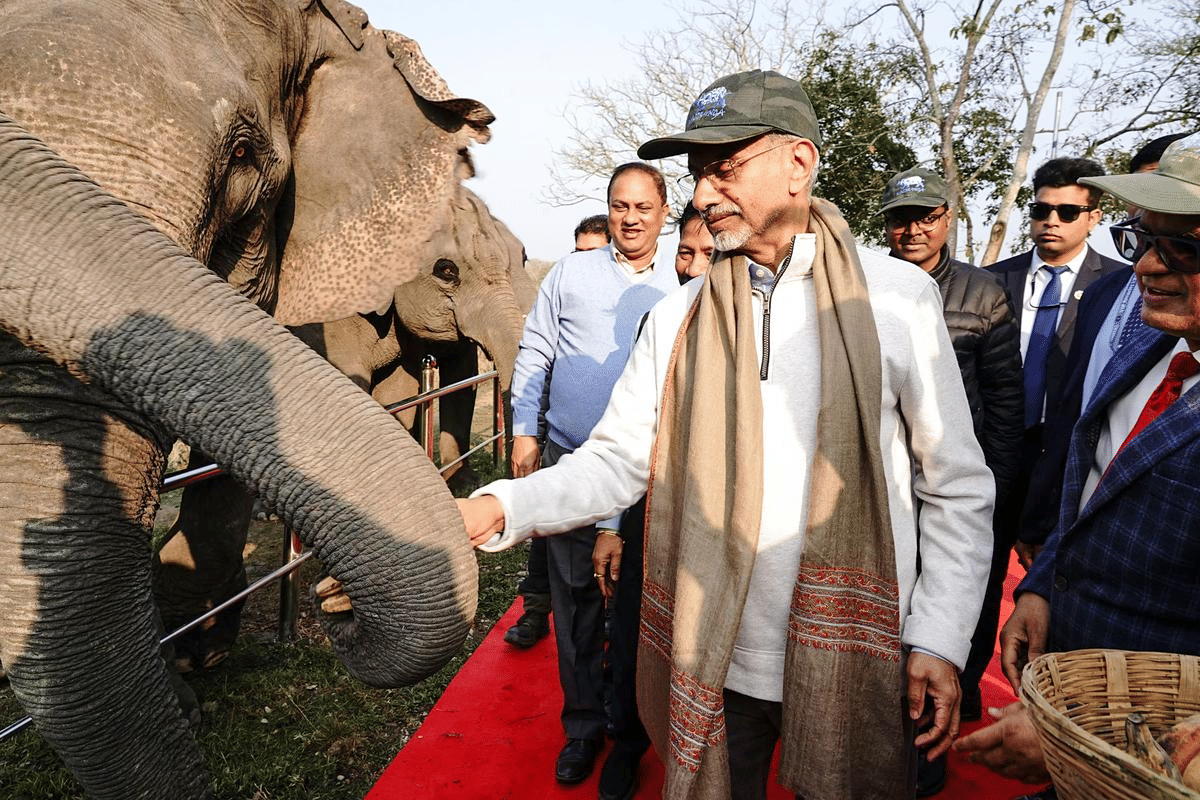
On February 24, 2025, External Affairs Minister S. Jaishankar, along with ambassadors and envoys from 61 countries, visited Kaziranga National Park (KNP). This visit was part of the Advantage Assam 2.0 Infrastructure and Investment Summit, aimed at boosting investment and tourism in Assam. Several nations, including Bhutan, Japan, South Korea, Thailand, Malaysia, and Indonesia, participated in the summit.
Kaziranga National Park: Location & Geography
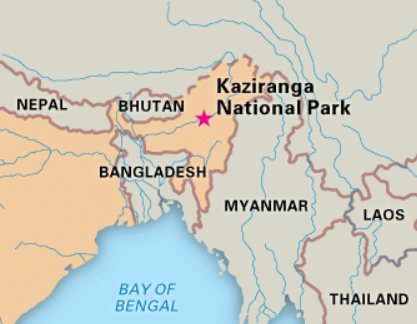
Kaziranga National Park is located in the northeastern Indian state of Assam, spanning across the Golaghat, Nagaon, Sonitpur, and Biswanath districts. Covering an area of approximately 430 square kilometers, the park is enriched by the Brahmaputra River, which flows through its expanse, sustaining its diverse ecosystem.
History of Kaziranga National Park
Kaziranga’s conservation journey dates back to 1904, when Mary Curzon, the wife of Lord Curzon (then Viceroy of India), visited the region but was unable to spot the famed one-horned rhinoceros. She persuaded her husband to take measures to protect the species. As a result:
- On June 1, 1905, Kaziranga was declared a Proposed Reserve Forest covering 232 square kilometers.
- Under the Assam National Park Act of 1968, Kaziranga gained the status of a national park.
- On February 11, 1974, the central government officially designated Kaziranga as a national park.
- In 2006, Kaziranga was declared a Tiger Reserve due to the significant increase in the tiger population.
- Recognized globally, Kaziranga National Park became a UNESCO World Heritage Site in 1985.
Flora and Fauna of Kaziranga National Park
1. Vegetation
Kaziranga National Park is home to diverse vegetation types, including:
- Alluvial inundated grasslands
- Savanna woodlands
- Tropical moist mixed deciduous forests
- Tropical semi-evergreen forests
2. Wildlife and Biodiversity
Kaziranga is globally renowned for its Indian one-horned rhinoceros, which boasts the largest population in the world. Other key species found in the park include:
- Mammals: Indian elephant, wild water buffalo, swamp deer, Bengal tiger, leopard, sloth bear, hoolock gibbon
- Birds: Kaziranga is a significant bird habitat, attracting numerous migratory birds.
- Reptiles and Amphibians: Various species of snakes, turtles, and frogs thrive in Kaziranga’s wetlands.
Conservation Success & Rhino Population Growth
Kaziranga National Park has played a critical role in protecting the Greater one-horned rhinoceros, an endangered species. According to the 2018 census, the park was home to 2,613 rhinoceroses, a significant increase from 2,401 in 2015.
Download the PREPP App and attempt FREE IAS Exam Mock Tests and get complete study material!

Live Test : UPSC CSE Prelims CSAT (Paper-II) (Oct 08 - 11)
Full Test - 04: UPSC CSE Prelims CSAT (Paper-II)
Full Test - 03: UPSC CSE Prelims CSAT (Paper-II)
UPSC CSE Prelims 2026 GS Paper 1 Question Paper (24-May-2026)
UPSC CSE Prelims 2026 CSAT Paper 2 Question Paper (24-May-2026)

17 February 2025 | The Hindu Must Read Articles | Current Affairs

16 February 2026 | The Hindu Must Read Articles | Current Affairs

13 February 2026 | The Hindu Must Read Articles | Current Affairs









Comments