Kaveri Engine: Key Points
Why in news
India’s Gas Turbine Research Establishment (GTRE), part of the Defence Research and Development Organisation (DRDO), has announced that the Kaveri engine has been cleared for inflight testing, marking a significant development in India’s indigenous aero-engine development program, according to latest reports.
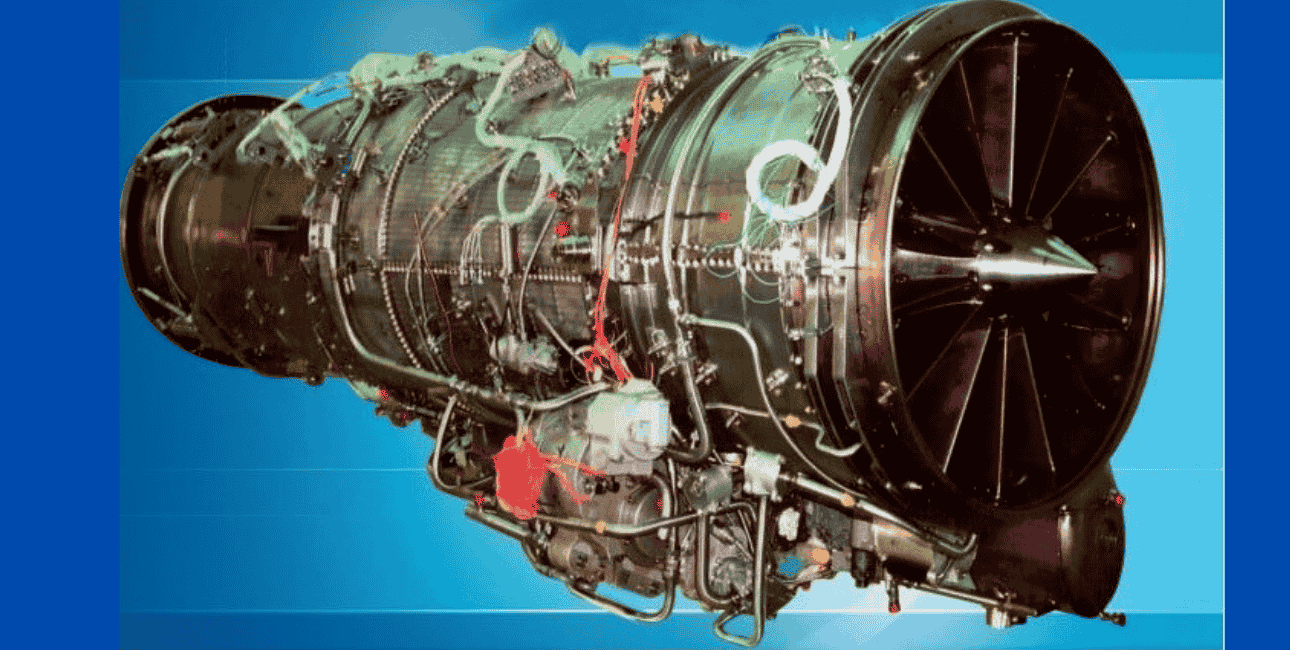
About Kaveri engine
- Development of Kaveri Engine:
- The Kaveri engine is an indigenous gas turbine engine developed by the Gas Turbine Research Establishment (GTRE) under DRDO (Defence Research and Development Organisation).
- The project, initiated in 1986, was aimed at powering India’s Light Combat Aircraft (LCA) Tejas, as part of India’s self-reliance in defense technology.
- Challenges and Revival Efforts:
- The Kaveri engine initially faced significant setbacks and was decertified for the LCA Tejas program.
- However, in 2016, the engine project was revived with SAFRAN’s technical assistance, redirecting its focus towards applications in UAVs (Unmanned Aerial Vehicles) like the Ghatak UCAV.
- Current Specifications:
- The Kaveri engine currently produces a thrust of 49-51 kN, making it suitable for unmanned aerial vehicles (UAVs).
- Plans include integrating an afterburner to achieve 73-75 kN thrust, expanding its capabilities for more advanced defense applications.
- Extensive Testing:
- The engine has undergone high-altitude simulations in Russia and ground trials in India, proving its reliability and operational stability.
- These tests have ensured the engine meets the performance metrics necessary for in-flight testing and operational deployment.
- Strategic Significance:
- The Kaveri engine is a key milestone in India’s defense self-sufficiency, reducing reliance on foreign technology for critical components like aero-engines.
- It plays a vital role in the development of stealth technology, UAVs, and advanced combat aircraft, reinforcing India’s strategic defense capabilities.
- Impact on India’s Defense Modernization:
- The successful development of the Kaveri engine enhances India’s capability in producing indigenous fighter engines, contributing to the Make in India initiative.
The engine’s application in UAVs like the Ghatak UCAV strengthens India’s presence in the evolving global defense landscape, especially in stealth operations and aerospace technologies.
Download the PREPP App and attempt FREE IAS Exam Mock Tests and get complete study material!
*The article might have information for the previous academic years, please refer the official website of the exam.
How likely are you to recommend Prepp.in to a friend or a colleague?
Not so likely
Highly likely
UPSC CSE (IAS) 2027 Prelims Mock Test Series
Live Quizzes
Quizzes
Live Tests

• Live
Live Test : UPSC CSE Prelims CSAT (Paper-II) (Oct 08 - 11)
120 Minutes
80 Questions
200 Marks
English, Hindi
MEDIUM
Test will end in 05:31:42
Full Tests
Full Test - 04: UPSC CSE Prelims CSAT (Paper-II)
120 Minutes
80 Questions
200 Marks
English, Hindi
MEDIUM
Attempted by 19 aspirants in 12 hours
Full Test - 03: UPSC CSE Prelims CSAT (Paper-II)
120 Minutes
80 Questions
200 Marks
English, Hindi
MEDIUM
Attempted by 20 aspirants in 12 hours
Previous Year Papers
UPSC CSE Prelims 2026 GS Paper 1 Question Paper (24-May-2026)
120 Minutes
100 Questions
200 Marks
2,989 Attempted
English, Hindi
MEDIUM
Attempted by 12 aspirants in 12 hours
UPSC CSE Prelims 2026 CSAT Paper 2 Question Paper (24-May-2026)
120 Minutes
80 Questions
200 Marks
3,167 Attempted
English, Hindi
MEDIUM
Attempted by 13 aspirants in 12 hours
Videos

17 February 2025 | The Hindu Must Read Articles | Current Affairs
7,202 Views
•4
•7 months ago

16 February 2026 | The Hindu Must Read Articles | Current Affairs
6,962 Views
•4
•7 months ago

13 February 2026 | The Hindu Must Read Articles | Current Affairs
8,765 Views
•5
•7 months ago

12 February 2026 | The Hindu Must Read Articles | Current Affairs
5,788 Views
•4
•7 months ago






Also Check
IAS Exam Overview
IAS Exam Admit Card
IAS Exam Question Paper 2026
IAS Exam Mains Syllabus
IAS Exam Application Process
IAS Exam Eligibility
IAS Exam Result
IAS Exam Exam Pattern
IAS Exam CSAT Syllabus
IAS Exam Answer Key
IAS Exam Previous Year Paper
IAS Exam Current Affairs
IAS Exam Mains Question Paper
IAS Exam IAS Courses
IAS Exam UPSC Study Notes
IAS Exam Foundation Course 2024
IAS Exam Prelims Question Paper
IAS Exam Exam Center
IAS Exam Foundation Course 2025
IAS Exam Notification 2026
IAS Exam IAS Success Stories
IAS Exam Salary
IAS Exam Cutoff
IAS Exam Mock Tests
IAS Exam News


Comments