Kambala: A Thrilling Buffalo Racing Festival of Karnataka
Why in the News?
The eighth edition of the Mangaluru Kambala recently saw 171 pairs of buffaloes competing, highlighting the enduring popularity of this ancient festival.
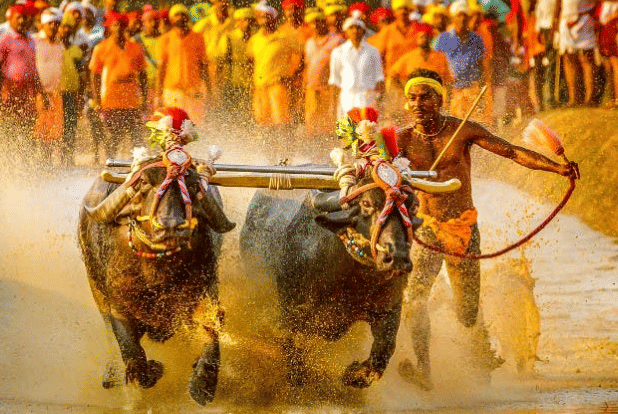
About Kambala
Kambala is an exhilarating annual buffalo racing festival celebrated in the Dakshina Kannada, Udupi, and Bhatkal districts of Karnataka. Known for its cultural richness and vibrant traditions, this event draws thousands of participants and spectators from across the region.
- Annual Festival: Kambala is celebrated annually, typically starting in November and lasting until March.
- Sporting Tradition: This thrilling event involves buffalo races in slushy paddy fields, showcasing the skill of farmers and the strength of their buffaloes.
- Regional Attraction: It is a major cultural event in Karnataka, attracting enthusiasts from near and far.
Historical Significance
- Ancient Roots: The origins of Kambala date back over a thousand years. Initially, it was celebrated as Karaga before evolving into its present form.
- Hoysala Influence: Some historians trace Kambala to the Hoysala dynasty, where it served as a method to test buffaloes for warfare.
- Religious Origins: The festival is also associated with worshiping Lord Kadri Manjunatha, a manifestation of Lord Shiva, as a thanksgiving for a bountiful harvest.
Traditions and Rituals
- Buffalo Procession: The festival begins with a grand procession featuring decorated buffaloes, adorned with colorful headpieces, brass ornaments, and special towels known as "paavade".
- Race Format: Buffaloes compete in pairs, driven by skilled farmers who use whips to encourage maximum speed.
- Community Celebration: The event fosters community bonding and showcases traditional farming practices.
Cultural and Agricultural Significance
- Agricultural Roots: Kambala reflects the gratitude of farming communities to their deities for a good harvest and protection against diseases.
- Cultural Heritage: The festival embodies the spirit of Karnataka’s rural culture, blending tradition with sporting fervor.
- Community Unity: It serves as a platform for farmers to come together in celebration and friendly competition.
Legal Status and Animal Welfare
- Ban and Relegalization: In 2014, Kambala was banned by the Supreme Court of India due to concerns over animal cruelty. However, it was relegalized in 2018 after amendments to the Prevention of Cruelty to Animals Act.
- Animal Welfare Concerns: Despite its legal status, concerns remain about the use of whips and the treatment of buffaloes during the races. Efforts are ongoing to ensure that the event adheres to ethical practices.
Conclusion
Kambala is more than just a buffalo race; it is a celebration of Karnataka’s rich cultural heritage and agricultural roots. As the festival continues to evolve, efforts to balance tradition with modern ethical standards will ensure its place as a cherished event for generations to come.
Download the PREPP App and attempt FREE IAS Exam Mock Tests and get complete study material!

Live Test : UPSC CSE Prelims CSAT (Paper-II) (Oct 08 - 11)
Full Test - 04: UPSC CSE Prelims CSAT (Paper-II)
Full Test - 03: UPSC CSE Prelims CSAT (Paper-II)
UPSC CSE Prelims 2026 GS Paper 1 Question Paper (24-May-2026)
UPSC CSE Prelims 2026 CSAT Paper 2 Question Paper (24-May-2026)

17 February 2025 | The Hindu Must Read Articles | Current Affairs

16 February 2026 | The Hindu Must Read Articles | Current Affairs

13 February 2026 | The Hindu Must Read Articles | Current Affairs









Comments