Jallikattu: Tradition, Controversy, and Cultural Significance
Why in the News?
A 22-year-old bull tamer tragically lost his life, and many others were injured during a Jallikattu event in Avaniyapuram, Madurai, held as part of the Pongal celebrations. This incident has reignited discussions about the cultural importance and ethical concerns surrounding this traditional sport.
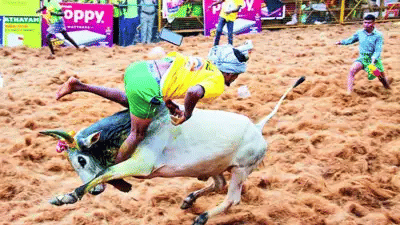
What is Jallikattu?
Jallikattu is a traditional bull-taming sport originating in Tamil Nadu, primarily celebrated during the Pongal festival.
- Objective: Participants attempt to grab the hump of a running bull and hold on, often trying to stop or subdue the animal.
- Cultural Significance: It is celebrated on Mattu Pongal, a day dedicated to cattle worship during the Pongal festivities, symbolizing the bond between humans and cattle.
Historical Roots of Jallikattu
- Ancient Origins: Jallikattu dates back to the Tamil classical period (400–100 BCE), initially serving as a display of bravery among the Ayar tribal people.
- Cave Art Evidence: A cave painting near Madurai, estimated to be 1,500 years old, depicts a man attempting to tame a bull.
- Indus Valley Links: A seal from the Indus Valley Civilization highlights similar bull-taming practices, showcasing its ancient roots.
- Evolution: Initially performed as a ritual to honor village deities, the event later transformed into a competitive sport, often with prize money.
Animal Welfare Concerns
Jallikattu has faced criticism for its impact on animal welfare:
- Cruel Practices: Bulls are subjected to painful treatments, including tail bending, prodding with sharp tools, and even the application of chili peppers to their eyes to aggravate them.
- Injuries and Fatalities: Both participants and bulls face significant risks. Between 2008 and 2014, 43 people and 4 bulls lost their lives in Jallikattu events.
- Criticism from Organizations: Animal welfare groups like PETA argue that the event exploits and traumatizes bulls, calling for its ban.
The Supreme Court Ban and Public Outcry
- Initial Ban: In 2014, the Supreme Court of India banned Jallikattu, citing animal cruelty and public safety concerns.
- Legal Reasoning: The court declared bulls anatomically unsuitable for the sport, making their participation inherently cruel.
- Protests: The ban led to widespread protests in Tamil Nadu, with people emphasizing the cultural significance of Jallikattu.
Legalization and Current Status
- 2017 Ordinance: Responding to public protests, the Tamil Nadu government passed an ordinance allowing Jallikattu under regulated conditions.
- Exemption: The Tamil Nadu legislature amended the Prevention of Cruelty to Animals Act (1960) to exempt Jallikattu.
- Ongoing Controversy: Despite legalization, the issue remains unresolved in higher courts, with animal rights organizations continuing to challenge its validity.
Conclusion
Jallikattu is more than a sport; it is a symbol of Tamil Nadu’s cultural heritage. However, the ethical and safety concerns surrounding the event continue to spark debate. Striking a balance between cultural traditions and animal welfare remains a critical challenge.
Download the PREPP App and attempt FREE IAS Exam Mock Tests and get complete study material!

Live Test : UPSC CSE Prelims CSAT (Paper-II) (Oct 08 - 11)
Full Test - 04: UPSC CSE Prelims CSAT (Paper-II)
Full Test - 03: UPSC CSE Prelims CSAT (Paper-II)
UPSC CSE Prelims 2026 GS Paper 1 Question Paper (24-May-2026)
UPSC CSE Prelims 2026 CSAT Paper 2 Question Paper (24-May-2026)

17 February 2025 | The Hindu Must Read Articles | Current Affairs

16 February 2026 | The Hindu Must Read Articles | Current Affairs

13 February 2026 | The Hindu Must Read Articles | Current Affairs









Comments