Injectable Hydrogels for Targeted Cancer Treatment
Why in the News?
Researchers at IIT-Guwahati, in collaboration with Bose Institute, Kolkata, have developed an advanced injectable hydrogel for localized breast cancer treatment. This breakthrough represents a significant step in minimally invasive and targeted cancer therapies.
What are Hydrogels?
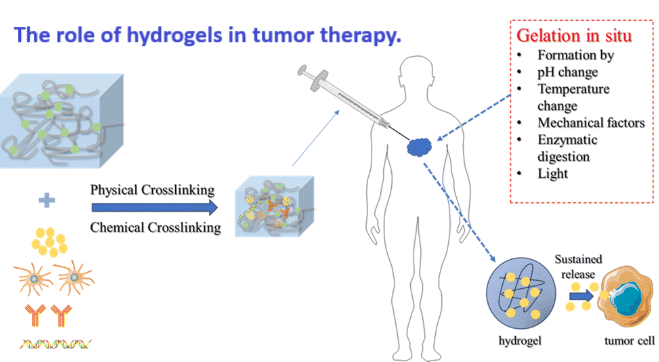
Hydrogels are three-dimensional, water-based polymer networks capable of absorbing and retaining fluids, closely mimicking the properties of living tissues. These unique structures are primarily composed of biocompatible materials such as ultra-short peptides, making them ideal for biomedical applications.
Key Applications:
- Drug Delivery: Transporting therapeutic agents to targeted areas.
- Tissue Regeneration: Supporting the repair and growth of damaged tissues.
- Medical Innovations: Used in various advanced medical technologies.
Mechanism of Action
- Targeted Delivery:
- The hydrogel remains localized at the injection site, minimizing its interaction with healthy tissues.
- Responsive Release:
- It reacts to elevated glutathione (GSH) levels, a molecule abundant in tumor cells, enabling controlled drug release within the tumor microenvironment.
- Drug Reservoir:
- Acts as a stable reservoir for chemotherapy drugs, ensuring sustained release over time and reducing the frequency of administration.
- Enhanced Drug Uptake:
- Promotes efficient drug absorption by cancer cells, causing cell cycle arrest and inducing programmed cell death.
Benefits of Injectable Hydrogels
1. Localized Action:
- Delivers drugs directly to tumor sites, reducing systemic exposure and minimizing harmful side effects.
2. Controlled Release:
- Ensures prolonged and steady drug delivery, enhancing therapeutic efficacy while reducing toxicity.
3. Reduced Dosage Requirements:
- Lowers the required drug dosage, decreasing overall drug-related toxicity.
4. Non-Invasive Treatment:
- Provides a minimally invasive alternative to traditional therapies, offering a more patient-friendly option.
5. Biocompatibility:
- Composed of biodegradable materials, these hydrogels are safe, minimizing adverse reactions within the body.
About Tumors
- Nature of Cancer: Tumors arise from genetic and epigenetic changes, often resistant to conventional treatments.
- Current Challenges: Surgery and chemotherapy often damage healthy tissues, cause severe side effects, and increase the risk of recurrence.
Future Outlook
1. Expanding Applications:
- Potential to treat other cancer types and diseases requiring localized drug delivery.
2. Integration with Advanced Therapies:
- Combining hydrogels with gene therapy, immunotherapy, and other treatments for superior results.
3. Clinical Trials:
- Essential for validating the safety, efficiency, and scalability of this innovative technology for broader adoption.
4. Personalized Medicine:
- Hydrogels could be tailored to meet individual patient needs, paving the way for personalized cancer treatments.
5. Sustainability:
- Cost-effective and easy to fabricate, making hydrogels a promising solution for resource-constrained settings.
Conclusion
Injectable hydrogels mark a revolutionary approach to cancer treatment by offering localized, controlled, and patient-friendly solutions. While further research and clinical trials are needed, this innovation holds immense potential to transform cancer therapies, especially for breast cancer, into safer and more effective treatments.
Download the PREPP App and attempt FREE IAS Exam Mock Tests and get complete study material!

Live Test : UPSC CSE Prelims CSAT (Paper-II) (Oct 08 - 11)
Full Test - 04: UPSC CSE Prelims CSAT (Paper-II)
Full Test - 03: UPSC CSE Prelims CSAT (Paper-II)
UPSC CSE Prelims 2026 GS Paper 1 Question Paper (24-May-2026)
UPSC CSE Prelims 2026 CSAT Paper 2 Question Paper (24-May-2026)

17 February 2025 | The Hindu Must Read Articles | Current Affairs

16 February 2026 | The Hindu Must Read Articles | Current Affairs

13 February 2026 | The Hindu Must Read Articles | Current Affairs









Comments