Indo-Pacific Policy of President Trump: Strategic Shifts and Regional Impacts
Why in the News?
The Quad Summit highlights the U.S.'s ongoing commitment to the Indo-Pacific under President Trump, reinforcing its strategic focus on this critical region. This article delves into the concept, history, and impact of the policy while addressing its vulnerabilities and future prospects.
What is the Indo-Pacific?
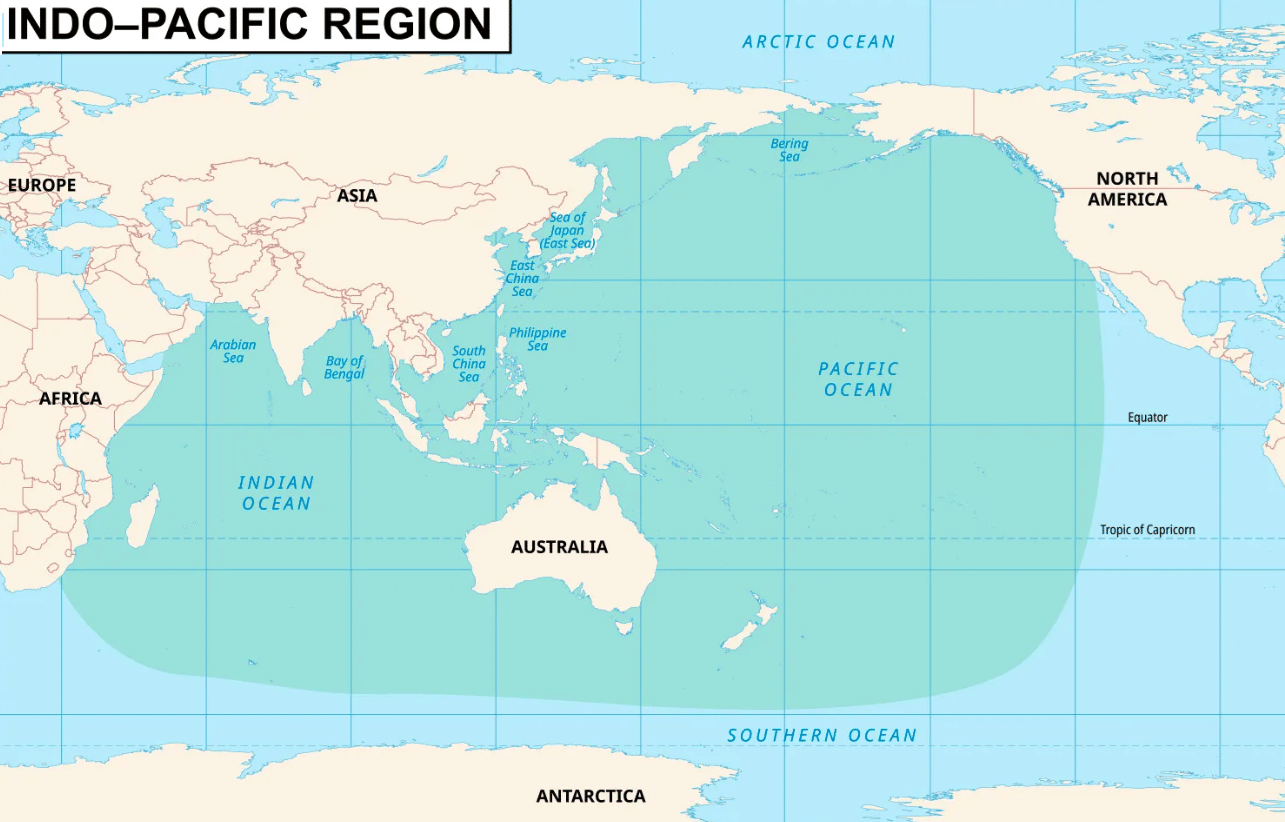
The Indo-Pacific is a geostrategic concept that merges the Indian and Pacific Oceans, emphasizing connectivity and collaboration.
Key Features:
- Strategic Evolution: Replacing "Asia-Pacific," it broadens focus beyond East Asia, fostering inclusivity.
- Global Trade Hub: Vital sea lanes here facilitate significant global commerce, impacting global trade and security.
- Countering Hegemony: Aimed at balancing China's regional dominance and fostering a rules-based order.
Geographical Scope:
- From the East Coast of Africa to the U.S. West Coast, it integrates the Indian Ocean, South China Sea, and Pacific Islands.
- While ASEAN remains central, it includes nations like Australia, Japan, and India, ensuring a broader coalition.
Historical Context
The Indo-Pacific concept has historical roots and has evolved significantly:
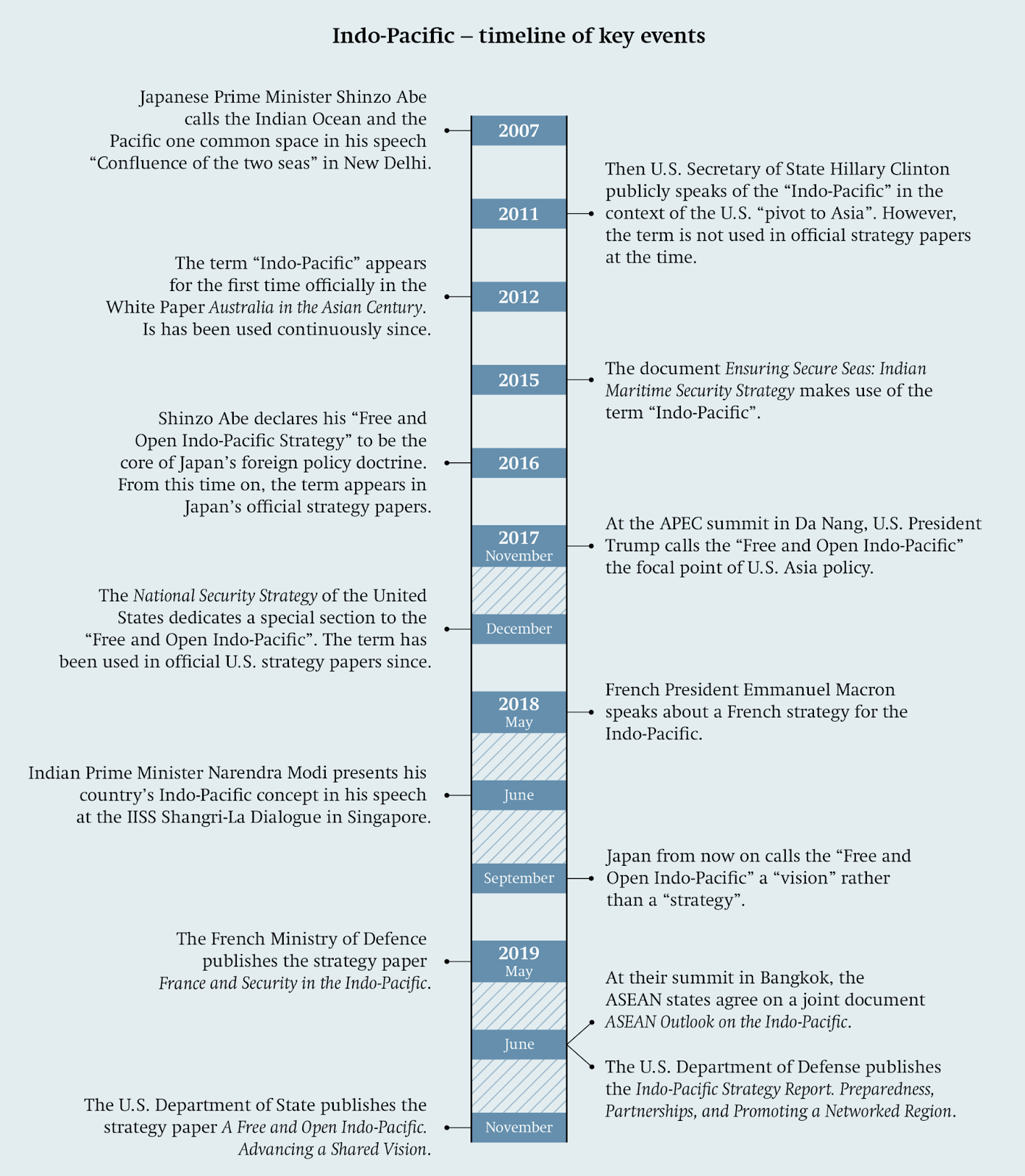
- 1920s: First coined by Karl Haushofer, gaining prominence in the 2000s.
- Shinzo Abe’s Vision: The Japanese PM's 2007 speech highlighted the "Confluence of Two Seas."
- Institutional Adoption: Countries like India, Japan, and the U.S. later integrated it into strategic frameworks.
U.S. Involvement in the Indo-Pacific
The U.S.'s engagement in the region has a storied history:
-
Post-WWII: Establishing military alliances with Japan, South Korea, and the Philippines.
- Pivot to Asia: Under President Obama, this strategy bolstered regional economic ties through initiatives like the Trans-Pacific Partnership (TPP).
- Rise of the Quad: The Quad (U.S., Japan, India, Australia) emerged as a security-focused coalition addressing shared concerns.
President Trump’s Indo-Pacific Policy
President Trump brought strategic rebranding and significant shifts:
- Adopting "Indo-Pacific": Officially integrated in 2017, this policy promoted a free, open, and inclusive region.
- Strengthening the Quad: Elevated to the ministerial level, enhancing collaboration and defense ties.
- Hard Power Dynamics: Increased military presence and exercises, countering China's actions in the South China Sea.
- Economic Resilience: Focused on digital infrastructure, supply chain diversification, and reducing dependency on China.
Vulnerabilities in the Indo-Pacific
Despite its strategic importance, challenges remain:
- Maritime Disputes: Territorial claims in the South China Sea and piracy impact stability.
- Economic Dependencies: Many nations rely heavily on China, complicating alignment with U.S. policies.
- Geopolitical Tensions: The U.S.-China rivalry creates a polarized environment.
- Climate Challenges: Rising sea levels and natural disasters threaten smaller Pacific nations.
Impact of Trump's Policy
Security Enhancement:
- Naval Cooperation: Strengthened maritime partnerships safeguard sea lanes.
- Military Realignment: Increased U.S. presence deters aggressive actions in disputed waters.
Economic Realignment:
- Diversified Supply Chains: Reduced reliance on China fosters resilience.
- Investment Attraction: U.S.-led projects support regional infrastructure and technology.
Strategic Collaboration:
- Quad Institutional Growth: A unified response to regional challenges.
- Broader Participation: Engaging ASEAN and smaller nations strengthens coalitions.
Challenges Ahead
- Quad Cohesion: Balancing differing priorities among member nations.
- Resource Constraints: U.S. initiatives often lack funding compared to China's Belt and Road Initiative.
- Soft Power Erosion: Inconsistencies in U.S. policies undermine its global influence.
- Environmental Oversight: Regional security focus often sidelines climate action.
Way Forward
To ensure long-term success, the U.S. must:
- Strengthen Multilateral Frameworks: Expand the Quad to include partners like South Korea and New Zealand.
- Focus on Inclusivity: Promote equitable development through the Indo-Pacific Economic Framework.
- Invest in Sustainability: Support green energy and climate resilience initiatives.
- Enhance Digital Cooperation: Build secure digital infrastructure to counter China's influence.
Conclusion
President Trump’s Indo-Pacific policy marked a pivotal shift in U.S. foreign strategy, fostering security and economic collaboration. Addressing vulnerabilities and fostering inclusive growth remains critical to realizing a stable and prosperous Indo-Pacific.
Download the PREPP App and attempt FREE IAS Exam Mock Tests and get complete study material!

Live Test : UPSC CSE Prelims CSAT (Paper-II) (Oct 08 - 11)
Full Test - 04: UPSC CSE Prelims CSAT (Paper-II)
Full Test - 03: UPSC CSE Prelims CSAT (Paper-II)
UPSC CSE Prelims 2026 GS Paper 1 Question Paper (24-May-2026)
UPSC CSE Prelims 2026 CSAT Paper 2 Question Paper (24-May-2026)

17 February 2025 | The Hindu Must Read Articles | Current Affairs

16 February 2026 | The Hindu Must Read Articles | Current Affairs

13 February 2026 | The Hindu Must Read Articles | Current Affairs









Comments