India's Shipping Industry: Growth, Challenges, and Government Initiatives
Why in the News?
The Indian government has announced the establishment of a Maritime Development Fund (MDF) to support the shipbuilding and repair industry.
The shipping industry is the backbone of India's trade, handling over 90% of export-import (EXIM) cargo by volume. Recent policy reforms and budgetary allocations aim to strengthen the sector, boost shipbuilding, and enhance global competitiveness.
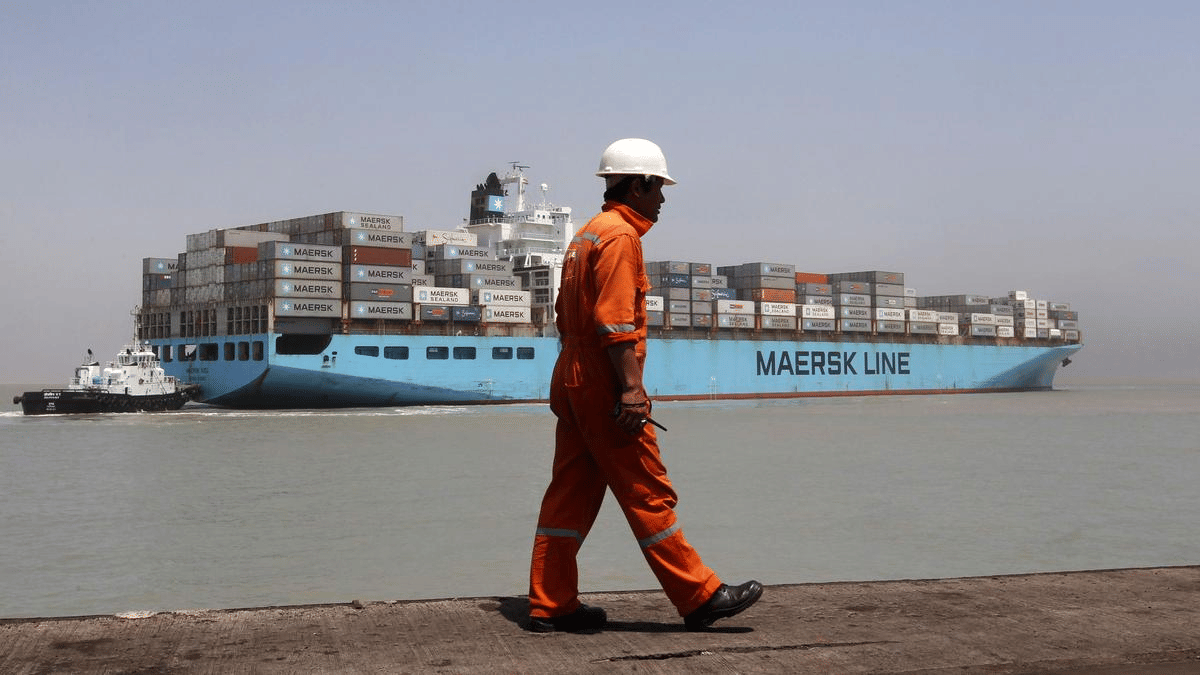
Key Announcements for the Shipping Industry in Union Budget 2025
Maritime Development Fund (MDF)
- The government has announced a ₹25,000 crore Maritime Development Fund to finance ship acquisition and modernization.
- The government will contribute 49% of the fund, with the rest coming from major ports, financial institutions, and private investors.
- This initiative is expected to generate ₹1.5 lakh crore in investments by 2030.
Infrastructure Status for Large Ships
- Large ships have been granted infrastructure status, reducing financial costs and enabling access to cheaper credit.
- This move could lower capital costs by up to 10 percentage points.
- Smaller vessels, such as tugboats and barges, are excluded from this status.
Support for Shipbuilding and Shipbreaking
- The Shipbuilding Financial Assistance Policy has been revamped to reduce cost disadvantages.
- A 10-year extension of basic customs duty exemption on raw materials, components, and consumables for shipbuilding.
- Credit incentives for shipbreaking in Indian yards to encourage recycling and a circular economy.
Tonnage Tax Scheme Extension
- The tonnage tax scheme, previously applicable only to seagoing ships, is now extended to inland vessels.
- This move is expected to boost inland water transport and create new employment opportunities.
India’s Shipping Industry: Current Status and Trends
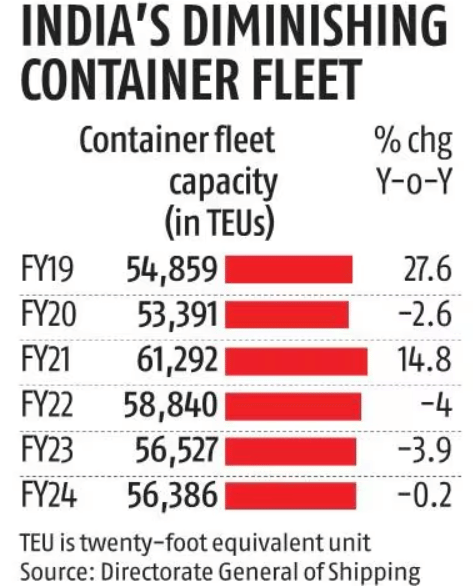
Global Ranking
- India ranks 19th globally in ship ownership, a decline from 17th place in previous years, indicating a need for policy reforms.
Fleet Size and Composition
- Indian-registered ships increased from 1,313 in 2016-17 to 1,526 in 2024.
- However, a significant portion of the fleet consists of aging vessels.
Cargo Handling Capacity
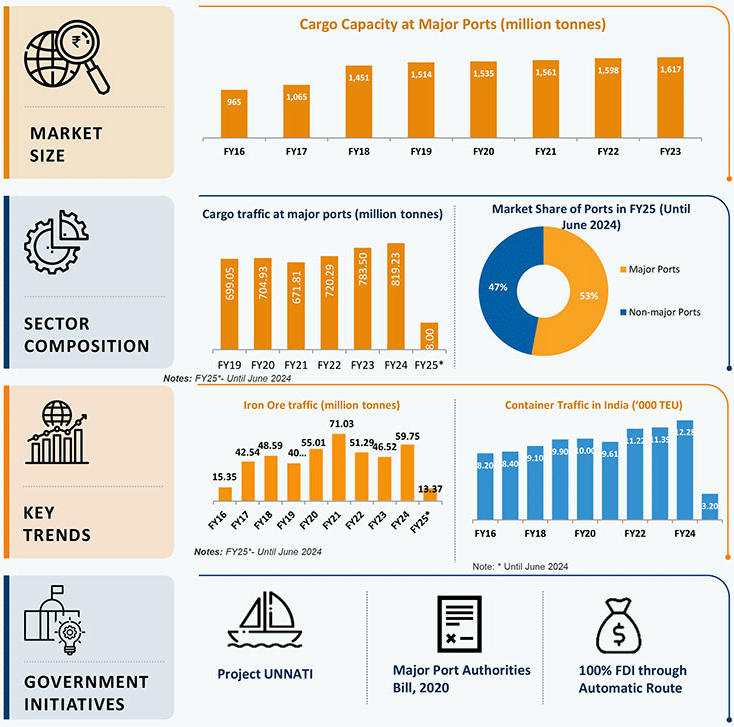
- Major Indian ports handled 1,249.99 million tons of cargo in 2020-21, compared to 1,071.76 million tons in 2016-17.
- Despite this growth, the industry’s annual growth rate is a modest 2.85%.
Dependence on Foreign Vessels
- A significant portion of India's EXIM cargo is carried by foreign-flagged ships.
- Indian vessels struggle to compete due to higher costs and regulatory disadvantages.
Present Status of Ports in India
Government Initiatives: Strengthening India’s Shipping Sector
Sagarmala Programme
- Aims to modernize ports and improve logistics efficiency.
- Out of 839 projects, 241 have been completed, with a total investment of ₹1.22 lakh crore.
- Advantage India
- Focuses on making India a leading maritime hub by improving port efficiency and logistics.
- Project Unnati
- Identifies and implements best practices to improve port performance and operational efficiency.
- Merchant Shipping Bill and Coastal Shipping Bill 2024
- Aims to modernise maritime regulations, simplify processes, and promote ease of doing business.
- Maritime India Vision 2030
- A long-term strategy to enhance port capacity, shipbuilding, and maritime logistics.
- Green Tug Transition Programme
- Encourages the use of environmentally friendly tugboats to reduce carbon emissions in ports.
Port Connectivity and Modernization
- ₹2.06 lakh crore allocated for port connectivity projects.
- ₹2.91 lakh crore dedicated to modernizing ports and improving infrastructure.
Key Challenges in India's Shipping Industry
Funding and Investment Challenges
- High borrowing costs and short loan tenures for Indian shipowners.
- Foreign-flagged vessels enjoy better financing conditions.
Lack of a Strong Shipbuilding Ecosystem
- Heavy dependence on imported machinery, increasing production costs.
- Skill gaps in the workforce limit efficiency and productivity.
Regulatory and Taxation Issues
- 5% IGST on Indian ship purchases, while foreign ships are exempt.
- TDS deductions apply to seafarers on Indian vessels, but not on foreign ships.
Aging Fleet
- The average vessel age was 26 years (2022-23), though it has improved to 21 years.
Limited Shipbuilding Infrastructure
- India lacks large shipyards to construct big vessels for global trade.
- Additional modern shipyards are essential for growth.
Stringent Compliance Requirements
- Regulatory bottlenecks make operations costly for Indian shipping companies.
- Delays in fund repatriation hinder ship acquisitions.
Green Shipping Transition
- Compliance with international emission norms demands significant investment.
Future Roadmap: Way Forward for India's Shipping Industry
Boosting Domestic Shipbuilding
- Establish shipbuilding clusters with private participation incentives.
- Encourage technology transfer and global joint ventures.
Tax Reforms
- Abolish IGST on Indian ship purchases to level the playing field.
- Provide tax exemptions on seafarers’ salaries to retain skilled workers.
Long-Term Financing Solutions
- Utilize the Maritime Development Fund (MDF) to attract foreign investments.
- Extend loan tenures to 7-10 years for ship acquisitions.
Promoting Green Shipping
- Invest in LNG and hydrogen-powered ships to meet international climate goals.
Strengthening Inland Waterways
- Expand the tonnage tax scheme for inland vessels.
- Develop multimodal transport hubs integrating rivers, rail, and roads.
Conclusion
The Indian shipping industry is at a critical juncture. With strong government initiatives, strategic financing, and regulatory reforms, the sector can overcome its current challenges. By promoting domestic shipbuilding, reducing reliance on foreign vessels, and investing in sustainable technologies, India can position itself as a global maritime leader in the coming years.
Download the PREPP App and attempt FREE IAS Exam Mock Tests and get complete study material!

Live Test : UPSC CSE Prelims CSAT (Paper-II) (Oct 08 - 11)
Full Test - 04: UPSC CSE Prelims CSAT (Paper-II)
Full Test - 03: UPSC CSE Prelims CSAT (Paper-II)
UPSC CSE Prelims 2026 GS Paper 1 Question Paper (24-May-2026)
UPSC CSE Prelims 2026 CSAT Paper 2 Question Paper (24-May-2026)

17 February 2025 | The Hindu Must Read Articles | Current Affairs

16 February 2026 | The Hindu Must Read Articles | Current Affairs

13 February 2026 | The Hindu Must Read Articles | Current Affairs









Comments