India's Maritime Transformation: Merchant Shipping and Coastal Shipping Bills 2024
Why in the News?
The Indian Government has introduced the Merchant Shipping Bill, 2024, and the Coastal Shipping Bill, 2024, in the Lok Sabha, aiming to modernize and streamline India's maritime legislation.
Key Highlights of the Bills
Repealing Outdated Laws
- The Merchant Shipping Bill replaces the Merchant Shipping Act, 1958, and the Coasting Vessels Act, 1838.
- The Coastal Shipping Bill supersedes Part XIV of the Merchant Shipping Act, focusing exclusively on coastal trade.
Policy Shift
- Promotes ease of doing business.
- Encourages investor-friendly policies and coastal development initiatives.
Why the New Bills Are Needed
Modernizing Maritime Laws
The Merchant Shipping Act, 1958, is outdated and lacks provisions for modern maritime needs, such as offshore operations, cybersecurity, and seafarers' welfare.
Indian Maritime Sector Growth
- India is the second-largest ship recycler globally and has a growing seafaring workforce of over 280,000, many employed on foreign-flagged vessels.
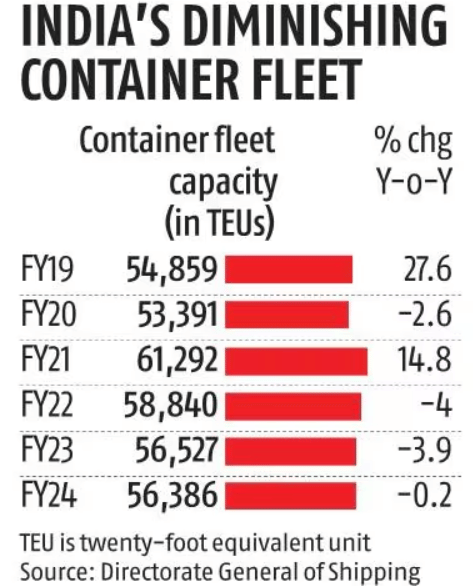
- Despite this growth, outdated laws have stagnated container fleet expansion.
Global Best Practices
Aligns Indian regulations with international standards set by the International Maritime Organization (IMO).
Ease of Doing Business
Simplifies regulations to attract investments and enhance India’s global competitiveness.
Promoting Coastal Shipping
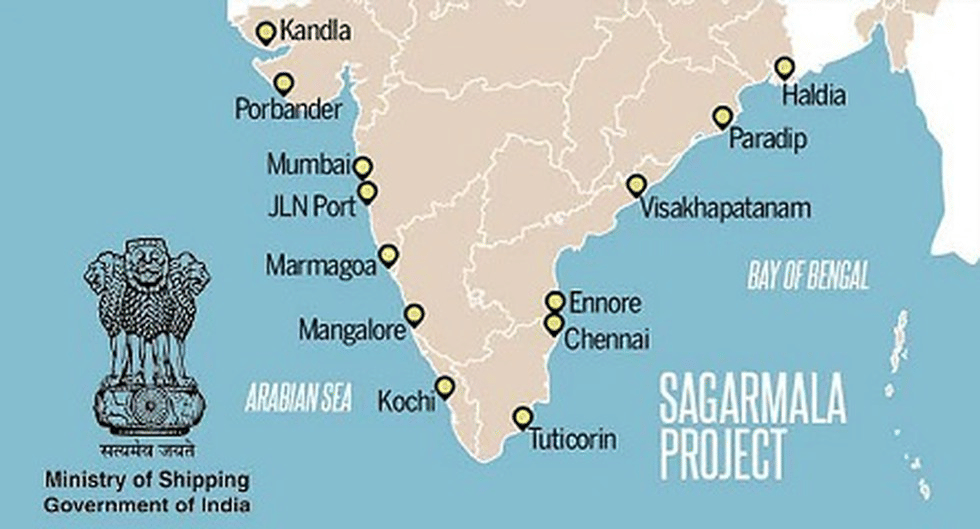
Supports the Sagarmala initiative, a program by the Ministry of Ports, Shipping, and Waterways to develop India's coastal regions and maritime sector.
Key Provisions
Merchant Shipping Bill
- Vessel Registration Reforms:
- Ownership threshold for Indian entities reduced from 100% to 51%.
- Non-Resident Indians (NRIs), Overseas Citizens of India (OCIs), and foreign entities can own shares in Indian-flagged vessels.
- Provisions for temporary and provisional vessel registration.
- Expanded Vessel Definitions:
- Includes offshore crafts, submersibles, amphibious crafts, and Mobile Offshore Drilling Units (MODUs).
- Seafarers' Welfare:
- Extends Maritime Labour Convention protections to Indian seafarers on foreign ships.
- Environmental Commitments:
- Adopts IMO conventions such as MARPOL, the Civil Liability Convention, and the Wreck Removal Convention.
- Implements stricter norms for polluting vessels.
- Maritime Training Regulation:
- Legal framework for over 160 maritime training institutes.
- Eliminates unapproved institutions and standardizes education.
Coastal Shipping Bill
- Deregulation:
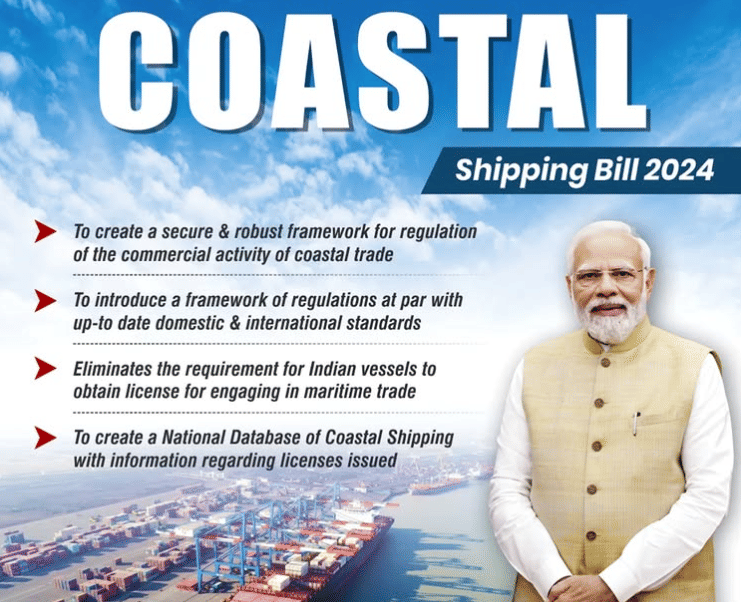
- Simplifies licensing for Indian-owned vessels.
- Database Integration:
- Introduces a unified database and specific provisions for foreign-owned vessels.
- Coastal Operations Streamlining:
- Establishes a dedicated framework for operations in Indian coastal waters.
- Penalties and Compliance:
- Revised penalties for violations, with fines up to Rs. 15 lakh.
- Provisions for vessel detention and civil penalties for non-compliance.
Expected Benefits
- Enhanced Investment:
- Attracts global investors with relaxed ownership criteria and streamlined policies.
- Improved Safety:
- Comprehensive regulation reduces safety risks for offshore and mechanized vessels.
- Environmental Gains:
- Adherence to international pollution control standards.
- Initiatives like the Swachh Sagar portal improve maritime waste management.
- Seafarer Welfare:
- Better working conditions enhance competitiveness of Indian seafarers.
Challenges to Implementation
- Administrative Capacity:
- Requires coordination among agencies like the Director General of Shipping, coastal authorities, and port regulators.
- Cost Implications:
- Compliance with new norms may increase operational costs, affecting smaller operators.
- Infrastructure Gaps:
- Ports like Kandla and Vizag need significant upgrades.
- Resistance to Change:
- Entrenched interests in coastal shipping and ship recycling may oppose reforms.
- Global Competition:
- India must contend with established maritime hubs like Singapore.
Way Forward
- Capacity Building:
- Train personnel and implement advanced systems for vessel tracking.
- Establish dedicated maritime courts for faster dispute resolution.
- Incentives for Compliance:
- Subsidies or tax breaks for smaller operators adhering to new safety and environmental norms.
- Boosting Coastal Shipping:
- Expand the Sagarmala initiative to underdeveloped coastal regions.
- Focus on Green Shipping:
- Collaborate with global partners on sustainable maritime practices.
- Seafarer Advocacy:
- Establish a grievance redressal system for Indian seafarers on foreign-flagged ships.
- Port Infrastructure Development:
- Upgrade existing ports and develop new ones to meet growing maritime demands.
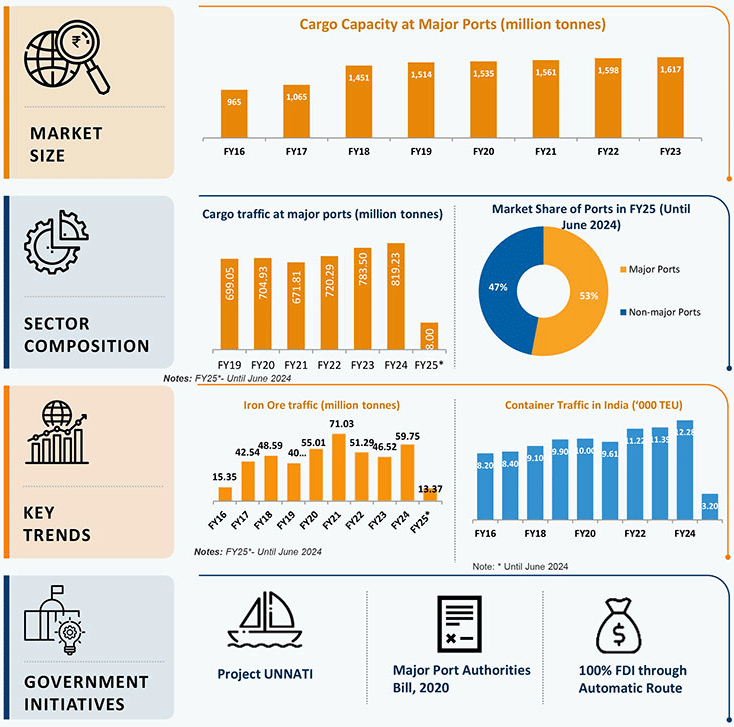
Present Status of Ports in India
Conclusion
By modernizing India’s maritime laws, the Merchant Shipping Bill and Coastal Shipping Bill, 2024, aim to position India as a global maritime powerhouse while addressing domestic challenges and aligning with international standards.
Download the PREPP App and attempt FREE IAS Exam Mock Tests and get complete study material!
Live Test : UPSC IAS : GS - Indian Geography - Subject Knowledge Test

Live Test : UPSC CSE Prelims CSAT (Paper-II) (Oct 08 - 11)
Full Test - 04: UPSC CSE Prelims CSAT (Paper-II)
Full Test - 03: UPSC CSE Prelims CSAT (Paper-II)
UPSC CSE Prelims 2026 GS Paper 1 Question Paper (24-May-2026)
UPSC CSE Prelims 2026 CSAT Paper 2 Question Paper (24-May-2026)

17 February 2025 | The Hindu Must Read Articles | Current Affairs

16 February 2026 | The Hindu Must Read Articles | Current Affairs

13 February 2026 | The Hindu Must Read Articles | Current Affairs









Comments