Indian Rock Python: A Conservation Spotlight in Moyar Valley
Why in the News?
The Indian rock python population is declining across Tamil Nadu, but the species is thriving in the biodiverse Moyar Valley.
Why is Indian Rock Python Thriving in Moyar Valley?
Moyar Valley, nestled between Mudumalai Tiger Reserve (MTR), Sathyamangalam Tiger Reserve (STR), and Bandipur Tiger Reserve, has become a safe haven for the Indian rock python. This region offers:
- Large Landscapes: Vast, undisturbed spaces ideal for wildlife.
- Minimal Human Interference: Reduced human activity supports natural habitats.
- Favorable Climate: Ranging from 17°C in winter to 42°C in summer.
- Abundant Resources: Ample prey and riverbeds for thermoregulation.
Effective conservation measures have contributed significantly to the survival of this species in the Moyar Valley.
About the Indian Rock Python
Scientific Classification:
- Scientific Name: Python molurus
- Common Names: Black-tailed python, Indian python, Asian rock python.
Key Characteristics:
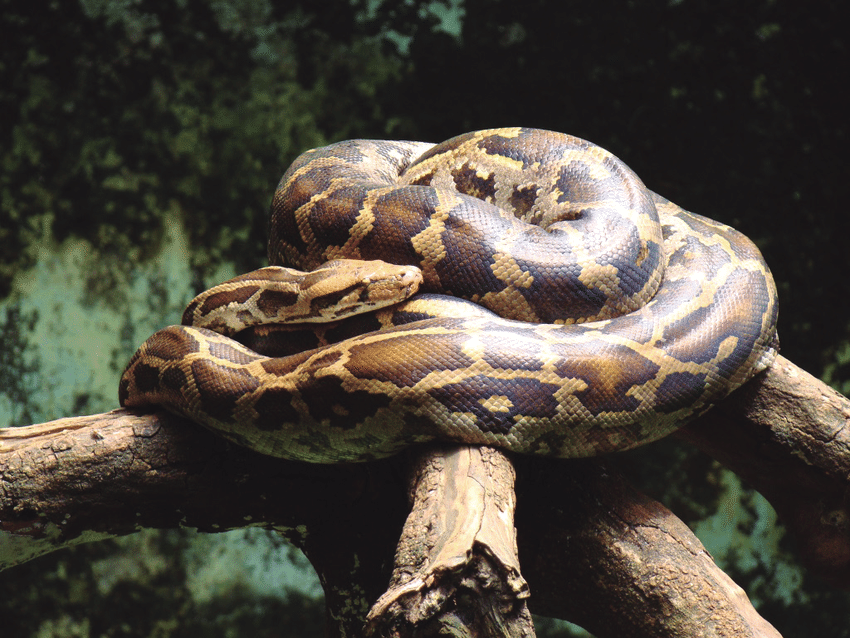
- Size: One of the largest snake species, capable of growing up to 15 feet.
- Appearance: Color varies by terrain, from tan to dark brown, with lighter patterns in drier regions.
- Behavior: Docile and slow-moving, rarely aggressive toward humans.
- Diet: Preys on mammals, birds, and reptiles, using constriction to subdue its prey.
Habitat and Distribution
Habitat:
The Indian rock python inhabits a variety of ecosystems, including:
- Grasslands
- Swamps
- Rocky foothills
- Woodlands
- River valleys
Geographical Range:
The species is distributed across the Indian subcontinent, including:
- India
- Pakistan
- Sri Lanka
- Nepal
- Bhutan
- Bangladesh
Threats to Survival
Despite its adaptability, the Indian rock python faces numerous challenges:
- Habitat Loss:
- Infrastructure development
- Mining activities
- Deforestation
- Poaching and Persecution:
- Hunted for skin and traditional medicine.
- Invasive Species:
- The spread of the Prosopis juliflora shrub disrupts their preferred habitats.
Conservation Status
The Indian rock python is protected under various conservation frameworks:
- IUCN Status: Near Threatened
- Wildlife Protection Act: Schedule I
- CITES Status: Appendix I
These measures underline the importance of ongoing conservation efforts to ensure the species' survival.
Conclusion
The thriving Indian rock python population in Moyar Valley serves as a testament to the impact of effective conservation initiatives. Protecting this species requires continued efforts to mitigate habitat loss and curb human interference.
Download the PREPP App and attempt FREE IAS Exam Mock Tests and get complete study material!

Live Test : UPSC CSE Prelims CSAT (Paper-II) (Oct 08 - 11)
Full Test - 04: UPSC CSE Prelims CSAT (Paper-II)
Full Test - 03: UPSC CSE Prelims CSAT (Paper-II)
UPSC CSE Prelims 2026 GS Paper 1 Question Paper (24-May-2026)
UPSC CSE Prelims 2026 CSAT Paper 2 Question Paper (24-May-2026)

17 February 2025 | The Hindu Must Read Articles | Current Affairs

16 February 2026 | The Hindu Must Read Articles | Current Affairs

13 February 2026 | The Hindu Must Read Articles | Current Affairs









Comments