Indian Long-Billed Vulture: Conservation Success at Ramadevarabetta
Why in the News?
The Indian Long-Billed Vulture (Gyps indicus), also known as the Indian Vulture, is witnessing a conservation success story at Ramadevarabetta Vulture Sanctuary near Bengaluru. This marks the fourth consecutive year of successful breeding at India's only vulture sanctuary, offering hope for this critically endangered species.
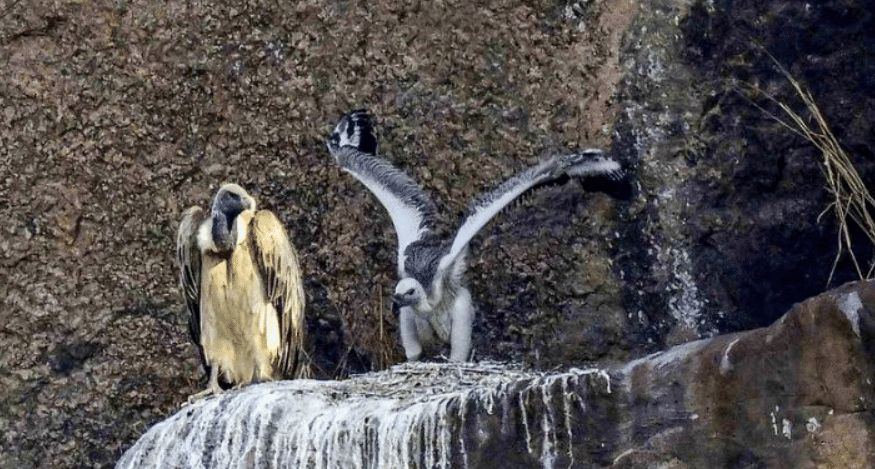
Indian Long-Billed Vulture: An Overview
Scientific Classification and Importance
- Scientific Name: Gyps indicus
- Family: Accipitridae
- Ecological Role: As scavengers, these vultures help maintain ecosystem balance by feeding on animal carcasses, preventing the spread of diseases.
Habitat and Distribution
- Preferred Habitat: Cliffs, rocky hills, open fields, semi-deserts, and areas near human settlements like garbage dumps and slaughterhouses.
- Geographical Range: Primarily found in central and peninsular India, with populations in southwest Pakistan, Bangladesh, and Nepal.
- Migration Pattern: Non-migratory, but covers large distances in search of food.
Physical Characteristics and Behavior
- Appearance: Medium-sized vulture with a pale brown body, dark flight feathers, and a small semi-bald head.
- Wingspan: 2.22 to 2.58 meters.
- Weight: 5.5 to 6.3 kg.
- Flight Abilities: Uses thermal currents to soar, reaching speeds of up to 35 km/h and staying airborne for hours.
- Social Behavior: Forms small flocks and is often seen feeding with other vulture species.
- Breeding: Primarily nests on cliffs, lays one egg annually, and both parents share incubation duties.
Threats to the Indian Long-Billed Vulture
The population of the Indian Long-Billed Vulture has drastically declined due to several threats, including:
- Poisoning from Veterinary Drugs: The widespread use of diclofenac, an anti-inflammatory drug used in livestock, causes fatal kidney failure in vultures.
- Other Harmful NSAIDs: Drugs like aceclofenac and ketoprofen continue to pose a significant threat.
- Habitat Destruction: Deforestation, urbanization, and loss of nesting sites impact vulture populations.
- Electrocution and Collisions: Power lines and windmills cause fatal accidents.
- Roadkills: Vultures scavenging on carcasses near roads are at risk of vehicular accidents.
Conservation Efforts and Protection Status
- IUCN Red List: Critically Endangered
- Wildlife Protection Act, 1972 (India): Schedule I
- CITES (Convention on International Trade in Endangered Species of Wild Fauna and Flora): Appendix II
Successful Conservation at Ramadevarabetta Vulture Sanctuary
Ramadevarabetta, India’s only designated vulture sanctuary, has seen consistent breeding success for four years. Conservation efforts include:
- Ban on Diclofenac: The Indian government banned diclofenac for veterinary use to reduce vulture mortality.
- Breeding Programs: Sanctuaries and breeding centers play a crucial role in sustaining the population.
- Awareness Campaigns: Educating farmers and veterinarians on safer alternatives to harmful drugs.
The Way Forward
To ensure the survival of the Indian Long-Billed Vulture, further steps are essential:
- Strict Enforcement of Drug Bans: Monitoring and banning alternative harmful NSAIDs like aceclofenac.
- Expanding Protected Areas: Establishing more vulture-safe zones.
- Research and Monitoring: Conducting studies on population trends and threats.
Conclusion
The continued success at Ramadevarabetta Vulture Sanctuary is a beacon of hope for the Indian Long-Billed Vulture. Conservation efforts, strict regulations, and public awareness are crucial in ensuring this magnificent scavenger thrives in the wild.
Download the PREPP App and attempt FREE IAS Exam Mock Tests and get complete study material!

Live Test : UPSC CSE Prelims CSAT (Paper-II) (Oct 08 - 11)
Full Test - 04: UPSC CSE Prelims CSAT (Paper-II)
Full Test - 03: UPSC CSE Prelims CSAT (Paper-II)
UPSC CSE Prelims 2026 GS Paper 1 Question Paper (24-May-2026)
UPSC CSE Prelims 2026 CSAT Paper 2 Question Paper (24-May-2026)

17 February 2025 | The Hindu Must Read Articles | Current Affairs

16 February 2026 | The Hindu Must Read Articles | Current Affairs

13 February 2026 | The Hindu Must Read Articles | Current Affairs









Comments