India-China Bilateral Relations: An Evolving Geopolitical Landscape
Why in the News?
Prime Minister Narendra Modi recently emphasized that India and China have restored "normalcy" at the border and are working to rebuild ties to pre-2020 levels. This statement signals a crucial shift in diplomatic engagement between the two Asian giants.
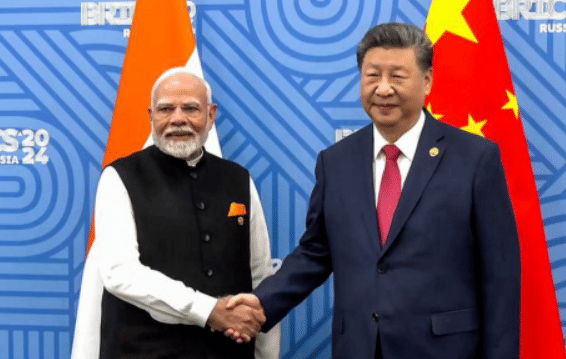
Recent Developments in India-China Relations
- Chinese Foreign Ministry spokesperson Mao Ning welcomed Modi’s remarks, highlighting the historical ties and cooperation between the two nations.
- Modi compared India-China relations to a familial bond, acknowledging occasional disagreements but stressing dialogue over discord.
- The October 2023 Modi-Xi meeting in St. Petersburg played a pivotal role in easing tensions.
- National Security Advisor Ajit Doval and Foreign Secretary Vikram Misri visited Beijing for high-level discussions.
- Modi is expected to attend the June 2024 SCO Summit in China, further strengthening diplomatic outreach.
Historical Perspective on India-China Relations
- Ancient & Colonial Ties
- India and China have shared cultural and economic relations for thousands of years, facilitated by the Silk Road and the spread of Buddhism.
- During the 19th century, China engaged in opium trade with the East India Company, impacting both nations' economies.
- Post-Independence Recognition & Cooperation
- In 1950, India became one of the first non-communist countries to recognize the People's Republic of China (PRC).
- Both countries played crucial roles in countering Japan during World War II.
Major Conflicts Between India and China
- Sino-Indian War (1962): A significant military conflict resulting in a Chinese victory and unresolved border disputes.
- Nathu La & Cho La Clashes (1967): Demonstrated India's improved military readiness.
- Sumdorong Chu Standoff (1987): Nearly led to war but was resolved through diplomacy.
- Doklam Standoff (2017-18): A 73-day military standoff over disputed territory.
- Galwan Valley Clash (2020): A violent confrontation resulting in casualties on both sides, escalating border tensions.
India’s Evolving China Policy
Phases of India's China Strategy
- Initial Friendship: The "Hindi-Chini Bhai-Bhai" era promoted brotherhood.
- Post-1962 Caution: Strengthened border defenses and strategic planning.
- Economic Engagement (1990s-Present): Trade relations expanded despite strategic autonomy concerns.
- Modern Strategic Shift: India has deepened partnerships with the US, Japan, and Australia to counterbalance China's influence.
India-China Trade and Economic Relations
- Bilateral Trade: Grew by 66.38% from 2016 to 2023, reaching $115.82 billion in 2023.
- Trade Deficit: India’s trade deficit with China was $83.36 billion in 2023 due to higher Chinese exports.
- Investment: Chinese investments in India stood at $5.4 billion by 2021, while Indian investments in China amounted to $943.96 million.
- Economic Challenges: Limited access for Indian pharmaceuticals and IT services in China remains a concern.
Key Challenges in India-China Relations
- Border Disputes: Ongoing tensions in Arunachal Pradesh and Ladakh.
- Trade Imbalance: India's dependency on Chinese imports raises concerns about economic security.
- Strategic Rivalry: Both nations compete for influence in South Asia and the Indian Ocean region.
- Trust Deficit: Border incursions and China’s ties with Pakistan hinder confidence-building efforts.
- Technological Competition: India has imposed restrictions on Chinese tech firms over security concerns.
Strategic Considerations in India-China Relations
- US-China Rivalry: India’s foreign policy is increasingly shaped by US-China tensions.
- Asian Power Dynamics: India advocates for a multipolar Asia, while China seeks dominance.
- Pakistan Factor: China’s close ties with Pakistan influence India’s strategic calculus.
- Maritime Security: India is countering China’s naval expansion in the Indian Ocean.
Steps to Strengthen India-China Relations
- Diplomatic and Military Initiatives
- Bilateral Dialogues: Regular discussions under the Working Mechanism for Consultation & Coordination on India-China Border Affairs (WMCC).
- Military Talks: Regular Corps Commander-level meetings to manage border tensions.
- Multilateral Engagements: Platforms like BRICS, SCO, and Quad play a role in India’s diplomatic outreach.
- Economic and Infrastructure Measures
- Reducing Dependency: India is diversifying supply chains and boosting domestic manufacturing under "Make in India."
- Border Infrastructure Development: Enhanced road, rail, and military infrastructure along the LAC.
- Trade Dialogues: Platforms like the Joint Economic Group (JEG) and Strategic Economic Dialogue (SED) focus on macroeconomic cooperation.
Way Forward: A Pragmatic Approach
- Balanced Engagement: Combining economic collaboration with strategic deterrence.
- Resolving Border Disputes: Mutually acceptable solutions are essential to long-term stability.
- Trade Rebalancing: Reducing the trade deficit and leveraging Chinese investments selectively.
- Regional Cooperation: Joint efforts in climate change and counter-terrorism can enhance trust.
- People-to-People Ties: Strengthening cultural, academic, and tourism exchanges to foster better understanding.
- Multilateral Coordination: Utilizing global forums to address bilateral concerns and strategic interests.
Conclusion
India-China relations remain complex, shaped by historical ties, economic interdependence, and strategic competition. While challenges persist, diplomatic engagement and economic recalibration can pave the way for a stable and mutually beneficial relationship in the future.
Download the PREPP App and attempt FREE IAS Exam Mock Tests and get complete study material!
*The article might have information for the previous academic years, please refer the official website of the exam.
How likely are you to recommend Prepp.in to a friend or a colleague?
Not so likely
Highly likely
UPSC CSE (IAS) 2027 Prelims Mock Test Series
Live Quizzes
Quizzes
Live Tests

• Live
Live Test : UPSC CSE Prelims CSAT (Paper-II) (Oct 08 - 11)
120 Minutes
80 Questions
200 Marks
English, Hindi
MEDIUM
Test will end in 05:30:58
Full Tests
Full Test - 04: UPSC CSE Prelims CSAT (Paper-II)
120 Minutes
80 Questions
200 Marks
English, Hindi
MEDIUM
Attempted by 19 aspirants in 12 hours
Full Test - 03: UPSC CSE Prelims CSAT (Paper-II)
120 Minutes
80 Questions
200 Marks
English, Hindi
MEDIUM
Attempted by 20 aspirants in 12 hours
Previous Year Papers
UPSC CSE Prelims 2026 GS Paper 1 Question Paper (24-May-2026)
120 Minutes
100 Questions
200 Marks
2,989 Attempted
English, Hindi
MEDIUM
Attempted by 12 aspirants in 12 hours
UPSC CSE Prelims 2026 CSAT Paper 2 Question Paper (24-May-2026)
120 Minutes
80 Questions
200 Marks
3,167 Attempted
English, Hindi
MEDIUM
Attempted by 13 aspirants in 12 hours
Videos

17 February 2025 | The Hindu Must Read Articles | Current Affairs
7,202 Views
•4
•7 months ago

16 February 2026 | The Hindu Must Read Articles | Current Affairs
6,962 Views
•4
•7 months ago

13 February 2026 | The Hindu Must Read Articles | Current Affairs
8,765 Views
•5
•7 months ago

12 February 2026 | The Hindu Must Read Articles | Current Affairs
5,788 Views
•4
•7 months ago






Also Check
IAS Exam Overview
IAS Exam Admit Card
IAS Exam Question Paper 2026
IAS Exam Mains Syllabus
IAS Exam Application Process
IAS Exam Eligibility
IAS Exam Result
IAS Exam Exam Pattern
IAS Exam CSAT Syllabus
IAS Exam Answer Key
IAS Exam Previous Year Paper
IAS Exam Current Affairs
IAS Exam Mains Question Paper
IAS Exam IAS Courses
IAS Exam UPSC Study Notes
IAS Exam Foundation Course 2024
IAS Exam Prelims Question Paper
IAS Exam Exam Center
IAS Exam Foundation Course 2025
IAS Exam Notification 2026
IAS Exam IAS Success Stories
IAS Exam Salary
IAS Exam Cutoff
IAS Exam Mock Tests
IAS Exam News


Comments