Illegal Immigration Crisis in India: Causes, Consequences, and Solutions
Why in the News?
In a major police crackdown in Jaipur, approximately 500 individuals were detained, including 394 Rohingya refugees from Myanmar and several alleged Bangladeshi nationals. This operation highlights the growing challenge of illegal immigration in India.
What is Illegal Immigration?
As defined under the Citizenship Act, 1955, an illegal immigrant is:
- A foreign national who enters India on valid travel documents but overstays their permitted duration.
- A foreign national who enters India without valid travel documents.
Historical Context of Migration
India has historically experienced large-scale migration from neighboring countries like Bangladesh, Myanmar, and Pakistan, driven by:
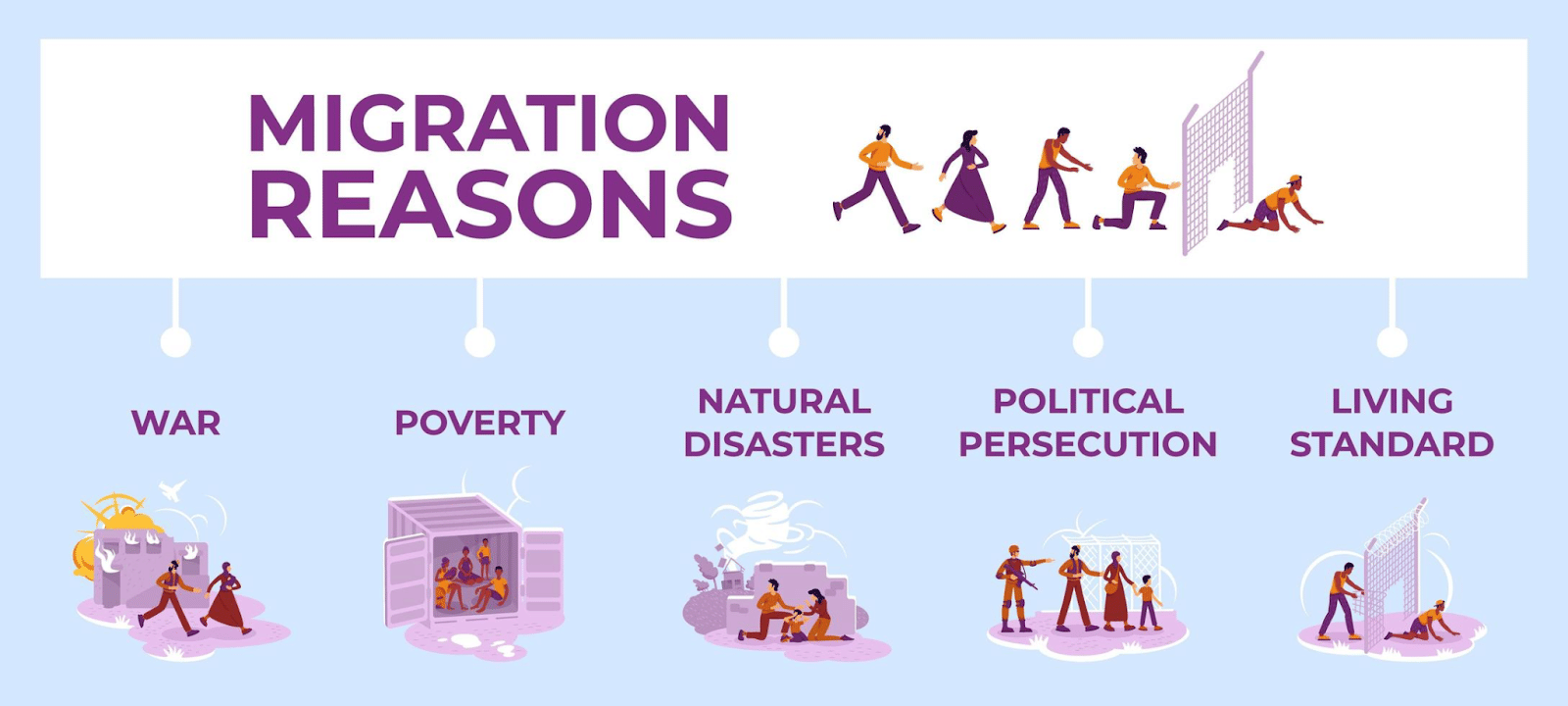
- Political Persecution: The 1971 Bangladesh Liberation War caused a significant influx of refugees.
- Economic Disparities: Better opportunities in India attract migrants.
- Religious Persecution: Minority communities from these countries seek refuge in India.
Present Status of Illegal Immigrants in India
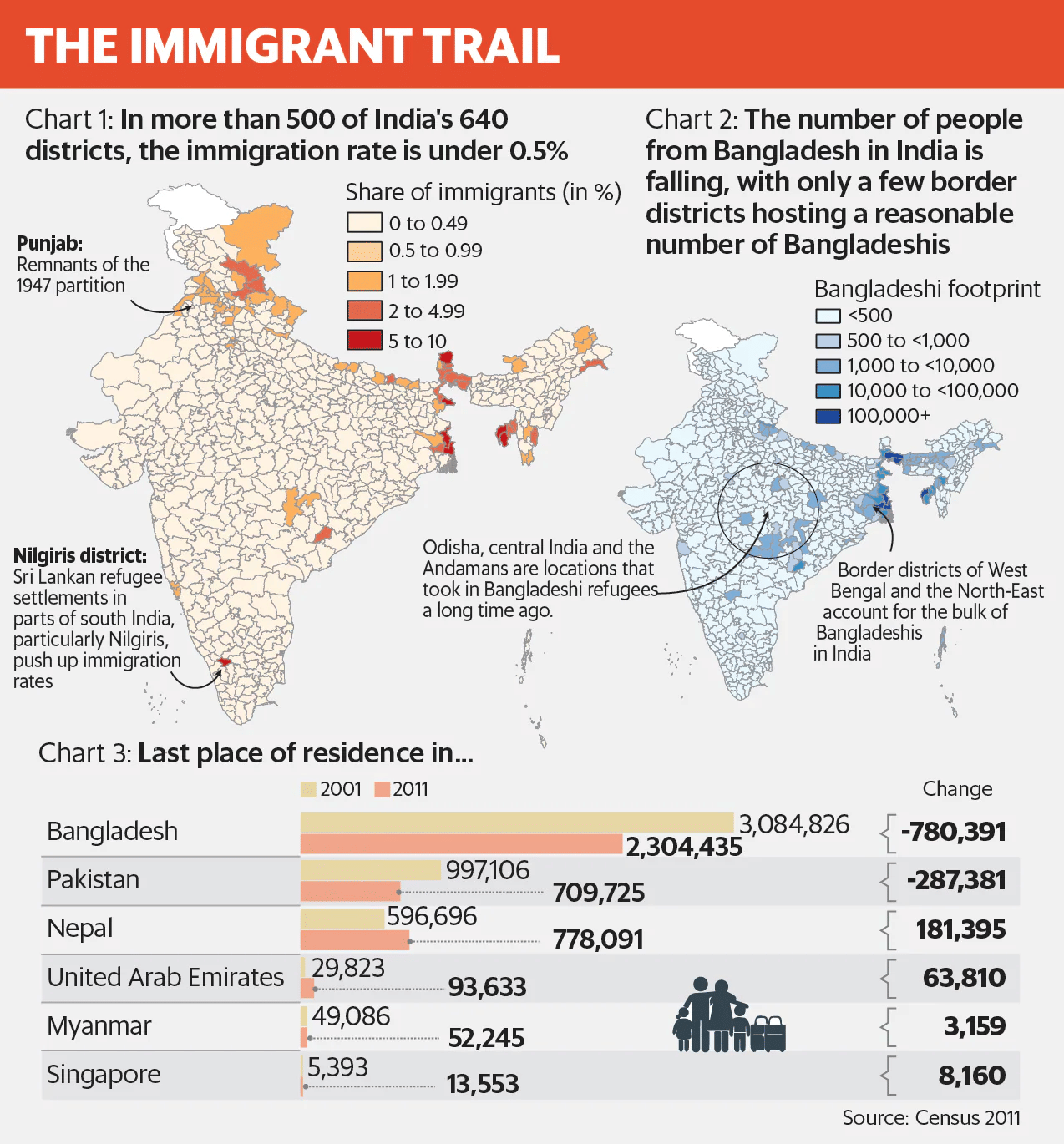
- Rohingya Refugees: Over 10,000 registered families live in India (as of 2015), with government estimates placing the number of illegal Rohingya immigrants at 40,000+.
- Bangladeshi Nationals: Bangladeshi migrants constitute the largest group, with millions residing across India.
- Other Groups: Migrants from Pakistan, Afghanistan, and Myanmar also contribute to the illegal immigrant population, particularly in Assam, West Bengal, and Manipur.
Legal Framework to Address Illegal Immigration
- Citizenship Act, 1955: Defines and penalizes illegal immigration.
- Foreigners Act, 1946: Empowers the central government to deport illegal immigrants.
- Passport (Entry into India) Act, 1920: Regulates the entry of individuals into India.
- Foreigners Tribunals: Determine the legal status of suspected illegal immigrants.
- National Register of Citizens (NRC): Updated in Assam to detect illegal immigrants.
- Citizenship (Amendment) Act, 2019 (CAA): Offers citizenship to certain persecuted minorities but excludes Muslims, sparking debates.
Impacts of Illegal Immigration
Economic Consequences
- Labor Exploitation: Migrants often work in informal, low-paying jobs.
- Resource Strain: Increased demand for housing, healthcare, and education.
Social and Cultural Issues
- Demographic Shifts: Alters local populations, particularly in border states like Assam.
- Social Tensions: Leads to identity crises and conflicts among communities.
Security Concerns
- Rise in Organized Crime: Human smuggling and trafficking are prevalent.
- Political Instability: Illegal migration often fuels regional political disputes.
Challenges in Combating Illegal Immigration
- Porous Borders: Long and unguarded borders with Bangladesh and Nepal.
- Lack of Comprehensive Refugee Law: Absence of legal protection for refugees.
- Coordination Gaps: Poor collaboration between central and state governments.
- Humanitarian Dilemmas: Balancing security with human rights obligations.
Government Initiatives
- Border Fencing and Surveillance: Use of technology like CIBMS (Comprehensive Integrated Border Management System).
- Aadhaar Project: Facilitates identity verification for legal residents.
- Detention Centers: Holding facilities for deportation-bound migrants.
- Awareness Campaigns: Initiatives like ‘Surakshit Jayen Prashikshit Jayen’ promote legal migration.
Proposed Solutions
- Enact a Refugee Law: Define rights and responsibilities for refugees and asylum seekers.
- Strengthen Border Infrastructure: Deploy advanced surveillance tools and trained personnel.
- Foster International Cooperation: Collaborate with neighboring countries to address root causes of migration.
- Community Engagement: Encourage local participation to reduce social tensions.
Conclusion
Illegal immigration in India poses significant challenges, from economic strain to social tensions and security concerns. A balanced approach, combining stringent border controls with humanitarian policies, is crucial to managing this issue effectively.
FAQs
1. Who are illegal immigrants in India?
Illegal immigrants are individuals who enter or stay in India without valid travel documents or after their visa expires.
2. What is the Citizenship Amendment Act (CAA)?
The CAA grants citizenship to persecuted non-Muslim minorities from Afghanistan, Pakistan, and Bangladesh who entered India before December 31, 2014.
3. What is the NRC in Assam?
The NRC is a register to identify Indian citizens and detect illegal immigrants in Assam.
Download the PREPP App and attempt FREE IAS Exam Mock Tests and get complete study material!

Live Test : UPSC CSE Prelims CSAT (Paper-II) (Oct 08 - 11)
Full Test - 04: UPSC CSE Prelims CSAT (Paper-II)
Full Test - 03: UPSC CSE Prelims CSAT (Paper-II)
UPSC CSE Prelims 2026 GS Paper 1 Question Paper (24-May-2026)
UPSC CSE Prelims 2026 CSAT Paper 2 Question Paper (24-May-2026)

17 February 2025 | The Hindu Must Read Articles | Current Affairs

16 February 2026 | The Hindu Must Read Articles | Current Affairs

13 February 2026 | The Hindu Must Read Articles | Current Affairs









Comments