Houthis Launch Hypersonic Missile at Tel Aviv: Key Insights
Why in the News?
Yemen’s Houthi group recently launched a hypersonic ballistic missile targeting Ben Gurion Airport in Tel Aviv. The missile was successfully intercepted by Israel’s Defense Forces (IDF), highlighting escalating tensions in the region.
Who Are the Houthis?
The Houthis, formally known as Ansar Allah (“Partisans of God”), are a political and military organization deeply rooted in Yemen’s Zaidi Shia Muslim minority.
Leadership:
- Founded by Hussein al-Houthi in the 1990s.
- Currently led by Abdul Malik al-Houthi, Hussein’s brother.
Political Identity:
- Aligned with the Iranian-led "axis of resistance" against Israel, the U.S., and Western powers.
A Brief History of the Houthis
- Emergence in the 1990s:
- Initially a religious and social movement advocating for Zaidi Shia rights in northern Yemen.
- Rebellions Against Saleh:
- In the early 2000s, launched uprisings against then-President Ali Abdullah Saleh, accusing him of corruption and aligning with the U.S. and Saudi Arabia.
- Role in Yemen’s Arab Spring:
- Participated in the 2011 uprising but rejected the subsequent reconciliation deal.
- Civil War and Takeover:
- It allied with former President Saleh in 2014 to seize Yemen’s capital, Sanaa.
- This prompted a Saudi-led coalition intervention in 2015.
The Houthis’ Present Influence
- Control in Yemen:
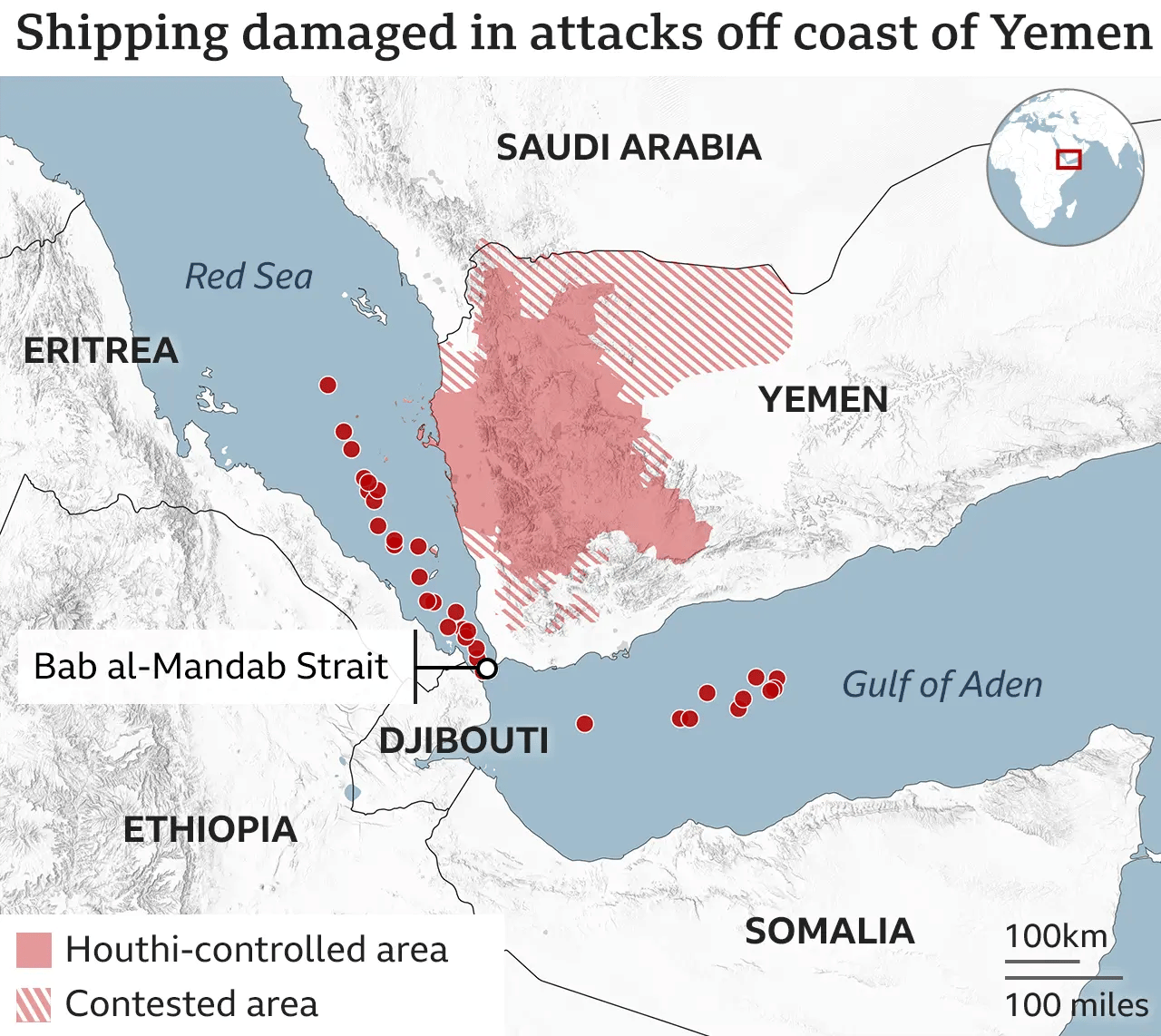
- Dominate Sanaa and much of northwestern Yemen, including key Red Sea coastal regions.
- Alignment with Iran:
- Consider themselves part of an "axis of resistance" alongside Iran, Hezbollah, and Hamas.
- Allegedly receive weapons, training, and intelligence from Iran, though Tehran denies direct involvement.
- Solidarity with Palestinians:
- Missile and drone attacks on Israel underscore their alignment with the Israel-Hamas conflict.
- Maritime Threats:
- Increasingly target ships in the Red Sea, including vessels linked to Israeli ports.
- International Designations:
- The U.S. and some other countries classify the Houthis as a terrorist organization.
Global Concerns
Houthi actions risk escalating regional conflicts, especially involving Iran, Saudi Arabia, and other stakeholders. Analysts warn that their growing capabilities and attacks on maritime and land-based targets could destabilize the Middle East further.
Conclusion
The Houthis continue to play a pivotal role in Yemen’s ongoing conflict and the broader geopolitical landscape of the Middle East. Their missile attack on Tel Aviv—despite being intercepted—underscores their willingness to engage in high-profile regional conflicts.
Download the PREPP App and attempt FREE IAS Exam Mock Tests and get complete study material!
Live Test : UPSC IAS : GS - Indian Geography - Subject Knowledge Test

Live Test : UPSC CSE Prelims CSAT (Paper-II) (Oct 08 - 11)
Full Test - 04: UPSC CSE Prelims CSAT (Paper-II)
Full Test - 03: UPSC CSE Prelims CSAT (Paper-II)
UPSC CSE Prelims 2026 GS Paper 1 Question Paper (24-May-2026)
UPSC CSE Prelims 2026 CSAT Paper 2 Question Paper (24-May-2026)

17 February 2025 | The Hindu Must Read Articles | Current Affairs

16 February 2026 | The Hindu Must Read Articles | Current Affairs

13 February 2026 | The Hindu Must Read Articles | Current Affairs









Comments