Hornbill Festival 2023: Celebrating Naga Culture Amid Liquor Law Controversy
Why in the News?
The 25th Hornbill Festival, Nagaland’s premier cultural event, has stirred debate this year due to the relaxation of liquor prohibition laws during the celebrations.
Liquor Laws in Nagaland and the Hornbill Festival Controversy
Nagaland Liquor Total Prohibition (NLTP) Act, 1989
- The NLTP Act bans the production, sale, and consumption of alcohol in Nagaland, reflecting the state’s strong Christian values.
- With approximately 87% of Nagaland’s population adhering to Christianity—predominantly Baptists—alcohol consumption is widely regarded as morally unacceptable.
Traditional Practices and Alcohol
- Despite the prohibition, brewing and consuming traditional rice beer remains integral to Naga culture.
- Such practices are typically tolerated during events like the Hornbill Festival, though openly selling alcohol has been a contentious issue.
Current Controversy
- This year, the Nagaland government permitted the sale of Indian-Made Foreign Liquor (IMFL) for tourists and vendors at the festival venue.
- Critics argue that tourists visit the festival for its unique cultural experiences, not for access to alcohol.
What is the Hornbill Festival?
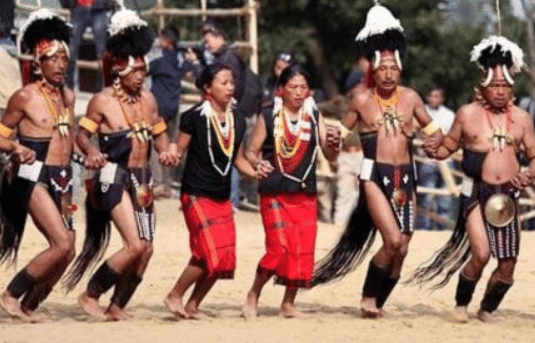
The Hornbill Festival, launched in 2000, is a celebration of Nagaland’s rich heritage, held annually from December 1 to 10.
- Named after the hornbill bird, a significant symbol in Naga folklore, the festival reflects the state’s vibrant traditions.
- The Great Indian Hornbill is listed as Vulnerable on the IUCN Red List, emphasizing the importance of its conservation.
Significance of the Festival
Organized by the Nagaland government, the festival promotes:
- Cultural heritage: It showcases the diverse traditions of Nagaland’s 14 recognized tribes.
- Tourism and economy: As the state’s flagship event, it attracts tourists worldwide, contributing to local businesses and the economy.
- Unity among tribes: The event acts as a platform for cultural exchange, fostering unity among the Naga communities.
Hornbill Festival Activities
The festival is hosted at Kisama Heritage Village and features:
- Traditional performances: Dance, music, and storytelling by Naga tribes.
- Crafts and cuisine: Stalls selling local crafts and authentic Naga delicacies.
- Sports and entertainment: Highlights include Naga wrestling, indigenous games, fashion shows, and the Hornbill International Rock Festival.
Cultural Significance and Global Appeal
Dubbed the “Festival of Festivals,” the Hornbill Festival is a global attraction, blending tradition with modernity. It underscores Nagaland’s efforts to preserve its culture while embracing a global audience.
Conclusion
While the decision to relax liquor laws has sparked controversy, the Hornbill Festival remains a vibrant celebration of Naga culture and traditions. Tourists and locals alike are drawn to its unique blend of heritage, arts, and community spirit, making it a must-visit event for cultural enthusiasts.
Download the PREPP App and attempt FREE IAS Exam Mock Tests and get complete study material!

Live Test : UPSC CSE Prelims CSAT (Paper-II) (Oct 08 - 11)
Full Test - 04: UPSC CSE Prelims CSAT (Paper-II)
Full Test - 03: UPSC CSE Prelims CSAT (Paper-II)
UPSC CSE Prelims 2026 GS Paper 1 Question Paper (24-May-2026)
UPSC CSE Prelims 2026 CSAT Paper 2 Question Paper (24-May-2026)

17 February 2025 | The Hindu Must Read Articles | Current Affairs

16 February 2026 | The Hindu Must Read Articles | Current Affairs

13 February 2026 | The Hindu Must Read Articles | Current Affairs









Comments