Ghodpara (Nilgai): Culling, Habitat, and Conservation Status
Why in the News?
Over 4,250 Nilgais (Blue Bulls) were culled in Bihar within a year due to extensive crop damage, as per the state government. The Bihar administration has classified Nilgais as vermin in certain regions, granting permission to shoot them to control their population. The culling was conducted under official authorization from the Union Ministry of Environment, Forest, and Climate Change (MoEFCC).
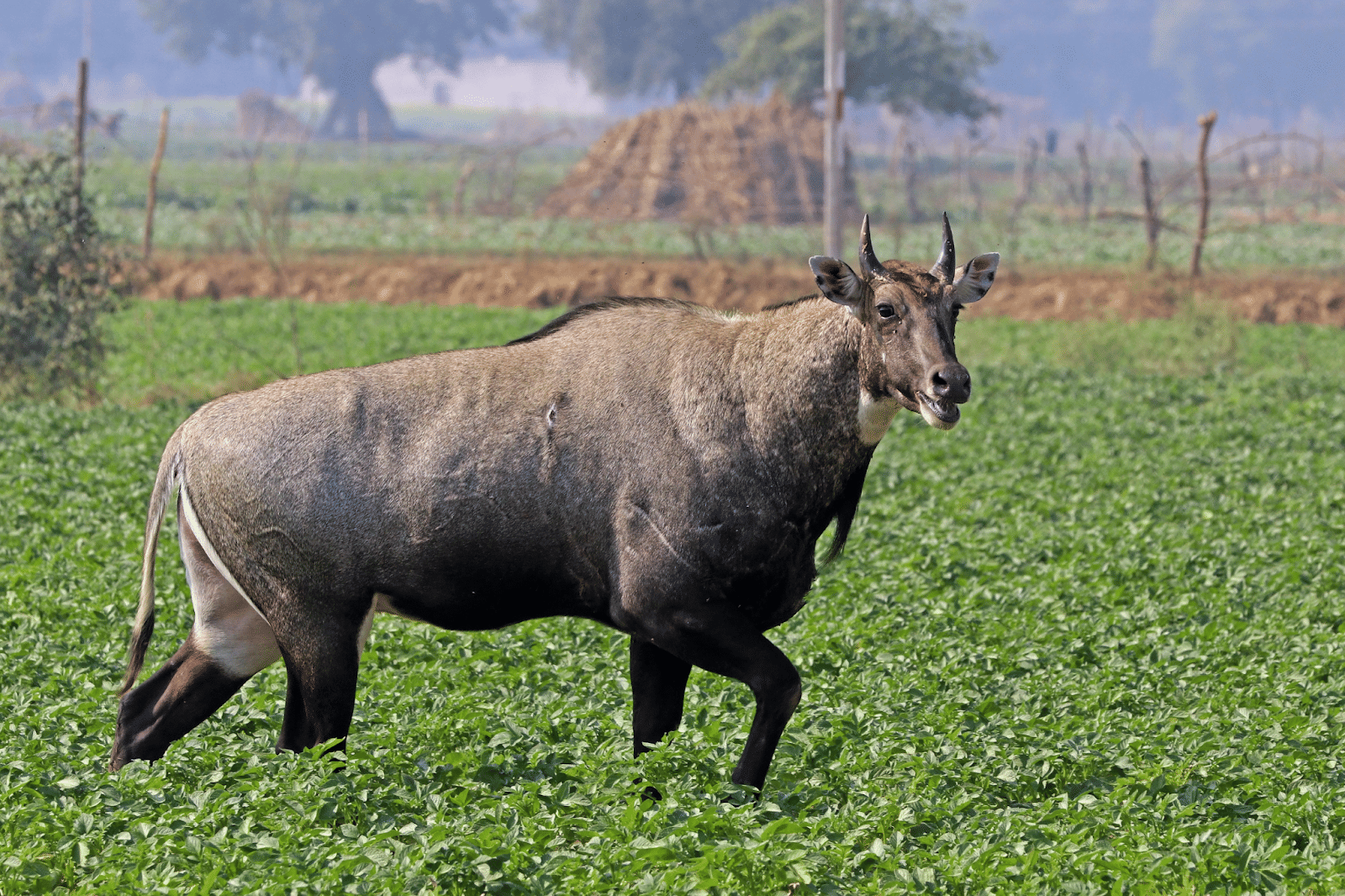
Impact of Nilgais on Agriculture
Farmers across Bihar suffer significant agricultural losses due to Nilgai herds feeding on standing crops. These large herbivores invade farmlands, consuming vital crops and leading to financial setbacks for farmers. This conflict between wildlife and agriculture has necessitated population control measures.
About Ghodpara (Nilgai)
Scientific Classification and Etymology
- Scientific Name: Boselaphus tragocamelus
- Etymology:
- Boselaphus originates from Greek words meaning ‘ox’ and ‘deer’.
- Tragocamelus refers to a goat-camel hybrid, representing its unique physical characteristics.
Habitat and Geographic Distribution
Nilgais are commonly found in grasslands, scrub forests, and agricultural fields across India, Nepal, and Pakistan. Major populations exist in:
- India: Rajasthan, Uttar Pradesh, Madhya Pradesh, Bihar, and Haryana.
- Preferred Habitat: Dry deciduous forests and open plains rather than dense woodlands.
Physical Characteristics and Behavior
- Size: Largest antelope species native to the Indian subcontinent.
- Appearance:
- Males exhibit a bluish-grey coat.
- Females have a brownish coat.
- Males develop small conical horns, while females lack horns.
- Diet: Herbivorous, feeding on grasses, crops, and shrubs.
- Activity Pattern: Crepuscular—most active during early morning and late evening.
- Social Structure: Lives in small groups but can form larger herds, especially near agricultural areas.
Conservation Status and Legal Protection
Despite human-wildlife conflict, Nilgais hold a stable population and are legally protected under various conservation frameworks:
- IUCN Red List: Least Concern
- Wildlife Protection Act (India): Schedule III
- CITES: Appendix III
Conclusion
Nilgais, or Ghodpara, play a crucial role in India’s ecosystem but also pose challenges to agriculture. While conservation efforts continue, culling remains a contentious yet government-sanctioned solution to mitigate crop damage. Understanding their habitat, behavior, and conservation status is essential for balancing wildlife protection and human interests.
Download the PREPP App and attempt FREE IAS Exam Mock Tests and get complete study material!

Live Test : UPSC CSE Prelims CSAT (Paper-II) (Oct 08 - 11)
Full Test - 04: UPSC CSE Prelims CSAT (Paper-II)
Full Test - 03: UPSC CSE Prelims CSAT (Paper-II)
UPSC CSE Prelims 2026 GS Paper 1 Question Paper (24-May-2026)
UPSC CSE Prelims 2026 CSAT Paper 2 Question Paper (24-May-2026)

17 February 2025 | The Hindu Must Read Articles | Current Affairs

16 February 2026 | The Hindu Must Read Articles | Current Affairs

13 February 2026 | The Hindu Must Read Articles | Current Affairs









Comments