Genetically Modified (GM) Crops: An Overview
Why in news?
- The Union Ministry of Environment, Forest and Climate Change has amended the rules governing the selection of experts to the Genetic Engineering Appraisal Committee (GEAC), the apex technical body regulating genetically modified (GM) seeds in India.
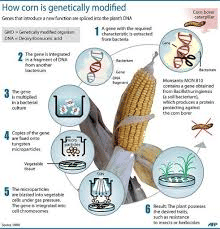
What Are GM Crops?
- Genetically Modified (GM) crops are plants that have been altered at the DNA level to introduce new traits.
- These traits may include increased pest resistance, herbicide tolerance, disease resistance, or enhanced nutritional content.
Examples of Genetically Modified Crops:
- Bt Cotton: A widely grown GM crop engineered to resist pests like bollworms.
- GM Soybeans: Modified for herbicide tolerance, allowing farmers to control weeds more efficiently.
- GM Maize (Corn): Engineered for resistance to pests and tolerance to herbicides.
- GM Canola: Modified to withstand herbicides.
- Golden Rice: A GM crop enriched with beta-carotene (Vitamin A) to combat vitamin A deficiency.
Benefits of Genetically Modified Crops:
- Pest Resistance: GM crops such as Bt cotton contain genes from the Bacillus thuringiensis bacterium, which helps protect crops from pests, reducing reliance on chemical pesticides.
- Herbicide Tolerance: Crops engineered to resist specific herbicides, like glyphosate-resistant soybeans, provide effective weed control while reducing the need for manual weeding.
- Higher Yields: GM crops can increase agricultural productivity by reducing crop losses due to pests and diseases.
- Environmental Sustainability: GM crops can reduce the use of chemical pesticides, fertilizers, and tilling, helping preserve soil health and reduce environmental pollution.
- Drought and Stress Tolerance: Genetically modified crops can be engineered to withstand drought conditions, offering a solution to food security in water-scarce regions.
- Improved Nutritional Value: GM crops like Golden Rice have been developed to address nutritional deficiencies, improving health and food security.
Risks and Concerns of Genetically Modified Crops:
- Health Concerns: There are ongoing studies to assess whether GM crops might cause allergic reactions or long-term health issues, though many research findings suggest GM crops are safe to consume.
- Environmental Impact: The potential effects of GM crops on biodiversity, soil quality, and pollinators like bees remain under research, with concerns about unintended consequences.
- Pest Resistance Development: Over time, pests may evolve resistance to Bt toxins, diminishing the effectiveness of GM crops like Bt cotton.
- Gene Flow: There is concern that GM crop genes might transfer to wild plants or non-GM crops, potentially affecting genetic diversity.
Status of GM Crops in India:
- Bt Cotton: Commercialized in 2002, Bt Cotton has revolutionized cotton production in India, boosting yields and reducing the need for chemical pesticides.
- Bt Brinjal: Approved for field trials in 2009, the commercialization of Bt Brinjal faced a moratorium due to public concern but resumed in 2020 for testing.
- GM Mustard: GM Mustard is in the final stages of development but has not yet been approved for commercial cultivation in India.
- Other GM Crops: India is exploring the development of other GM crops like GM maize, chickpeas, and sugarcane to improve crop productivity and resilience.
Regulatory Framework for GM Crops in India:
- India’s regulatory system ensures that GM crops are safe for the environment and human health:
- GEAC (Genetic Engineering Appraisal Committee): The body responsible for evaluating the safety and approval of GM crops.
- RCGM (Review Committee on Genetic Manipulation): Monitors GM crop research and experimental trials.
- RDAC (Recombinant DNA Advisory Committee): Oversees biotechnology developments on a national and international level.
- SBCC (State Biotechnology Coordination Committee): Reviews GM crop safety at the state level and ensures compliance with safety standards.
Future of GM Crops:
- As biotechnology advances, the potential for GM crops to address global challenges such as climate change, food security, and malnutrition continues to grow.
- Ongoing research focuses on developing crops that are not only resistant to pests and diseases but also offer higher nutritional value and environmental benefits.
- Conclusion
Genetically Modified (GM) crops are transforming agriculture by improving crop yields, reducing pesticide use, and offering environmental benefits. Despite concerns, GM technology has the potential to play a crucial role in addressing food security and environmental sustainability, especially in developing countries like India, which is actively researching and trialing various GM crops.
Download the PREPP App and attempt FREE IAS Exam Mock Tests and get complete study material!
*The article might have information for the previous academic years, please refer the official website of the exam.
How likely are you to recommend Prepp.in to a friend or a colleague?
Not so likely
Highly likely
UPSC CSE (IAS) 2027 Prelims Mock Test Series
Live Quizzes
Quizzes
Live Tests

• Live
Live Test : UPSC CSE Prelims CSAT (Paper-II) (Oct 08 - 11)
120 Minutes
80 Questions
200 Marks
English, Hindi
MEDIUM
Test will end in 05:31:33
Full Tests
Full Test - 04: UPSC CSE Prelims CSAT (Paper-II)
120 Minutes
80 Questions
200 Marks
English, Hindi
MEDIUM
Attempted by 19 aspirants in 12 hours
Full Test - 03: UPSC CSE Prelims CSAT (Paper-II)
120 Minutes
80 Questions
200 Marks
English, Hindi
MEDIUM
Attempted by 20 aspirants in 12 hours
Previous Year Papers
UPSC CSE Prelims 2026 GS Paper 1 Question Paper (24-May-2026)
120 Minutes
100 Questions
200 Marks
2,989 Attempted
English, Hindi
MEDIUM
Attempted by 12 aspirants in 12 hours
UPSC CSE Prelims 2026 CSAT Paper 2 Question Paper (24-May-2026)
120 Minutes
80 Questions
200 Marks
3,167 Attempted
English, Hindi
MEDIUM
Attempted by 13 aspirants in 12 hours
Videos

17 February 2025 | The Hindu Must Read Articles | Current Affairs
7,202 Views
•4
•7 months ago

16 February 2026 | The Hindu Must Read Articles | Current Affairs
6,962 Views
•4
•7 months ago

13 February 2026 | The Hindu Must Read Articles | Current Affairs
8,765 Views
•5
•7 months ago

12 February 2026 | The Hindu Must Read Articles | Current Affairs
5,788 Views
•4
•7 months ago






Also Check
IAS Exam Overview
IAS Exam Admit Card
IAS Exam Question Paper 2026
IAS Exam Mains Syllabus
IAS Exam Application Process
IAS Exam Eligibility
IAS Exam Result
IAS Exam Exam Pattern
IAS Exam CSAT Syllabus
IAS Exam Answer Key
IAS Exam Previous Year Paper
IAS Exam Current Affairs
IAS Exam Mains Question Paper
IAS Exam IAS Courses
IAS Exam UPSC Study Notes
IAS Exam Foundation Course 2024
IAS Exam Prelims Question Paper
IAS Exam Exam Center
IAS Exam Foundation Course 2025
IAS Exam Notification 2026
IAS Exam IAS Success Stories
IAS Exam Salary
IAS Exam Cutoff
IAS Exam Mock Tests
IAS Exam News


Comments