Gangetic Dolphin (Platanista gangetica) - A Unique Freshwater Species
Why in news?
Ganges river dolphin tagged for the first time in India.
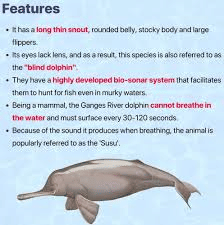
About The Gangetic Dolphin
- Names: Ganges River Dolphin (Platanista gangetica),
- Found in: It is a freshwater dolphin found in the river systems of India, Nepal, and Bangladesh.
- It is a crucial indicator species of the health of the river ecosystem, highlighting the need for effective conservation efforts.
Key Features of the Gangetic Dolphin
- Scientific Name: Platanista gangetica
- Common Names: Blind Dolphin, Ganges Susu, South Asian River Dolphin, Hihu.
- Habitat: Inhabits the Ganges-Brahmaputra-Meghna and Karnaphuli-Sangu river systems, including the Ganges River Basin.
- Physical Features:
- A long, thin snout, stocky body, and large flippers.
- Lack of functional eyes (hence referred to as the "blind dolphin").
- Bio-sonar system to navigate and hunt in murky waters.
- Behavior: Typically found in small groups or alone, with mothers and calves often traveling together. Breathing occurs every 30-120 seconds as the dolphin cannot breathe underwater.
- Diet: The Gangetic Dolphin primarily feeds on fish and thrives in counter-current systems in the main river channels.
Conservation Status
- IUCN Status: Endangered.
- Indian Wildlife (Protection) Act: Schedule I.
- CITES (Convention on International Trade in Endangered Species): Appendix I.
Importance of the Gangetic Dolphin
- Recognized as India's National Aquatic Animal since 2009, symbolizing the country's commitment to preserving aquatic life.
- Acts as a reliable indicator of river ecosystem health, making it essential for environmental monitoring.
Threats to the Gangetic Dolphin
- Unintentional killing through entanglement in fishing gear.
- Poaching for dolphin oil, used in fish attracting and medicinal purposes.
- Habitat destruction caused by pollution, development projects, and the construction of dams.
Conservation Efforts
- Project Dolphin aims to safeguard this endangered species and their habitats.
- The Vikramshila Ganges Dolphin Sanctuary in Bihar provides protection and a safe haven for the dolphins.
- National Ganga River Dolphin Day is observed annually on 5th October to raise awareness about the species and its conservation needs.
Why the Gangetic Dolphin Matters
- The Ganges River Dolphin is a symbol of India's aquatic biodiversity and a key focus of conservation programs. As an endangered species, its survival is intertwined with the health of the Ganges and other freshwater ecosystems in the region.
Download the PREPP App and attempt FREE IAS Exam Mock Tests and get complete study material!
*The article might have information for the previous academic years, please refer the official website of the exam.
How likely are you to recommend Prepp.in to a friend or a colleague?
Not so likely
Highly likely
UPSC CSE (IAS) 2027 Prelims Mock Test Series
Live Quizzes
Quizzes
Live Tests

• Live
Live Test : UPSC CSE Prelims CSAT (Paper-II) (Oct 08 - 11)
120 Minutes
80 Questions
200 Marks
English, Hindi
MEDIUM
Test will end in 05:28:59
Full Tests
Full Test - 04: UPSC CSE Prelims CSAT (Paper-II)
120 Minutes
80 Questions
200 Marks
English, Hindi
MEDIUM
Attempted by 19 aspirants in 12 hours
Full Test - 03: UPSC CSE Prelims CSAT (Paper-II)
120 Minutes
80 Questions
200 Marks
English, Hindi
MEDIUM
Attempted by 20 aspirants in 12 hours
Previous Year Papers
UPSC CSE Prelims 2026 GS Paper 1 Question Paper (24-May-2026)
120 Minutes
100 Questions
200 Marks
2,989 Attempted
English, Hindi
MEDIUM
Attempted by 12 aspirants in 12 hours
UPSC CSE Prelims 2026 CSAT Paper 2 Question Paper (24-May-2026)
120 Minutes
80 Questions
200 Marks
3,167 Attempted
English, Hindi
MEDIUM
Attempted by 13 aspirants in 12 hours
Videos

17 February 2025 | The Hindu Must Read Articles | Current Affairs
7,202 Views
•4
•7 months ago

16 February 2026 | The Hindu Must Read Articles | Current Affairs
6,962 Views
•4
•7 months ago

13 February 2026 | The Hindu Must Read Articles | Current Affairs
8,765 Views
•5
•7 months ago

12 February 2026 | The Hindu Must Read Articles | Current Affairs
5,788 Views
•4
•7 months ago






Also Check
IAS Exam Overview
IAS Exam Admit Card
IAS Exam Question Paper 2026
IAS Exam Mains Syllabus
IAS Exam Application Process
IAS Exam Eligibility
IAS Exam Result
IAS Exam Exam Pattern
IAS Exam CSAT Syllabus
IAS Exam Answer Key
IAS Exam Previous Year Paper
IAS Exam Current Affairs
IAS Exam Mains Question Paper
IAS Exam IAS Courses
IAS Exam UPSC Study Notes
IAS Exam Foundation Course 2024
IAS Exam Prelims Question Paper
IAS Exam Exam Center
IAS Exam Foundation Course 2025
IAS Exam Notification 2026
IAS Exam IAS Success Stories
IAS Exam Salary
IAS Exam Cutoff
IAS Exam Mock Tests
IAS Exam News


Comments