Fortified Rice Scheme: A Key Initiative to Combat Malnutrition in India
Why in the News?
The Fortified Rice Scheme is a crucial government initiative aimed at addressing malnutrition and improving public health. The Standing Committee on Consumer Affairs, Food, and Public Distribution has emphasized the need for effective implementation of fortified rice distribution across India.

Key Highlights of the Fortified Rice Scheme
Targeted Implementation for Maximum Impact
- Prioritizing Staple Food Regions: The government is urged to focus on states where rice is a staple food to enhance the scheme’s effectiveness.
- Tackling Malnutrition: Fortified rice is expected to play a significant role in reducing micronutrient deficiencies, including anemia.
- Efficient Budget Allocation: The committee has raised concerns over budget management and stressed the need for optimized fund utilization to ensure that free food grains reach the intended beneficiaries.
- Improving Food Storage Infrastructure: The Food Corporation of India (FCI) has not met its storage capacity targets. The panel has recommended an urgent strategy to increase storage facilities and minimize food wastage.
What is Fortified Rice?
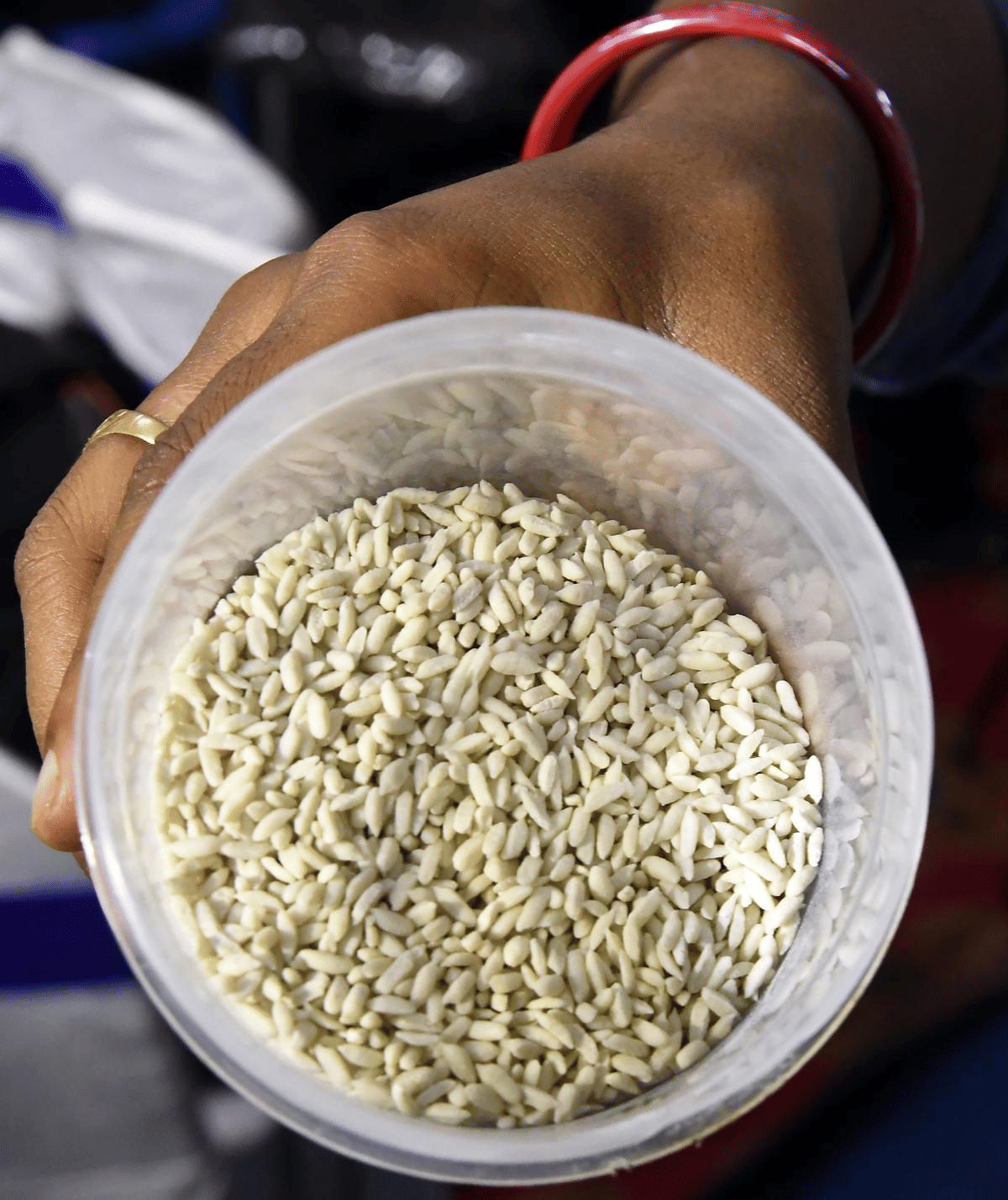
Fortified rice is regular rice enriched with essential micronutrients such as:
- Iron – To combat anemia
- Folic Acid – Essential for red blood cell formation
- Vitamin B12 – Important for nerve function and overall health
How is Rice Fortified?
- The fortification process reintroduces lost nutrients from milling and adds additional vitamins and minerals.
- Fortified rice maintains its original taste, texture, and aroma, ensuring high consumer acceptability.
- Regulation: The Food Safety and Standards Authority of India (FSSAI) oversees rice fortification under the Food Safety Standards (Fortification of Foods) Regulation, 2018.
Implementation of the Fortified Rice Scheme
The scheme is being executed in three phases:
- Phase 1 (March 2022): Distribution through Integrated Child Development Services (ICDS) and Pradhan Mantri Poshan Shakti Nirman (PM POSHAN).
- Phase 2 (March 2023): Extended to high-malnutrition districts under the Targeted Public Distribution System (TPDS).
- Phase 3 (March 2024): Nationwide implementation under all government food programs.
Government Support and Subsidy
- The central government covers the cost of fortification, estimated at ₹2,700 crore annually.
- Fortified rice is distributed under major food security programs such as TPDS, NFSA, ICDS, and PM POSHAN.
- Identification: Fortified rice bags carry a blue ‘+F’ logo with a tagline indicating iron, folic acid, and vitamin B1 fortification.
Advantages and Challenges of Fortified Rice
Advantages
- Effective Against Malnutrition: Helps address anemia and micronutrient deficiencies.
- Cost-Effective: A scalable and affordable strategy for nutrition improvement.
- No Change in Diet: Fortified rice retains its natural taste and texture, making it widely acceptable.
Challenges and Concerns
- Health Risks: Excessive iron intake may be harmful to individuals with conditions like thalassemia.
- Community Rejection: Some states have reported instances of people discarding fortified rice, mistaking it for ‘plastic rice’.
- Need for Dietary Diversity: Experts suggest promoting a diverse diet with pulses, millets, and eggs instead of relying solely on fortified foods.
Conclusion
The Fortified Rice Scheme is a significant step in India’s fight against malnutrition and anemia. However, challenges like public awareness, storage infrastructure, and dietary diversity need to be addressed for its long-term success. Effective implementation and continuous monitoring will ensure that fortified rice reaches the most vulnerable sections of society, contributing to a healthier and more nourished India.
Download the PREPP App and attempt FREE IAS Exam Mock Tests and get complete study material!

Live Test : UPSC CSE Prelims CSAT (Paper-II) (Oct 08 - 11)
Full Test - 04: UPSC CSE Prelims CSAT (Paper-II)
Full Test - 03: UPSC CSE Prelims CSAT (Paper-II)
UPSC CSE Prelims 2026 GS Paper 1 Question Paper (24-May-2026)
UPSC CSE Prelims 2026 CSAT Paper 2 Question Paper (24-May-2026)

17 February 2025 | The Hindu Must Read Articles | Current Affairs

16 February 2026 | The Hindu Must Read Articles | Current Affairs

13 February 2026 | The Hindu Must Read Articles | Current Affairs









Comments