Election Commissioner Appointment Law: Supreme Court to Review the 2023 Act
Why in the News?
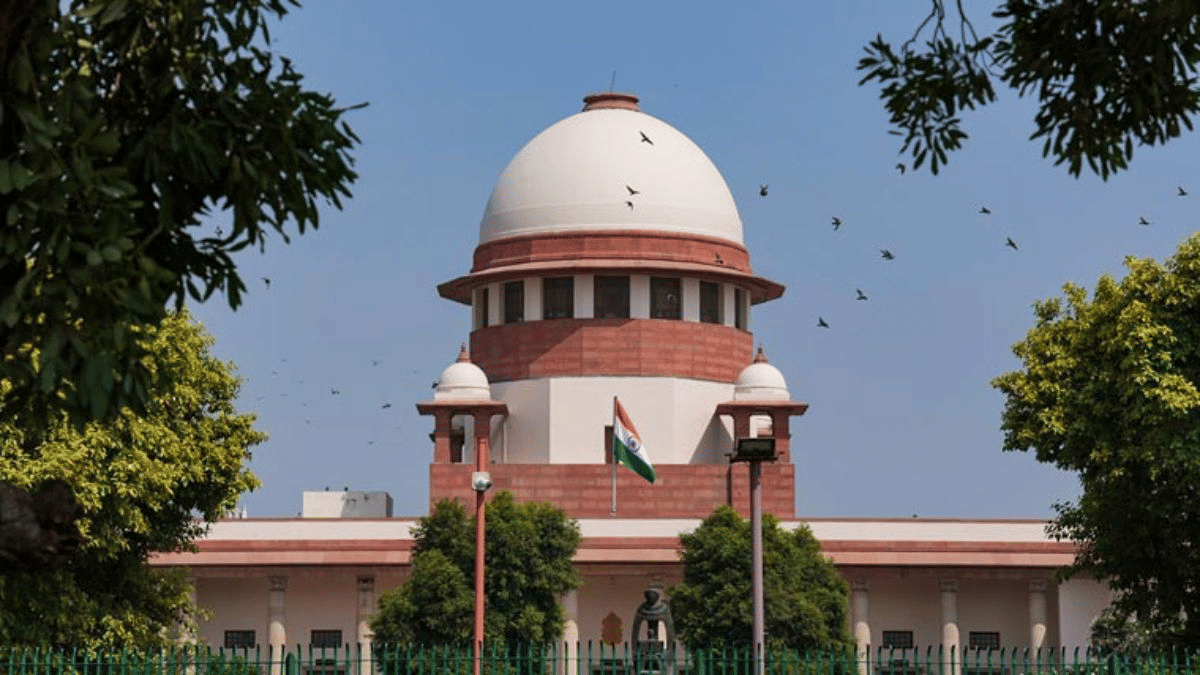
The Supreme Court has scheduled a detailed hearing on the Chief Election Commissioner and Other Election Commissioners (Appointment, Conditions of Service, and Term of Office) Act, 2023. The legal challenge questions whether the new law overrides the Supreme Court’s authority and affects the independence of the Election Commission of India (ECI).
Key Judicial Observations
- Parliament vs. Judiciary: Justice Surya Kant emphasized that the case will assess whether Parliament can override a Constitution Bench ruling without explicit justification.
- Repeated Adjournments: The hearing was postponed in February and March due to procedural reasons and scheduling conflicts.
- New CEC Appointment: Despite the pending legal review, the government appointed Gyanesh Kumar as the new Chief Election Commissioner (CEC) under the 2023 Act.
- Article 141 Concerns: The case will examine if the law undermines the Supreme Court’s authority, as Article 141 of the Constitution establishes that its decisions are binding on all courts and authorities.
The CEC and Other Election Commissioners Act, 2023: An Overview
Legislative Changes
- Replaces the Election Commission (Conditions of Service of Election Commissioners and Transaction of Business) Act, 1991.
- Defines the appointment process, salary structure, and removal conditions for the CEC and Election Commissioners (ECs).
New Appointment Process
- Selection Committee Composition: The President appoints the CEC and ECs based on recommendations from a three-member Selection Committee, comprising:
- The Prime Minister (Chairperson)
- A Union Cabinet Minister nominated by the Prime Minister
- The Leader of the Opposition (or leader of the largest opposition party) in the Lok Sabha
- Search Committee: Led by the Cabinet Secretary, the committee proposes a panel of names for consideration.
- Final Deciding Authority: The Selection Committee has the discretion to select candidates beyond the proposed panel.
Key Controversies & Legal Concerns
1. Government Dominance in the Selection Process
- The majority control of the government in the Selection Committee raises concerns about reduced independence of the Election Commission.
2. Exclusion of the Chief Justice of India (CJI)
- The 2023 Act removes the Chief Justice of India from the selection panel, reversing the Supreme Court’s 2023 judgment in Anoop Baranwal v. Union of India, which included the CJI to ensure neutrality.
3. Potential Political Influence on Election Commission
- Appointing bureaucrats with past government service may affect the independence and impartiality of the Election Commission.
4. Executive vs. Judiciary Debate
- The law contravenes the Supreme Court ruling in Anoop Baranwal v. Union of India (2023), raising questions about separation of powers.
- Article 141 Dispute: If Parliament can alter judicial rulings without justification, it could weaken judicial authority.
5. Impact on Free and Fair Elections
- The Election Commission of India (ECI) plays a vital role in conducting impartial elections. Any undue political influence in appointments could undermine electoral integrity.
- Constituent Assembly Debates: Dr. B.R. Ambedkar and other framers of the Constitution emphasized the need for an independent election authority.
Future Implications & Judicial Review
- Supreme Court Verdict: The outcome will determine if the 2023 Act remains or requires amendments.
- Potential Amendments: If ruled unconstitutional, Parliament may need to revise the law to align with constitutional principles.
- Electoral Transparency: The long-term impact will influence public trust in democratic processes and election oversight.
- Separation of Powers: The ruling will set a precedent on whether legislative power can override judicial decisions without explicit justification.
Conclusion
The Supreme Court’s verdict on the Election Commissioner Appointment Law, 2023, will shape the future of electoral democracy in India. The balance between the executive, legislature, and judiciary in regulating election bodies will be a key factor in ensuring free, fair, and transparent elections. As the legal battle unfolds, it remains to be seen how India’s highest court will safeguard the independence of the Election Commission.
Download the PREPP App and attempt FREE IAS Exam Mock Tests and get complete study material!
Live Test : UPSC IAS : GS - Indian Geography - Subject Knowledge Test

Live Test : UPSC CSE Prelims CSAT (Paper-II) (Oct 08 - 11)
Full Test - 04: UPSC CSE Prelims CSAT (Paper-II)
Full Test - 03: UPSC CSE Prelims CSAT (Paper-II)
UPSC CSE Prelims 2026 GS Paper 1 Question Paper (24-May-2026)
UPSC CSE Prelims 2026 CSAT Paper 2 Question Paper (24-May-2026)

17 February 2025 | The Hindu Must Read Articles | Current Affairs

16 February 2026 | The Hindu Must Read Articles | Current Affairs

13 February 2026 | The Hindu Must Read Articles | Current Affairs









Comments