Discovering Palpares Contrarius: A Rare Antlion Species in Tamil Nadu
Why in the News?
For the first time in Tamil Nadu, researchers have observed Palpares contrarius, a large antlion species resembling a dragonfly. This discovery sheds light on the unique characteristics and behaviors of this rarely seen insect.
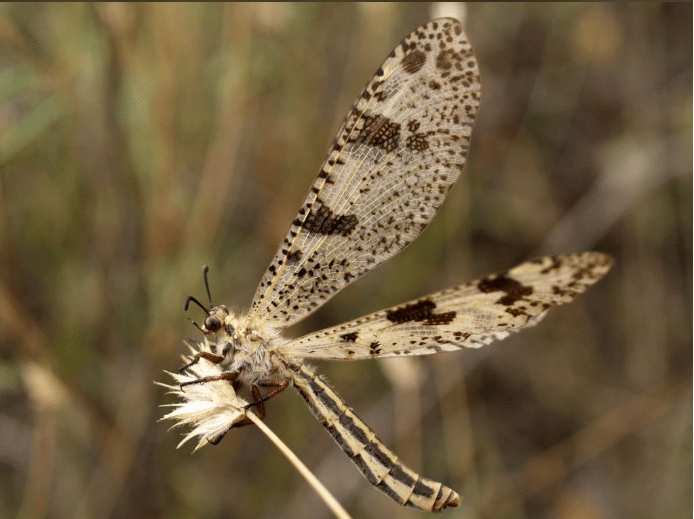
What is Palpares Contrarius?
Scientific Name: Palpares contrarius
Family: Myrmeleontidae (Antlion family)
Key Characteristics:
- Resembles a dragonfly but is distinguishable by its antennae and unique vertical wing-flapping flight.
- Larval Behavior: Known for digging pits to trap ants and other prey.
- Adult Flight: Active at night, often attracted to illuminated areas.
- Lifespan: Short adult life; larvae take over a year to mature depending on food availability and climate.
- Camouflage: Larvae blend perfectly into sandy surroundings.
Habitat and Distribution of Palpares Contrarius
- Preferred Habitat:
- Dry and sandy areas, ideal for larval pit excavation.
- Global Distribution:
- Found in Africa, Myanmar, Thailand, and Sri Lanka.
- Distribution in India:
- Recorded in Tamil Nadu, Odisha, Maharashtra, Karnataka, Mizoram, Uttarakhand, and Madhya Pradesh.
Understanding the Antlion Family (Myrmeleontidae)
Antlions belong to the insect family Myrmeleontidae and are renowned for their fascinating life cycle.
-
Larval Stage:
- Predatory Nature: Larvae dig characteristic pits in sandy habitats to trap ants and other small insects.
- Nicknamed doodlebugs due to the marks they create while moving through the sand.
-
Adult Stage:
- Appearance: Often mistaken for dragonflies or damselflies due to their size and wing structure.
- Activity: Nocturnal, with adults having a significantly shorter lifespan compared to their larval stage.
-
Global Presence:
- Antlions are distributed worldwide, with the greatest diversity observed in tropical regions. They thrive in dry, sandy environments.
Significance of the Discovery in Tamil Nadu
The sighting of Palpares contrarius in Tamil Nadu adds to the state’s rich biodiversity. It emphasizes the importance of conserving natural habitats to protect rare and ecologically significant species.
Download the PREPP App and attempt FREE IAS Exam Mock Tests and get complete study material!
*The article might have information for the previous academic years, please refer the official website of the exam.
How likely are you to recommend Prepp.in to a friend or a colleague?
Not so likely
Highly likely
UPSC CSE (IAS) 2027 Prelims Mock Test Series
Live Quizzes
Quizzes
Live Tests

• Live
Live Test : UPSC CSE Prelims CSAT (Paper-II) (Oct 08 - 11)
120 Minutes
80 Questions
200 Marks
English, Hindi
MEDIUM
Test will end in 14:11:15
Full Tests
Full Test - 04: UPSC CSE Prelims CSAT (Paper-II)
120 Minutes
80 Questions
200 Marks
English, Hindi
MEDIUM
Attempted by 18 aspirants in 12 hours
Full Test - 03: UPSC CSE Prelims CSAT (Paper-II)
120 Minutes
80 Questions
200 Marks
English, Hindi
MEDIUM
Attempted by 19 aspirants in 12 hours
Previous Year Papers
UPSC CSE Prelims 2026 GS Paper 1 Question Paper (24-May-2026)
120 Minutes
100 Questions
200 Marks
2,981 Attempted
English, Hindi
MEDIUM
Attempted by 12 aspirants in 12 hours
UPSC CSE Prelims 2026 CSAT Paper 2 Question Paper (24-May-2026)
120 Minutes
80 Questions
200 Marks
3,158 Attempted
English, Hindi
MEDIUM
Attempted by 13 aspirants in 12 hours
Videos

17 February 2025 | The Hindu Must Read Articles | Current Affairs
7,202 Views
•4
•7 months ago

16 February 2026 | The Hindu Must Read Articles | Current Affairs
6,962 Views
•4
•7 months ago

13 February 2026 | The Hindu Must Read Articles | Current Affairs
8,765 Views
•5
•7 months ago

12 February 2026 | The Hindu Must Read Articles | Current Affairs
5,788 Views
•4
•7 months ago






Also Check
IAS Exam Overview
IAS Exam Admit Card
IAS Exam Question Paper 2026
IAS Exam Mains Syllabus
IAS Exam Application Process
IAS Exam Eligibility
IAS Exam Result
IAS Exam Exam Pattern
IAS Exam CSAT Syllabus
IAS Exam Answer Key
IAS Exam Previous Year Paper
IAS Exam Current Affairs
IAS Exam Mains Question Paper
IAS Exam IAS Courses
IAS Exam UPSC Study Notes
IAS Exam Foundation Course 2024
IAS Exam Prelims Question Paper
IAS Exam Exam Center
IAS Exam Foundation Course 2025
IAS Exam Notification 2026
IAS Exam IAS Success Stories
IAS Exam Salary
IAS Exam Cutoff
IAS Exam Mock Tests
IAS Exam News


Comments