Debt Restructuring in Sri Lanka and Its Impact on India
Why in the News?
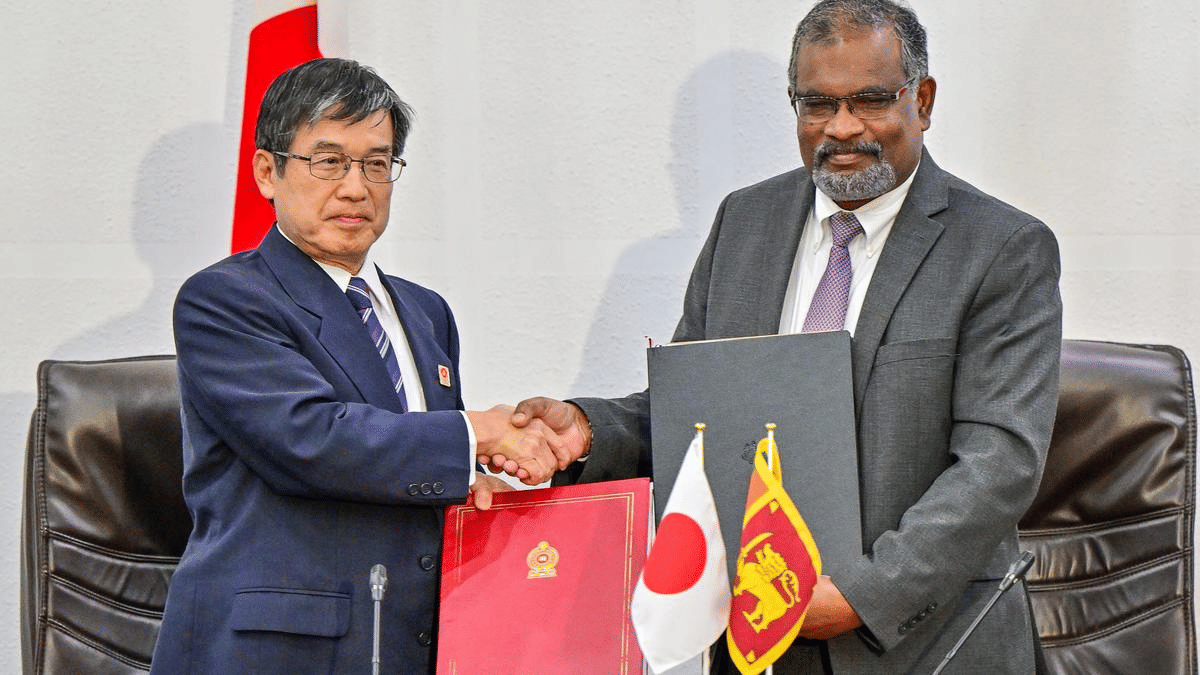
Sri Lanka recently finalized a $2.5 billion debt restructuring deal with Japan, marking a significant step toward economic recovery.
Key Aspects of the Debt Restructuring Deal
- First Agreement Under Official Creditor Committee (OCC): Japan is the first OCC member to finalize such an agreement.
- Debt Payment Terms:
- Total debt being restructured: 369.45 billion yen
- Repayment: Semi-annual installments from 2028 to 2042
- Interest rates: 0.96% per annum for the Sri Lankan government, 0.18% for Airport and Aviation Services (Sri Lanka) Limited
- Private creditors accepted a 27% haircut to ease financial stress.
Significance of the Deal
1. Economic Recovery for Sri Lanka
This agreement is crucial for stabilizing Sri Lanka’s economy and supporting long-term financial recovery. It enables key infrastructure projects, such as the expansion of Bandaranaike International Airport.
2. Compliance with IMF Program
Sri Lanka’s restructuring aligns with IMF’s $2.9 billion bailout package requirements, ensuring continued financial aid.
3. Strategic Importance in Indo-Pacific
Japan highlights Sri Lanka’s strategic location in the Indian Ocean, reinforcing regional stability and economic significance.
Impact on India
1. Strengthened Bilateral Relations
A structured debt framework enhances India-Sri Lanka economic cooperation, fostering trade and investment.
2. Regional Economic Stability
A financially stable Sri Lanka mitigates economic risks in South Asia, benefiting Indian investments and trade partnerships.
3. Countering Chinese Influence
Japan’s role in Sri Lanka’s financial recovery helps balance China’s growing economic influence, benefiting India’s strategic interests.
4. Business Opportunities for India
Indian businesses can explore investment in Sri Lanka’s infrastructure, aviation, and maritime trade sectors, driving economic synergy.
Understanding Debt Restructuring and Haircuts
Debt restructuring allows borrowers to renegotiate loan terms to prevent default, involving lower interest rates or extended repayment periods.
- Haircut in Debt Restructuring: Creditors reduce debt obligations, easing the burden on the debtor country.
- Objective: Maintain financial stability while ensuring creditors recover part of their investments.
Sri Lanka’s Financial Crisis: Causes and Consequences
1. Worst Economic Crisis Since Independence
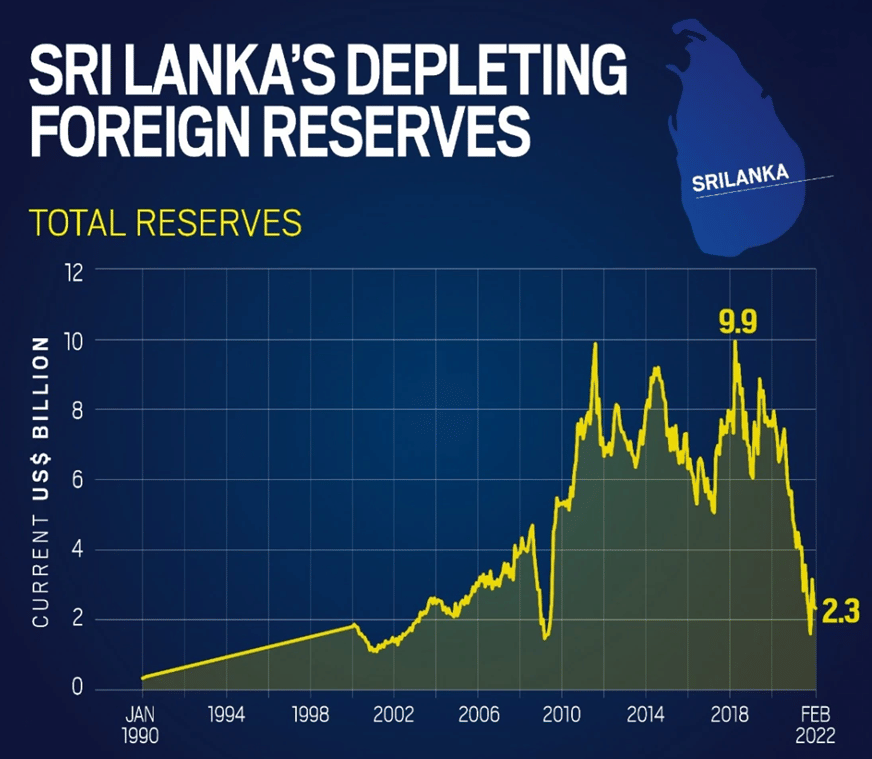
The Sri Lankan crisis, beginning in 2019, caused severe inflation, forex depletion, and essential commodity shortages.
2. Major Causes of the Crisis
- Tax Cuts (2019): Reduced government revenue, escalating fiscal deficits.
- Excessive Money Printing: Triggered inflation and currency depreciation.
- Abrupt Organic Farming Shift (2021): Declined agricultural output, leading to food shortages.
- 2019 Easter Bombings: Weakened investor confidence and devastated tourism.
- COVID-19 Pandemic: Disrupted trade, halted tourism, and increased public expenditure.
- Sovereign Default (April 2022): First-ever sovereign default in the Asia-Pacific region.
Sri Lanka’s Debt Landscape
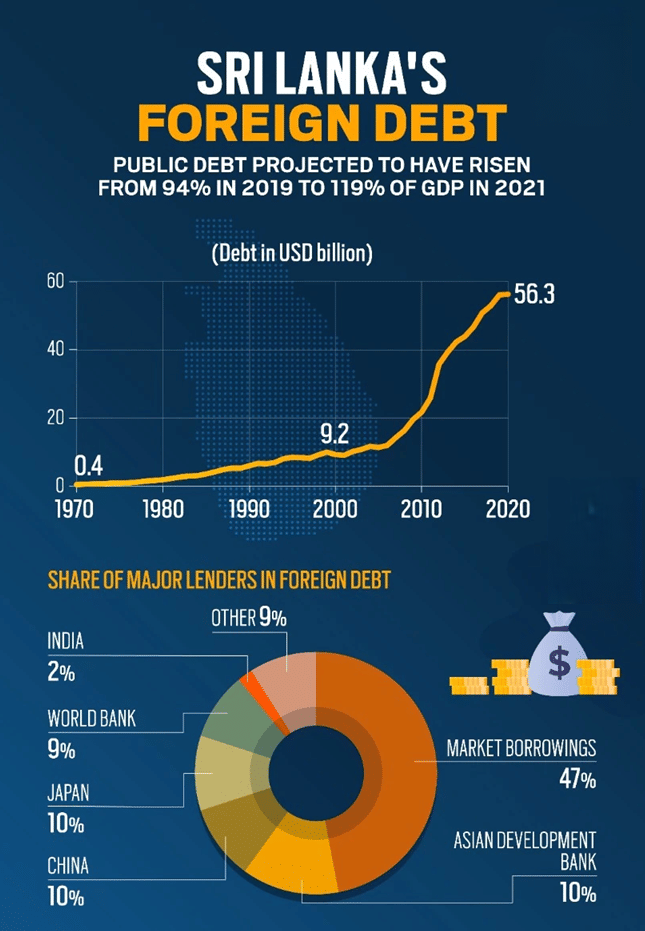
- Total External Debt Defaulted: $46 billion (April 2022)
- Major Bilateral Lenders:
- China: $4.66 billion
- Japan: $2.5 billion
- India: $1.4 billion (Debt agreements pending)
- China: $4.75 billion (Debt agreements pending)
- Indian Financial Assistance: India provided a $4 billion line of credit, improving forex reserves to $2.69 billion.
China’s Debt Trap and Its Influence
- Chinese Loans in Sri Lanka: Infrastructure projects like Hambantota Port and Mattala Airport have raised concerns over China’s debt-trap diplomacy.
- 99-Year Lease to China: Sri Lanka leased Hambantota Port for $1.12 billion, sparking strategic concerns.
- Debate Over Debt Crisis: Some argue China’s lending is responsible, while others cite domestic mismanagement as the primary factor.
Challenges Facing Sri Lanka
- Debt Burden: Balancing repayment obligations while fostering economic growth.
- Inflation and Currency Depreciation: Persistent inflation erodes investor confidence.
- Political Instability: Frequent leadership changes hinder long-term recovery.
- Social Unrest: Economic hardships trigger public dissatisfaction and protests.
- Dependence on External Support: High reliance on foreign aid limits economic autonomy.
Way Forward for Sri Lanka
- Structural Economic Reforms: Strengthening fiscal and monetary policies for economic stability.
- Economic Diversification: Expanding IT, manufacturing, and exports beyond agriculture and tourism.
- Improved Governance: Enhancing transparency and public administration.
- Sustainable Debt Management: Negotiating favorable repayment terms to ease financial stress.
- Boosting Domestic Production: Encouraging local industries and sustainable farming to ensure food and energy security.
Conclusion
Sri Lanka’s debt restructuring with Japan is a crucial step toward economic recovery, influencing regional stability and India’s economic interests. A financially stable Sri Lanka ensures stronger bilateral relations, increased trade opportunities, and counterbalances China’s dominance in the Indo-Pacific. India stands to gain through business investments, enhanced geopolitical positioning, and regional economic security.
Download the PREPP App and attempt FREE IAS Exam Mock Tests and get complete study material!

Live Test : UPSC CSE Prelims CSAT (Paper-II) (Oct 08 - 11)
Full Test - 04: UPSC CSE Prelims CSAT (Paper-II)
Full Test - 03: UPSC CSE Prelims CSAT (Paper-II)
UPSC CSE Prelims 2026 GS Paper 1 Question Paper (24-May-2026)
UPSC CSE Prelims 2026 CSAT Paper 2 Question Paper (24-May-2026)

17 February 2025 | The Hindu Must Read Articles | Current Affairs

16 February 2026 | The Hindu Must Read Articles | Current Affairs

13 February 2026 | The Hindu Must Read Articles | Current Affairs









Comments