Cyber Security: Tackling Financial Fraud with Innovation
Why in the News?
The Reserve Bank of India (RBI) has introduced MuleHunter.ai, an AI-powered tool developed by the Reserve Bank Innovation Hub (RBIH), to tackle financial fraud effectively.
MuleHunter.ai: RBI’s Latest Initiative to Combat Cybercrime
- Mule Accounts: Mule accounts are exploited by fraudsters for laundering stolen funds, often involving unwitting individuals known as "money mules."
- Pilot Success: MuleHunter.ai was successfully piloted in two public sector banks, enhancing fraud detection and prevention capabilities.
How MuleHunter.ai Works
- Advanced Technology: Utilizes machine learning algorithms to analyze transaction data and account behavior, surpassing traditional rule-based systems.
- Behavioral Analysis: Identifies 19 specific behaviors linked to mule accounts for precise and efficient detection.
Significance
- Enhanced Security: Strengthens the financial system by combating cybercrime and safeguarding consumer trust in digital platforms.
- Collaborative Approach: Promotes cooperation between banks, fintechs, and regulators to create a secure digital ecosystem.
Understanding Cybersecurity
Definition
Cybersecurity refers to the protection of digital systems, networks, and data from unauthorized access, attacks, and damage.
Importance in the Digital Era
As digital adoption accelerates globally, cybersecurity is essential for protecting personal, financial, and organizational data.
Key Areas
- Network Security: Safeguards against unauthorized access.
- Application Security: Focuses on protecting software and apps.
- Information Security: Prevents data breaches and theft.
- Operational Security: Protects operational procedures and assets.
Economic Impact
A robust cybersecurity framework ensures financial stability, boosts consumer confidence, and protects national interests.
Cybersecurity Threats in India
![upscca]()
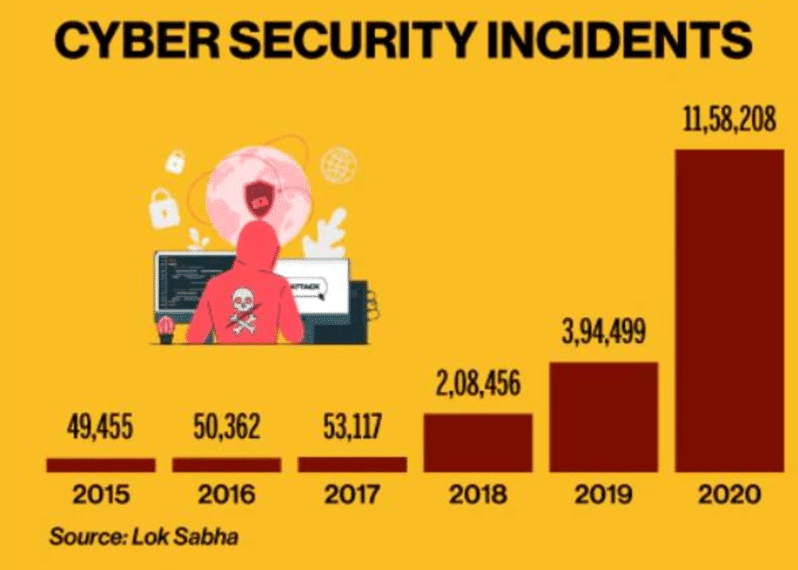
Key Challenges
- Phishing Attacks: Target individuals through deceptive emails and websites.
- Malware and Ransomware: Disrupt operations across sectors; e.g., WannaCry ransomware.
- Advanced Persistent Threats (APTs): Prolonged, state-sponsored attacks on sensitive sectors.
- Exploitation of Vulnerabilities: Weak passwords and outdated software are common entry points.
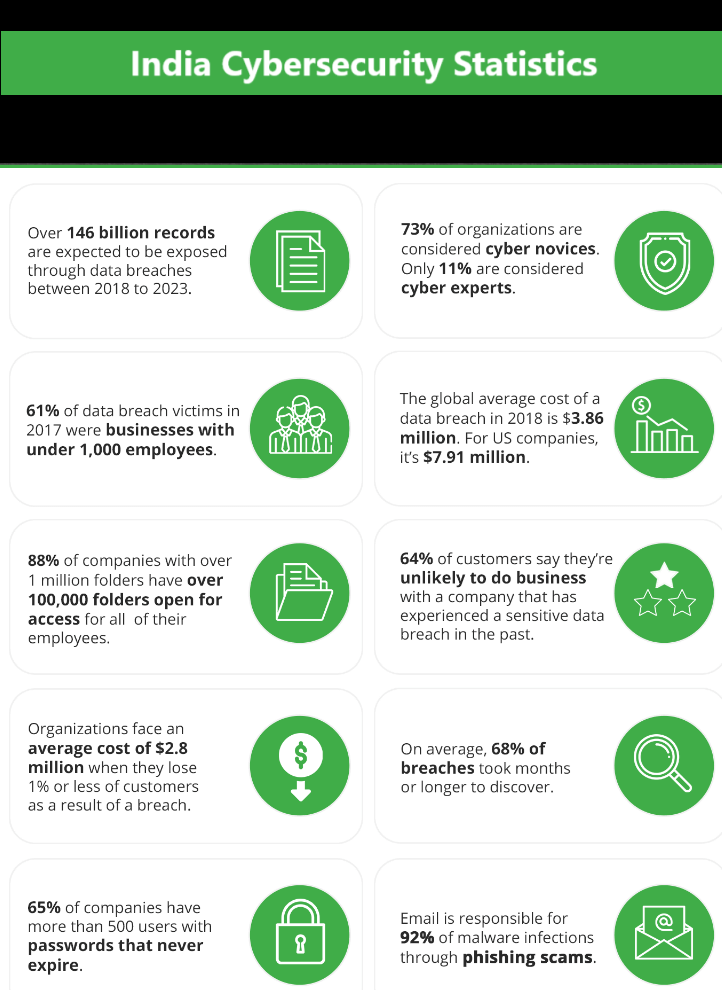
Cybersecurity Laws and Framework in India
![upscca]()
Information Technology Act, 2000
- Legal framework addressing cybercrimes and cyberattacks.
- Provisions for data protection and punishment for cyber offenses.
Role of CERT-IN
- CERT-IN: Nodal agency under MeitY for monitoring and addressing cyber threats.
- Mandates: Reporting cyber incidents within six hours.
National Cyber Security Policy 2013
Aims to build a secure cyberspace by addressing legal, technical, and organizational aspects.
Sector-Specific Measures
NCIIPC: Protects critical information infrastructure and essential services.
India’s Performance in Global Cybersecurity Index 2024
Achievements
Tier 1 Status: Scored 98.49/100 in the Global Cybersecurity Index by ITU, showcasing robust practices.
Factors Behind Success
- Strong cybercrime laws.
- Development of sectoral Computer Security Incident Response Teams (CSIRTs).
- International cooperation.
Focus on Education
- Integrating cybersecurity into school curricula.
- Nationwide awareness campaigns.
Challenges in Cybersecurity
- Evolving Threats: AI-driven attacks and zero-day exploits.
- Workforce Shortage: Limited skilled professionals to meet growing demand.
- Dependence on Imports: High reliance on foreign cybersecurity tools.
- Privacy vs. Security: Balancing individual rights with robust measures.
Government Initiatives
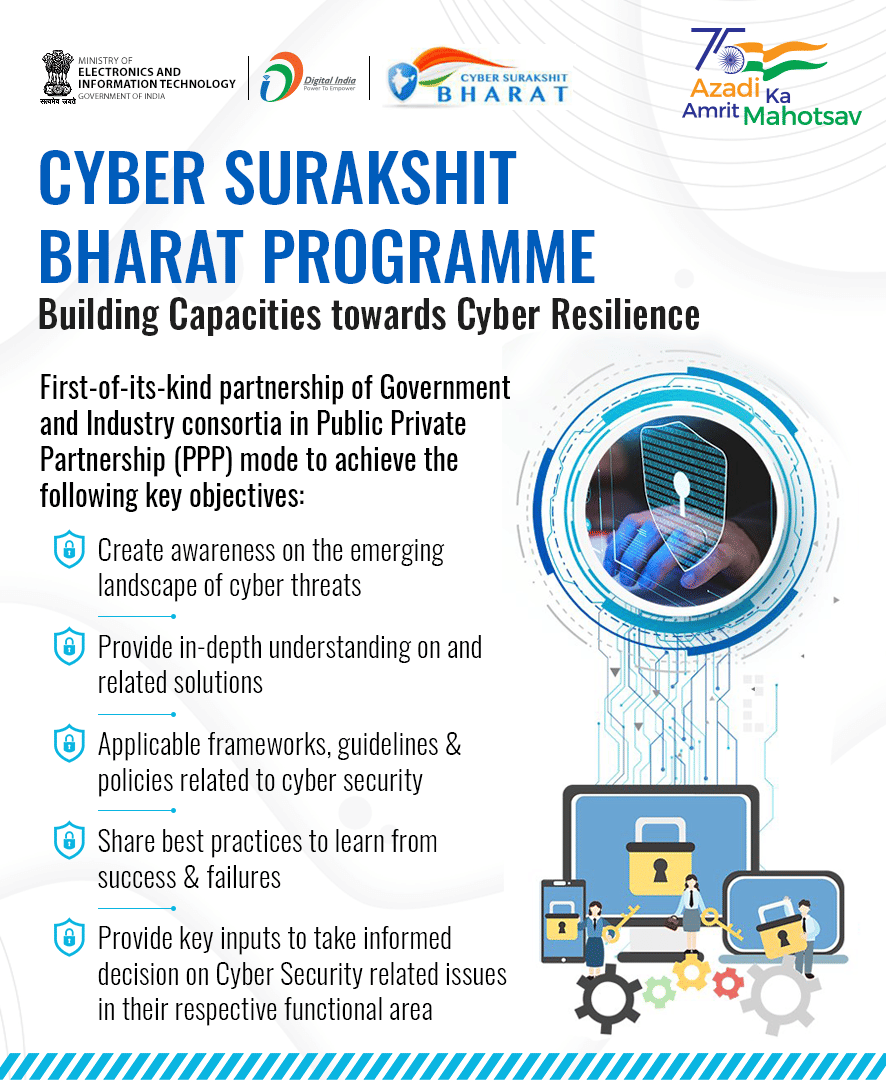
Cyber Surakshit Bharat
Initiative by MeitY to raise awareness about cybercrime and strengthen cybersecurity.
Indian Cybercrime Coordination Centre (I4C)
Framework by the Ministry of Home Affairs (MHA) for combating cybercrime.
Digital India Initiative
Promotes digital literacy and empowers citizens with digital skills.
National Cyber Coordination Centre (NCCC)
Coordinates cyber threat intelligence sharing across government agencies.
Cyber Swachhta Kendra
Platform for citizens to report cybercrimes and access resources.
Global Cybersecurity Initiatives
- Global Cyber Security Forum: Facilitates international cooperation on cybersecurity.
- International Telecommunication Union (ITU): Promotes global capacity building.
- OECD Guidelines: Framework for improving cybersecurity practices.
- Budapest Convention: International treaty for harmonizing cybercrime laws.
Way Forward
Encouraging Domestic Innovation
Investing in R&D to develop cost-effective, AI-driven threat detection and blockchain-based security tools.
Strengthening Education
Expanding cybersecurity training programs and integrating advanced topics into university curricula.
Building Resilience
Conducting regular security audits and incident response drills.
Promoting Public-Private Partnerships
Fostering collaboration among government, industry, and academia for threat intelligence sharing and response strategies.
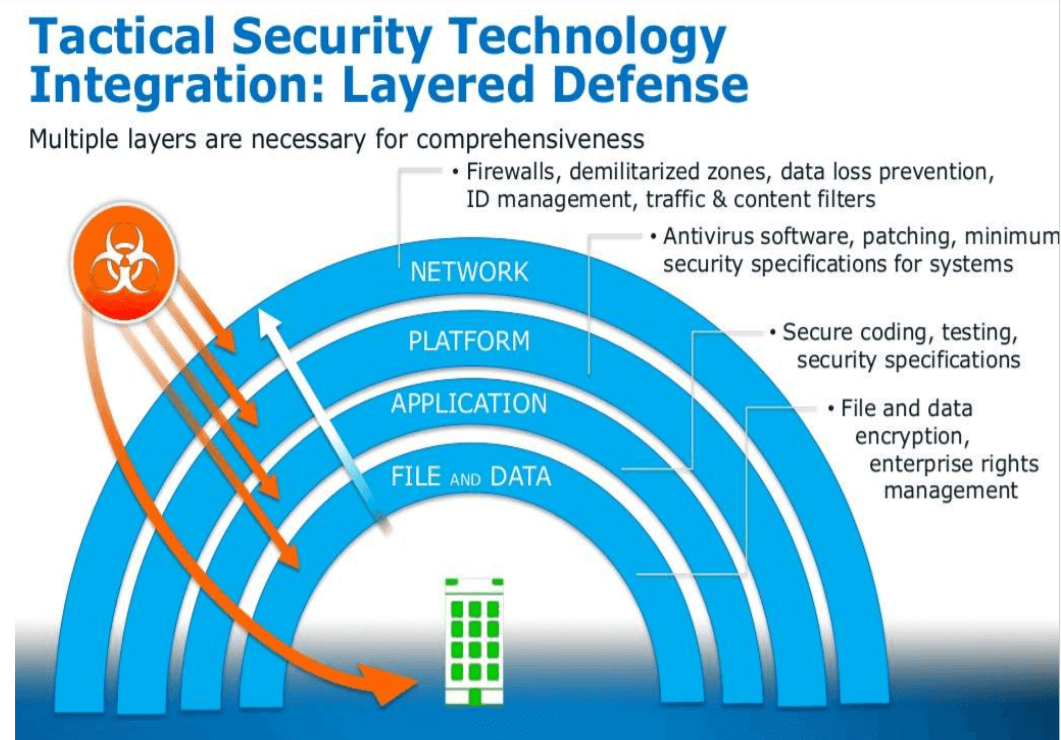
Adopting Layered Defense
Incorporating firewalls, intrusion detection systems, antivirus solutions, and file encryption for critical infrastructure.
Important Cybersecurity Terms
- Phishing: Fraudulent attempts to steal sensitive information.
- Malware: Malicious software like viruses, worms, Trojans, and ransomware.
- Ransomware: Malware that encrypts files and demands payment for their release.
- Zero-Day Exploits: Attacks on unknown software vulnerabilities.
- APT (Advanced Persistent Threats): Targeted cyberattacks, often by nation-states.
- Data Encryption: Secures data by converting it into an unreadable format.
Download the PREPP App and attempt FREE IAS Exam Mock Tests and get complete study material!

Live Test : UPSC CSE Prelims CSAT (Paper-II) (Oct 08 - 11)
Full Test - 04: UPSC CSE Prelims CSAT (Paper-II)
Full Test - 03: UPSC CSE Prelims CSAT (Paper-II)
UPSC CSE Prelims 2026 GS Paper 1 Question Paper (24-May-2026)
UPSC CSE Prelims 2026 CSAT Paper 2 Question Paper (24-May-2026)

17 February 2025 | The Hindu Must Read Articles | Current Affairs

16 February 2026 | The Hindu Must Read Articles | Current Affairs

13 February 2026 | The Hindu Must Read Articles | Current Affairs









Comments