China's Long Game in Africa and Concerns for India
Why in the News?
There is growing global attention on China's increasing influence in Africa, its long-term strategic investments, and the implications for India's own engagements with the continent.
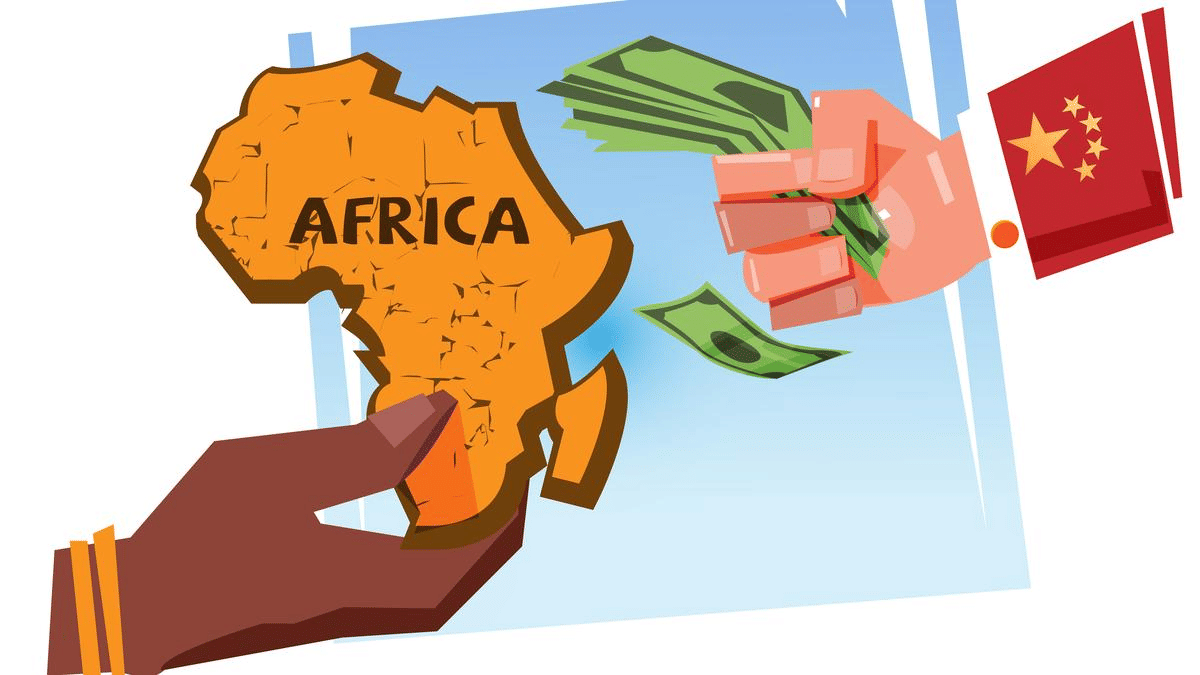
A Brief History of China-Africa Relations
Early Ties
- China’s relationship with Africa began in the 1950s and 60s, supporting African liberation movements and forging diplomatic ties with newly independent nations.
Cold War Era
- During the Cold War, China used its African connections to counter Western influence and gain support in the United Nations.
Post-Reform Period
- Following China’s economic reforms in the late 1970s, its Africa strategy shifted from ideology to economic and strategic engagement.
Forum on China-Africa Cooperation (FOCAC)
- Established in 2000, FOCAC institutionalized China’s engagement, emphasizing trade, investment, and development assistance.
China’s Current Engagement in Africa
Economic Dominance
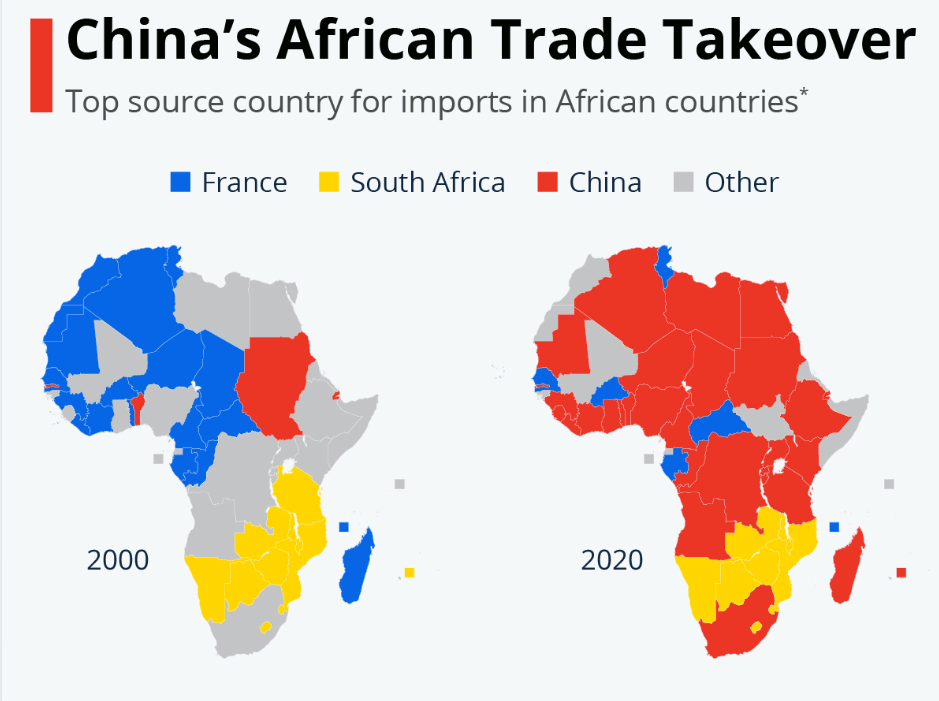
- Africa’s largest trading partner, with bilateral trade exceeding $254 billion in 2021.
- Dominant in infrastructure projects, including roads, railways, and power plants.
Debt Concerns
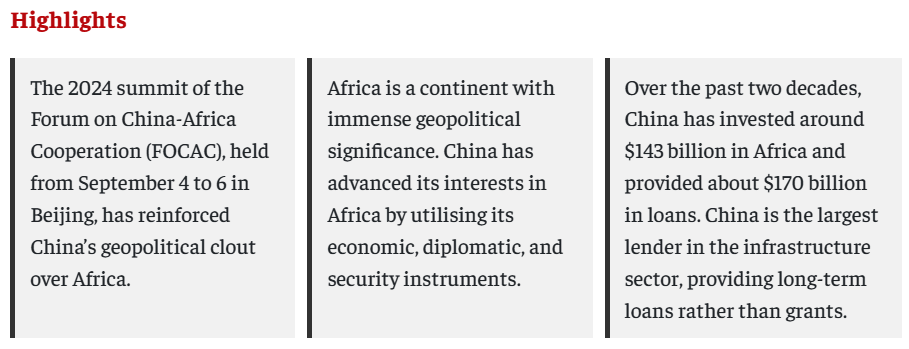
- African nations owe billions to Chinese lenders, sparking fears of debt traps and sovereignty loss.
Military Presence
- China’s military base in Djibouti highlights its security interests in the region.
Why Africa Matters to China
Resource Access
- Africa provides critical resources like oil, minerals, and rare earth metals for China’s industrial growth.
Market Expansion
- With over 1.4 billion people, Africa represents a vast market for Chinese goods and services.
Geopolitical Leverage
- Africa’s 54 UN votes make it a valuable ally in international diplomacy.
Belt and Road Initiative (BRI)
- Africa is integral to China’s BRI, with significant investments in transport and energy infrastructure.
China’s Long-Term Strategy in Africa
Infrastructure Diplomacy
- Large-scale projects solidify China’s influence.
Debt Trap Diplomacy
- Opaque loan terms and mounting debts increase Chinese control.
Soft Power Expansion
- Cultural exchanges, scholarships, and media outreach promote Chinese values.
Geopolitical Ambitions
- Deep ties with African governments help counter Western dominance.
Challenges for India
Strategic Competition
- China’s extensive investments challenge India’s goodwill and influence in Africa.
Economic Disparity
- India’s trade with Africa (at $69 billion in 2021) lags far behind China’s.
Debt Dependency
- Africa’s reliance on Chinese loans limits economic engagement with India.
Military Threat
- China’s Djibouti base and security footprint impact India’s interests in the Indian Ocean region.
India-Africa Relations: Present Status
Trade and Investment
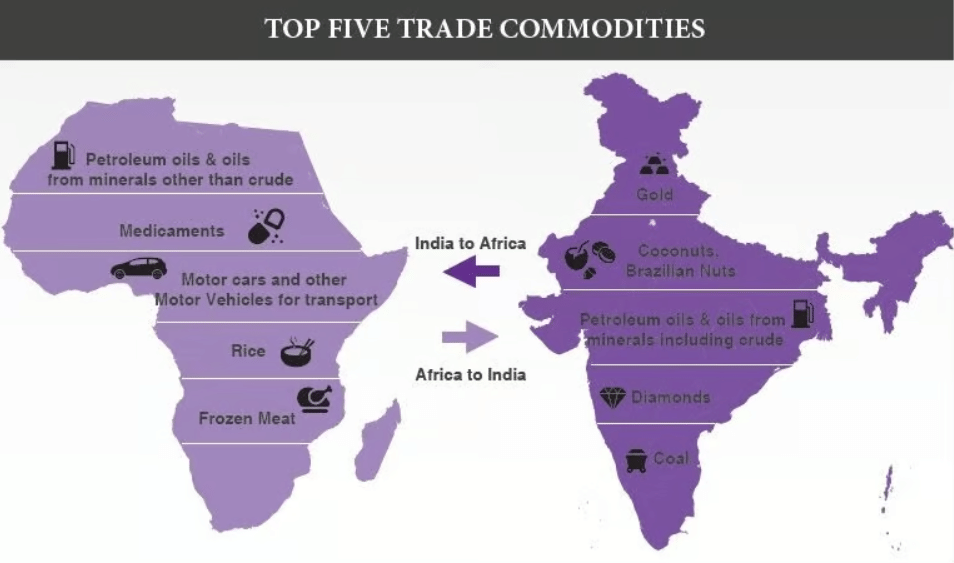
- Trade: $69 billion in 2021, making India Africa’s fourth-largest trading partner.
- Investments: Over $54 billion, primarily in energy, IT, and pharmaceuticals.
Development Cooperation
- India has extended over $10 billion in lines of credit for development projects.
Cultural and Diaspora Links
- The Indian diaspora strengthens ties, particularly in East and Southern Africa.
Indian Initiatives in Africa
International Solar Alliance (ISA)
- India’s solar initiatives, backed by $1 billion, promote renewable energy adoption.
Capacity Building
- Programs like ITEC have trained over 40,000 Africans in various fields.
Key Projects
- Notable projects include IT parks, power plants, and food processing centers across Africa.
Digital Outreach
- Initiatives like e-ITEC, e-VidyaBharti, and e-ArogyaBharti bring education and healthcare to remote areas.
Challenges in India’s Approach
Slow Implementation
- Delayed project delivery undermines India’s credibility.
Resource Constraints
- India’s limited financial and logistical capacity hinders its competitiveness.
Bureaucratic Hurdles
- Complex processes in India and African countries delay progress.
Negative Perceptions
- Criticism over land-grabbing by Indian firms affects trust.
Policy Incoherence
- A lack of a unified Africa policy has diluted India’s impact.
The Way Forward for India
Streamline Project Execution
- Accelerate delivery by improving coordination and reducing bureaucratic delays.
Increase Financial Commitments
- Expand lines of credit and work with multilateral institutions.
Focus on Sustainable Development
- Prioritize renewable energy, agriculture, and healthcare.
Leverage the Diaspora
- Engage the Indian diaspora as cultural ambassadors.
Collaborate with Democracies
- Partner with the US, Japan, and the EU to counterbalance China’s influence.
Promote Technology and Innovation
- Strengthen digital initiatives and share technological expertise.
Improve Strategic Communication
- Highlight India’s successes through targeted campaigns.
Monitor Progress
- Regularly review projects with joint monitoring committees.
Enhance Defense Cooperation
- Expand training, joint exercises, and arms exports to strengthen ties.
Conclusion
China’s strategic engagement in Africa presents both challenges and opportunities for India. By adopting a focused, sustainable, and cooperative approach, India can bolster its influence in Africa while addressing the competition posed by China.
Download the PREPP App and attempt FREE IAS Exam Mock Tests and get complete study material!
*The article might have information for the previous academic years, please refer the official website of the exam.
How likely are you to recommend Prepp.in to a friend or a colleague?
Not so likely
Highly likely
UPSC CSE (IAS) 2027 Prelims Mock Test Series
Live Quizzes
Quizzes
Live Tests

• Live
Live Test : UPSC CSE Prelims CSAT (Paper-II) (Oct 08 - 11)
120 Minutes
80 Questions
200 Marks
English, Hindi
MEDIUM
Test will end on 11th Oct, 07:00 PM
Full Tests
Full Test - 04: UPSC CSE Prelims CSAT (Paper-II)
120 Minutes
80 Questions
200 Marks
English, Hindi
MEDIUM
Attempted by 19 aspirants in 12 hours
Full Test - 03: UPSC CSE Prelims CSAT (Paper-II)
120 Minutes
80 Questions
200 Marks
English, Hindi
MEDIUM
Attempted by 21 aspirants in 12 hours
Previous Year Papers
UPSC CSE Prelims 2026 GS Paper 1 Question Paper (24-May-2026)
120 Minutes
100 Questions
200 Marks
2,972 Attempted
English, Hindi
MEDIUM
Attempted by 13 aspirants in 12 hours
UPSC CSE Prelims 2026 CSAT Paper 2 Question Paper (24-May-2026)
120 Minutes
80 Questions
200 Marks
3,148 Attempted
English, Hindi
MEDIUM
Attempted by 14 aspirants in 12 hours
Videos

17 February 2025 | The Hindu Must Read Articles | Current Affairs
7,202 Views
•4
•7 months ago

16 February 2026 | The Hindu Must Read Articles | Current Affairs
6,962 Views
•4
•7 months ago

13 February 2026 | The Hindu Must Read Articles | Current Affairs
8,765 Views
•5
•7 months ago

12 February 2026 | The Hindu Must Read Articles | Current Affairs
5,788 Views
•4
•7 months ago






Also Check
IAS Exam Overview
IAS Exam Admit Card
IAS Exam Question Paper 2026
IAS Exam Mains Syllabus
IAS Exam Application Process
IAS Exam Eligibility
IAS Exam Result
IAS Exam Exam Pattern
IAS Exam CSAT Syllabus
IAS Exam Answer Key
IAS Exam Previous Year Paper
IAS Exam Current Affairs
IAS Exam Mains Question Paper
IAS Exam IAS Courses
IAS Exam UPSC Study Notes
IAS Exam Foundation Course 2024
IAS Exam Prelims Question Paper
IAS Exam Exam Center
IAS Exam Foundation Course 2025
IAS Exam Notification 2026
IAS Exam IAS Success Stories
IAS Exam Salary
IAS Exam Cutoff
IAS Exam Mock Tests
IAS Exam News


Comments