Changing Trends in Fertilizer Use in India: Shift to NPKS Fertilizers
Why in the News?
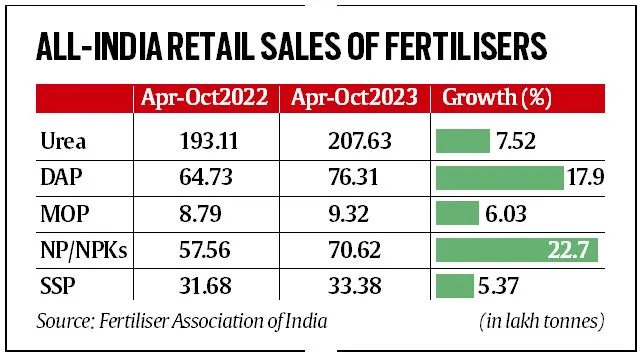
Recent data shows a significant decline in the sales of Di-Ammonium Phosphate (DAP) and a corresponding rise in the use of multi-nutrient fertilizers like NPKS. These changes are reshaping India's agricultural practices and impacting soil health, productivity, and sustainability.
Regional Variations in Fertilizer Adoption
States like Punjab, Haryana, and Maharashtra have experienced the most significant shift, with farmers increasingly choosing NPKS fertilizers. The change is driven by growing awareness of the benefits of balanced fertilization compared to single-nutrient fertilizers.
The Reason Behind the Shift
Farmers are realizing the importance of balanced fertilization. Over-reliance on single-nutrient fertilizers like DAP and urea has led to nutrient imbalances and soil degradation. Research has shown that soils in India are deficient in secondary nutrients such as sulfur, zinc, and boron, which DAP doesn't replenish.
Key Factors Driving the Fertilizer Trend Shift
- Depleting Soil Fertility
Overuse of DAP and urea has led to a reduction in soil fertility. The imbalance in nutrient application has made soils deficient in vital micronutrients, impacting crop growth and long-term agricultural sustainability.
- Impact on Soil Health
Overusing DAP fertilizer can reduce the availability of essential micronutrients like sulfur, zinc, and boron, further diminishing soil health.
- Awareness & Education
Agricultural extension services, supported by Krishi Vigyan Kendras (KVKs) and universities, have educated farmers on the importance of using multi-nutrient fertilizers for better crop yield and soil health.
- Cost-Effectiveness of NPKS Fertilizers
Though initially more expensive, NPKS fertilizers provide long-term benefits by improving crop yield and reducing overall input costs.
- Government Policies
The Nutrient-Based Subsidy (NBS) Scheme has played a crucial role in promoting NPK blends, supporting a shift towards balanced fertilization.
Fertilizer Types and Their Benefits
Fertilizers are substances added to soil to provide essential nutrients for plant growth. There are several types:
- Chemical Fertilizers: Manufactured products like urea, DAP, and NPK blends.
- Organic Fertilizers: Derived from natural sources like compost and manure.
- Bio-Fertilizers: Living organisms that improve soil fertility, such as Rhizobium and Azotobacter.
- Customized Fertilizers: Tailored blends for specific crops.
- Micronutrient Fertilizers: Provide trace elements like zinc and boron.
Past Fertilizer Use Trends in India
India’s fertilizer use has been historically dominated by urea and DAP. Urea accounted for nearly 60% of the total fertilizer consumption in the early 2000s. The over-reliance on these fertilizers led to an imbalance in nutrient ratios (6.5:2.5:1 instead of the recommended 4:2:1), reducing soil health and productivity.
Expected Benefits of Balanced Fertilization
- Improved Soil Health: Using balanced fertilizers helps restore soil fertility, replenishing essential micronutrients.
- Higher Crop Yields: Studies show that balanced fertilization increases crop yields by 15-20% compared to traditional practices.
- Environmental Sustainability: Reducing dependency on urea and DAP can lower nitrogen leaching and greenhouse gas emissions, benefiting the environment.
- Economic Gains for Farmers: Higher yields and better-quality crops improve farmers' income, while reduced fertilizer costs lower overall expenses.
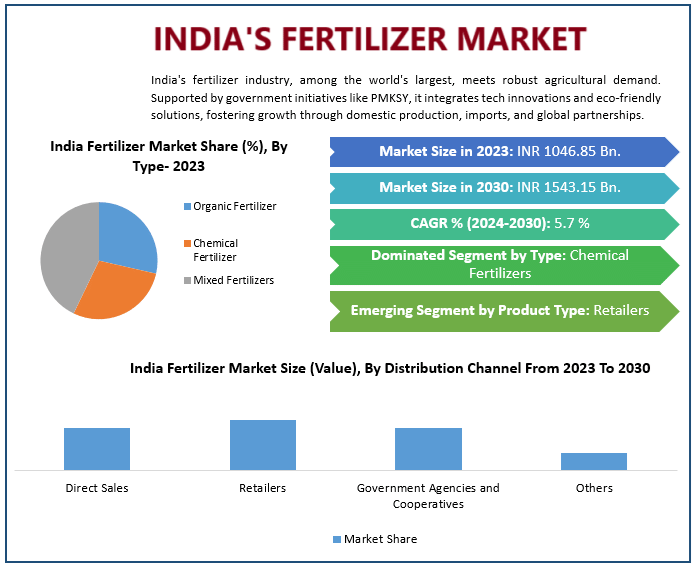
India’s Fertilizer Market
Challenges to Widespread Adoption of NPKS Fertilizers
- High Costs: Multi-nutrient fertilizers are more expensive than urea and DAP, posing challenges for small and marginal farmers.
- Lack of Awareness: Many farmers remain unaware of the long-term benefits of balanced fertilization, slowing adoption.
- Subsidy Imbalance: Government subsidies for urea continue to make it more attractive than NPKS fertilizers, perpetuating its overuse.
- Logistical Issues: The distribution of NPKS fertilizers is underdeveloped, particularly in remote areas, delaying their availability during peak seasons.
- Resistance to Change: Farmers who are used to traditional practices often resist adopting new methods due to a lack of immediate results.
Government Initiatives to Promote Fertilizer Use
- Nutrient-Based Subsidy (NBS) Scheme: Encourages the use of multi-nutrient fertilizers like NPKS by subsidizing their cost.
- Soil Health Card Scheme: Helps farmers assess the nutrient profile of their soil, guiding them to use appropriate fertilizers.
- Neem-Coated Urea: Mandates neem coating to reduce misuse of urea and improve nutrient uptake.
- Subsidy Reforms: The gradual reduction of urea subsidies aims to promote balanced fertilization and correct nutrient imbalances.
- Promotional Campaigns: Awareness programs by agricultural extension services and KVKs emphasize the benefits of balanced fertilization.
Way Forward for Fertilizer Use in India
- Rationalizing Subsidies: Equalizing subsidies for urea, DAP, and NPKS fertilizers can help promote balanced fertilization.
- Enhancing Awareness: Expanding farmer education through digital platforms, local networks, and field demonstrations.
- Strengthening Distribution Networks: Ensuring timely availability of NPKS fertilizers in all regions by improving logistics and partnerships.
- Incentivizing Research & Innovation: Supporting R&D for customized fertilizers that cater to regional soil and crop needs.
- Integrated Nutrient Management: Combining chemical fertilizers with organic and bio-fertilizers for sustainable soil health.
- Technology Integration: Using satellite and AI-based technologies for real-time soil analysis and better decision-making.
Download the PREPP App and attempt FREE IAS Exam Mock Tests and get complete study material!

Live Test : UPSC CSE Prelims CSAT (Paper-II) (Oct 08 - 11)
Full Test - 04: UPSC CSE Prelims CSAT (Paper-II)
Full Test - 03: UPSC CSE Prelims CSAT (Paper-II)
UPSC CSE Prelims 2026 GS Paper 1 Question Paper (24-May-2026)
UPSC CSE Prelims 2026 CSAT Paper 2 Question Paper (24-May-2026)

17 February 2025 | The Hindu Must Read Articles | Current Affairs

16 February 2026 | The Hindu Must Read Articles | Current Affairs

13 February 2026 | The Hindu Must Read Articles | Current Affairs









Comments