Chandrayaan 4 Mission: India’s Next Leap in Lunar Exploration
Why in the News?
India's Chandrayaan 4 mission, under the Indian Space Research Organisation (ISRO), is set to make significant advancements in lunar exploration. Recently, two 220 kg satellites were successfully placed into orbit by the PSLV C60 mission as part of the Space Docking Experiment (SpaDeX). This experiment, crucial for the Chandrayaan 4 mission, aims to develop technologies for complex docking and undocking maneuvers.
Docking Timeline for SpaDeX Satellites
According to ISRO Chairman S. Somanath, the SpaDeX satellites are expected to dock on January 7, 2025, following orbital adjustments. This docking is pivotal in advancing the capabilities needed for Chandrayaan 4's lunar sample return mission, which will require sophisticated docking and undocking techniques.
Upcoming ISRO Missions: 2025 and Beyond
In 2025, ISRO plans several major launches, including:
- Four GSLV launches
- Three PSLV launches
- One SSLV launch
These missions underscore India's growing capabilities in space exploration and set the stage for future missions like Chandrayaan-4, which will expand India’s presence in lunar exploration.
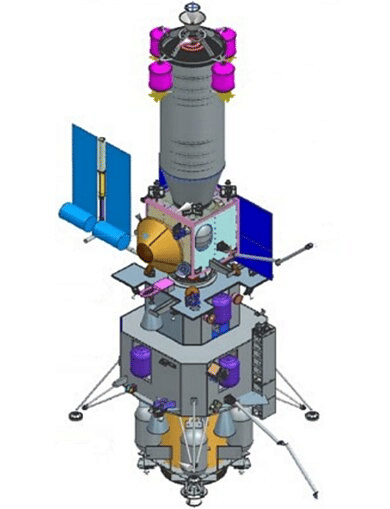
Chandrayaan 4: Mission Overview
Chandrayaan 4 is an ambitious lunar sample return mission, part of ISRO’s ongoing Chandrayaan program. This mission will focus on returning 3 kg of lunar regolith to Earth for in-depth scientific analysis. By incorporating advanced docking and robotic technologies, Chandrayaan 4 aims to make history by being the first to safely return lunar soil.
Mission Budget and Timeline
- Approved by the Union Cabinet on September 18, 2024, Chandrayaan-4 has a budget of ₹2,104.06 crore (approximately $250 million). The mission is scheduled for launch around 2027.
Landing Site and Scientific Goals
- The landing site for Chandrayaan 4 is near Shiv Shakti Point, the successful landing site of Chandrayaan-3. Located between the Manzinus P and Boguslawsky M craters near the lunar south pole, this site has high scientific potential. It offers the opportunity to study morphology and hydration, two important aspects of lunar science.
Key Objectives of Chandrayaan 4
- Safe Lunar Landing: Achieve a safe, soft landing on the Moon’s surface, demonstrating precision and stability.
- Sample Collection: Collect and store lunar soil and sub-surface samples in vacuum-sealed containers.
- Lunar Ascent: Validate technologies for launching the ascent module from the lunar surface to lunar orbit.
- Docking in Lunar Orbit: Demonstrate the ability to dock the ascent module with the transfer module in lunar orbit for efficient sample transfer.
- Return to Earth: Successfully transport lunar samples back to Earth for scientific analysis.
Components of Chandrayaan 4
The Chandrayaan-4 mission comprises several major components, each designed for specific tasks:
- Propulsion Module: This module will carry the spacecraft to lunar orbit and perform necessary orbital maneuvers, similar to Chandrayaan-3’s propulsion system.
- Lander Module: The lander is designed for a soft lunar landing and includes instruments for surface analysis and a robotic scoop for collecting samples. It will operate for one lunar day (approximately 14 Earth days).
- Ascender Module: The ascent module will lift off from the lunar surface, collect samples, and rendezvous with the transfer module to transfer the samples.
- Transfer Module: Equipped with a Liquid Apogee Motor (LAM), it will ferry the reentry module and the collected samples towards Earth.
- Reentry Module: Designed to withstand atmospheric reentry, the reentry module will safely return lunar samples to Earth’s surface for analysis.
Conclusion: ISRO’s Next Giant Leap
The Chandrayaan 4 mission marks a critical milestone in ISRO’s lunar exploration efforts. With advanced technologies and an ambitious mission plan, it promises to provide valuable scientific insights into the Moon’s composition and contribute to humanity’s understanding of lunar history.
Download the PREPP App and attempt FREE IAS Exam Mock Tests and get complete study material!

Live Test : UPSC CSE Prelims CSAT (Paper-II) (Oct 08 - 11)
Full Test - 04: UPSC CSE Prelims CSAT (Paper-II)
Full Test - 03: UPSC CSE Prelims CSAT (Paper-II)
UPSC CSE Prelims 2026 GS Paper 1 Question Paper (24-May-2026)
UPSC CSE Prelims 2026 CSAT Paper 2 Question Paper (24-May-2026)

17 February 2025 | The Hindu Must Read Articles | Current Affairs

16 February 2026 | The Hindu Must Read Articles | Current Affairs

13 February 2026 | The Hindu Must Read Articles | Current Affairs









Comments