Cesses and Surcharges in India: Analyzing the Fiscal Debate
Why in the News?
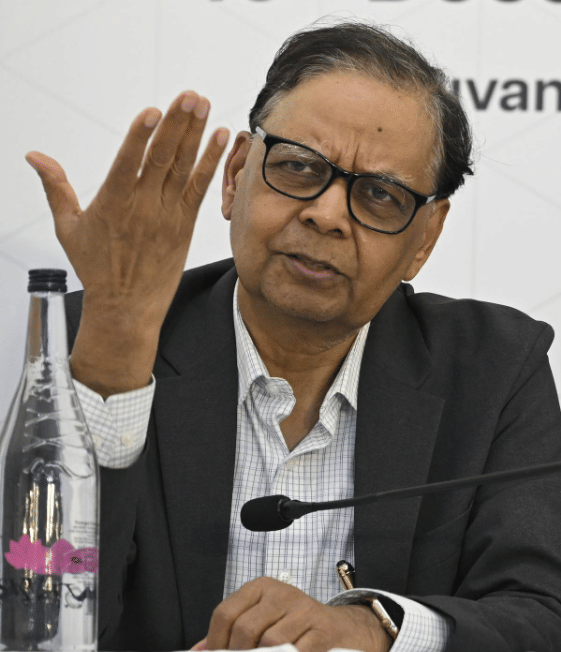
Arvind Panagariya, Chairman of the 16th Finance Commission, has highlighted the ongoing grievance of States regarding the Centre’s increasing reliance on cesses and surcharges. He described the issue as a “complicated” one, reflecting the complex interplay between fiscal policies and federal equity.
States’ Grievances Over Cesses and Surcharges
Concerns Raised by States
States have voiced concerns over the Centre’s growing reliance on cesses and surcharges, as these taxes are not shared with the States. This has created a fiscal imbalance, limiting the States’ ability to fund developmental projects effectively.
The Centre’s Perspective
Arvind Panagariya explained that the Centre’s dependence on cesses and surcharges is partly driven by the reduced fiscal space available due to the higher share allocated to States in the divisible tax pool. This share increased from 32% under the 13th Finance Commission to 42% under the 14th, significantly reducing the Centre’s flexibility.
Call for Reform
States are demanding a cap on cesses and surcharges, proposing that any excess collection should be added to the divisible tax pool to ensure equitable distribution.
What is a Cess?
Definition and Purpose
A cess is an additional tax imposed on existing taxes to fund specific purposes, such as education, health, or infrastructure. It is governed by Article 271 of the Indian Constitution, which empowers Parliament to levy such charges for Union purposes.
Examples of Cesses
- Education and Health Cess: Funds initiatives in education and healthcare.
- Infrastructure and Road Cess: Supports infrastructure development.
- Swachh Bharat Cess: Promotes sanitation and cleanliness.
- GST Compensation Cess: Compensates States for revenue shortfalls due to GST implementation.
Revenue Impact
- Bridging Revenue Gaps: Helps address the shortfall between expected and actual GST revenue.
- Project Funding: Ensures adequate resources for critical sectors like education, health, and infrastructure.
- Behavioral Influence: Discourages harmful consumption of goods like tobacco, coal, and aerated drinks, contributing to environmental and social benefits.
What is a Surcharge?
Definition and Application
A surcharge is an additional charge on the tax payable, often targeting higher-income individuals or entities. Unlike a cess, it is levied as a percentage of the tax payable and not on the income itself.
Examples of Surcharges
- Higher Income Taxpayers: Surcharge rates vary across income brackets, targeting those with higher earnings.
- Health and Education Cess: Imposed at 4% of the tax payable, it applies uniformly to all taxpayers without an income threshold.
Marginal Relief
To prevent undue financial burden, marginal relief is provided to taxpayers whose income marginally exceeds the prescribed surcharge thresholds.
The Core Issue: Fiscal Imbalance
Centralized Control
Only the Central Government can levy cesses and surcharges, and their proceeds are credited to the Consolidated Fund of India. This excludes States from sharing these revenues, exacerbating fiscal inequities.
Implications for States
The growing reliance on cesses and surcharges limits the funds available for States, affecting their ability to meet developmental and welfare needs. States argue that this undermines the principles of cooperative federalism and fiscal equity.
The Way Forward
Proposed Reforms
- Tax Structure Reforms: Introduce a cap on revenue generated from cesses and surcharges.
- Transparency and Accountability: Establish clear guidelines for cess collection and expenditure to ensure accountability.
- Strengthen Federal Dialogue: Foster collaboration between the Centre and States to address fiscal grievances effectively.
Enhancing Cooperative Federalism
A balanced approach that addresses the concerns of both the Centre and the States can promote fiscal harmony and equitable development across India.
Download the PREPP App and attempt FREE IAS Exam Mock Tests and get complete study material!

Live Test : UPSC CSE Prelims CSAT (Paper-II) (Oct 08 - 11)
Full Test - 04: UPSC CSE Prelims CSAT (Paper-II)
Full Test - 03: UPSC CSE Prelims CSAT (Paper-II)
UPSC CSE Prelims 2026 GS Paper 1 Question Paper (24-May-2026)
UPSC CSE Prelims 2026 CSAT Paper 2 Question Paper (24-May-2026)

17 February 2025 | The Hindu Must Read Articles | Current Affairs

16 February 2026 | The Hindu Must Read Articles | Current Affairs

13 February 2026 | The Hindu Must Read Articles | Current Affairs









Comments