Bodo Peace Accord: Implementation, Benefits, and Challenges
Why in the News?
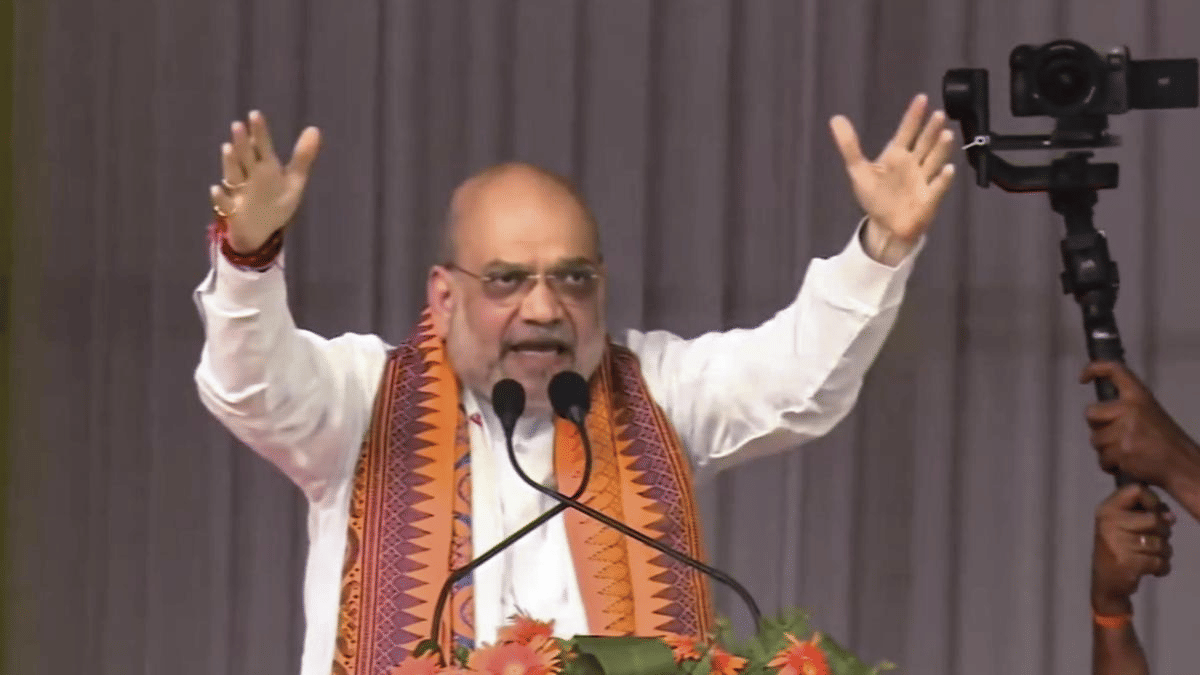
Union Home Minister Amit Shah recently announced that approximately 82% of the clauses of the Bodo Peace Accord have been successfully implemented. This historic agreement aims to bring lasting peace and development to the Bodoland Territorial Region (BTR) in Assam.
Understanding the Bodo Issue
Who Are the Bodos?
- The Bodos are the largest Scheduled Tribe community in Assam, making up about 5-6% of the state’s population.
- They have historically demanded statehood and greater autonomy.
Key Events in the Bodo Movement
- 1967-68: The first organized demand for a separate Bodoland state was raised by the Plains Tribals Council of Assam.
- 1986: Formation of the Bodo Security Force, later renamed the National Democratic Front of Bodoland (NDFB), leading to decades of militant insurgency.
- 1993 & 2003 Accords: Led to the formation of the Bodoland Territorial Council (BTC) under the Sixth Schedule of the Constitution.
- Ethnic Conflicts: Tensions between Bodo and non-Bodo communities over territorial and political rights.
Bodo Peace Accord 2020: Key Highlights
Signatories
- Signed on January 27, 2020, between:
- Government of India
- Government of Assam
- Bodo groups, including all factions of the NDFB and the All Bodo Students’ Union (ABSU).
Major Objectives
- Provide a comprehensive resolution to the Bodo issue.
- Ensure the territorial integrity of Assam.
- End militant insurgency and promote political and economic empowerment.
Key Provisions of the Accord
1. Territorial and Administrative Reforms
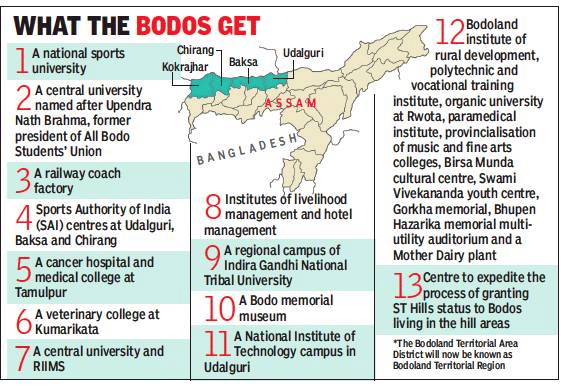
- Renaming of BTAD: The Bodoland Territorial Autonomous District (BTAD) was renamed as the Bodoland Territorial Region (BTR).
- Boundary Redefinition: A commission was set up to determine village inclusion/exclusion in BTR.
- Bodo-Kachari Welfare Council: Established for Bodo communities outside BTR.
- Greater Autonomy: BTC received enhanced legislative, executive, and financial powers.
2. Rehabilitation of Former Militants
- Weapon Surrender: All factions of the NDFB agreed to disband armed groups.
- Employment Support: 400 former militants recruited into a special commando battalion.
- Financial Assistance: Government funds allocated for vocational training & self-employment.
3. Socio-Economic Development
- ₹1,500 crore investment: Focus on roads, education, healthcare, and infrastructure.
- Bodo Language Recognition: Given associate official language status in Assam.

4. Legal and Political Safeguards
- Criminal Case Withdrawal: Non-heinous cases related to insurgency withdrawn.
- Strengthening Local Governance: Amendments to Sixth Schedule to enhance BTC’s financial and administrative powers.
Current Implementation Status
- 82% of the clauses implemented.
- Remaining provisions expected to be completed within the next two years.
- ₹1,500 crore allocated for BTC’s infrastructure and governance.
- ₹287 crore spent on rehabilitating 4,881 former extremists.
Benefits of the Bodo Peace Accord
Restoration of Peace
- Successfully ended decades of insurgency and violence.
Economic Growth & Development
- Government funding and private investments boosting job creation.
- Improved connectivity and infrastructure in BTR.
Political Stability
- Greater autonomy to BTC, reducing demands for separate statehood.
Community Reconciliation
- Inclusive governance policies helping mitigate ethnic tensions.
Improved Security
- Withdrawal of AFSPA from BTR due to improved law & order.
Challenges in Implementation
1. Funding Utilization & Corruption Risks
- Proper utilization of allocated funds requires strict monitoring.
2. Inter-Community Tensions
- Inclusion/exclusion of villages in BTR remains a sensitive issue.
3. Reintegration of Former Militants
- Employment challenges for rehabilitated extremists.
- Social acceptance issues for ex-militants.
4. Security Concerns
- Potential resurgence of insurgent groups.
- Illegal activities like cross-border smuggling require vigilance.
Way Forward: Ensuring Lasting Peace & Development
1. Full Implementation of Accord
- Establish an independent monitoring committee.
- Periodic audits to ensure transparent fund utilization.
2. Strengthening Social Harmony
- Inclusive development programs to benefit both Bodos and non-Bodos.
- Community dialogues to foster cooperation and trust.
3. Economic & Employment Opportunities
- Expand vocational training & entrepreneurship programs.
- Boost connectivity: Expedite Kokrajhar-Gelephu railway link to promote trade & tourism.
4. Security & Governance Measures
- Strict vigilance against potential insurgency resurgence.
- Stronger border security to prevent criminal activities.
- Empowering BTC leadership for better local governance.
- Regular government-community engagement for effective policy implementation.
Conclusion
The Bodo Peace Accord has transformed the Bodoland Territorial Region (BTR) by ending insurgency, fostering economic growth, and enhancing political stability. While challenges remain, effective governance, transparent implementation, and community engagement are key to ensuring lasting peace and prosperity in the region.
Download the PREPP App and attempt FREE IAS Exam Mock Tests and get complete study material!
Live Test : UPSC IAS : GS - Indian Geography - Subject Knowledge Test

Live Test : UPSC CSE Prelims CSAT (Paper-II) (Oct 08 - 11)
Full Test - 04: UPSC CSE Prelims CSAT (Paper-II)
Full Test - 03: UPSC CSE Prelims CSAT (Paper-II)
UPSC CSE Prelims 2026 GS Paper 1 Question Paper (24-May-2026)
UPSC CSE Prelims 2026 CSAT Paper 2 Question Paper (24-May-2026)

17 February 2025 | The Hindu Must Read Articles | Current Affairs

16 February 2026 | The Hindu Must Read Articles | Current Affairs

13 February 2026 | The Hindu Must Read Articles | Current Affairs









Comments