Bleeding Eye Virus
Why in news
- The World Health Organization announced a 42-day countdown to declare the Marburg virus disease outbreak over in Rwanda, signaling resolution.
About Marburg Virus (Bleeding Eye Virus)
- Overview:
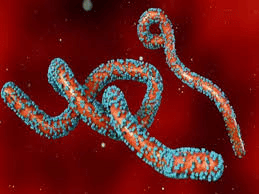
- Marburg Virus Disease (MVD) is a severe viral hemorrhagic fever caused by the Marburg virus, a member of the Filoviridae family, similar to Ebola.
- It is known as the ‘Bleeding Eye Virus’ due to the prominent symptom of bleeding in the eyes.
- Transmission:
- Zoonotic transmission occurs through fruit bats (Rousettus species) to humans.
- Human-to-human transmission is through direct contact with infected bodily fluids (blood, saliva, vomit, etc.) or contaminated surfaces (fomites).
- The incubation period ranges from 2 to 21 days.
- Symptoms:
- Initial symptoms include fever, headache, muscle pain, and malaise.
- Progression involves vomiting, diarrhea, abdominal pain, and rash.
- Severe bleeding (nose, gums, eyes, vagina) occurs by day 5, leading to multi-organ failure and shock.
- Fatality Rate:
- The case fatality rate can be as high as 90%, depending on the outbreak and healthcare response. Death typically results from severe blood loss and organ failure.
- Diagnosis and Treatment:
- RT-PCR and ELISA are used for diagnosis.
- There is no specific antiviral treatment. Supportive care (hydration, blood transfusion, etc.) is provided to manage symptoms.
- Prevention and Control:
- Preventive measures include avoiding contact with infected individuals, use of PPE, and strict hygiene (frequent handwashing).
- Vaccines are still under research, with no widely approved vaccine available yet.
- Global Impact:
- Marburg virus has caused sporadic outbreaks since its discovery in 1967.
- Recent outbreaks occurred in Equatorial Guinea, Tanzania, and Rwanda, with over 15 fatalities in affected regions.
- Challenges in Containment:
- The virus spreads rapidly and is highly contagious, making containment difficult, particularly in resource-limited settings.
- Outbreaks are typically localized, but due to global travel, there is an increased risk of broader transmission.
- Global Health Risk:
- While less likely to cause a global pandemic compared to airborne viruses like COVID-19, the high fatality rate and human-to-human transmission make Marburg a significant health concern.
- Effective containment relies on rapid diagnosis, isolation, contact tracing, and international collaboration.
- Future Outlook:
- Ongoing research into monoclonal antibodies and other antiviral agents aims to improve treatment options.
- Global surveillance, early detection, and preparedness are essential to prevent future outbreaks and minimize global risks.
Download the PREPP App and attempt FREE IAS Exam Mock Tests and get complete study material!
*The article might have information for the previous academic years, please refer the official website of the exam.
How likely are you to recommend Prepp.in to a friend or a colleague?
Not so likely
Highly likely
UPSC CSE (IAS) 2027 Prelims Mock Test Series
Live Quizzes
Quizzes
Live Tests

• Live
Live Test : UPSC CSE Prelims CSAT (Paper-II) (Oct 08 - 11)
120 Minutes
80 Questions
200 Marks
English, Hindi
MEDIUM
Test will end in 05:31:41
Full Tests
Full Test - 04: UPSC CSE Prelims CSAT (Paper-II)
120 Minutes
80 Questions
200 Marks
English, Hindi
MEDIUM
Attempted by 19 aspirants in 12 hours
Full Test - 03: UPSC CSE Prelims CSAT (Paper-II)
120 Minutes
80 Questions
200 Marks
English, Hindi
MEDIUM
Attempted by 20 aspirants in 12 hours
Previous Year Papers
UPSC CSE Prelims 2026 GS Paper 1 Question Paper (24-May-2026)
120 Minutes
100 Questions
200 Marks
2,989 Attempted
English, Hindi
MEDIUM
Attempted by 12 aspirants in 12 hours
UPSC CSE Prelims 2026 CSAT Paper 2 Question Paper (24-May-2026)
120 Minutes
80 Questions
200 Marks
3,167 Attempted
English, Hindi
MEDIUM
Attempted by 13 aspirants in 12 hours
Videos

17 February 2025 | The Hindu Must Read Articles | Current Affairs
7,202 Views
•4
•7 months ago

16 February 2026 | The Hindu Must Read Articles | Current Affairs
6,962 Views
•4
•7 months ago

13 February 2026 | The Hindu Must Read Articles | Current Affairs
8,765 Views
•5
•7 months ago

12 February 2026 | The Hindu Must Read Articles | Current Affairs
5,788 Views
•4
•7 months ago






Also Check
IAS Exam Overview
IAS Exam Admit Card
IAS Exam Question Paper 2026
IAS Exam Mains Syllabus
IAS Exam Application Process
IAS Exam Eligibility
IAS Exam Result
IAS Exam Exam Pattern
IAS Exam CSAT Syllabus
IAS Exam Answer Key
IAS Exam Previous Year Paper
IAS Exam Current Affairs
IAS Exam Mains Question Paper
IAS Exam IAS Courses
IAS Exam UPSC Study Notes
IAS Exam Foundation Course 2024
IAS Exam Prelims Question Paper
IAS Exam Exam Center
IAS Exam Foundation Course 2025
IAS Exam Notification 2026
IAS Exam IAS Success Stories
IAS Exam Salary
IAS Exam Cutoff
IAS Exam Mock Tests
IAS Exam News


Comments