Bandhavgarh Tiger Reserve: A Comprehensive Overview
Why in news?
A female tiger cub was found dead in Bandhavgarh Tiger Reserve.
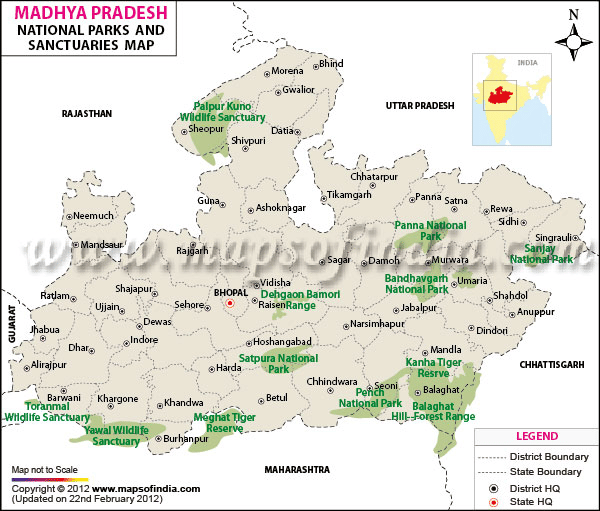
About Bandhavgarh Tiger Reserve
- Location: Eastern Satpura Hills, Umaria & Katni Districts, Madhya Pradesh
- Area: Core area of 694 sq km with a buffer zone of 437 sq km
- The park is spread across the Umaria and Katni districts and is famous for being a stronghold of the majestic Bengal tiger.
- Flora: Tropical moist deciduous forests dominated by Sal (Shorea robusta) and Bamboo (Dendrocalamus strictus)
- Fauna: Famous for its tiger population, along with elephants, nilgai, chausingha, chital, langurs, wild boar, jackals, and more
- Birdlife: Home to rare species like the Paradise Flycatcher, Indian Pitta, Shikra, Long-billed Vulture, and White-backed Shama
- The reserve is not only significant for its wildlife but also for its cultural and historical connections to the Ramayana, where the Bandhavgarh Fort was said to be gifted by Lord Rama to his brother Lakshmana.
Historical Significance
- Bandhavgarh Name Origin: Derived from "Bandhav" (brother) and "Garh" (fort), the name reflects the fort's legendary connection to Lord Rama and Lakshmana.
- Bandhavgarh Fort: Situated atop the Bandhavgarh hill, this fort was historically the capital for local rulers until 1617. The fort remains centrally located within the park, adding to the area's historical charm.
- Royal Hunting Ground: The park was once a royal hunting ground for the Maharajas, who killed tigers for sport. Maharaja Venkat Raman Singh was known to have killed 111 tigers by 1914.
Conservation Efforts
- Establishment: The area was declared a national park in 1968, initially covering just 105 sq km. The reserve expanded over time to include a core area of 694 sq km and a buffer zone of 437 sq km.
- Project Tiger: Bandhavgarh was included in India's Project Tiger initiative in 1993 to help conserve the Bengal tiger population.
Biodiversity
- Fauna: The tiger is the star attraction of Bandhavgarh, but the park is also home to elephants, nilgai (blue bulls), chausingha (four-horned antelope), chital (spotted deer), langurs, wild boars, and jackals.
- Flora: The reserve features tropical moist deciduous forests with dominant tree species like Sal (Shorea robusta) and Bamboo (Dendrocalamus strictus), creating a rich habitat for wildlife.
- Birdlife: Bandhavgarh is also famous for its bird species, including the Paradise Flycatcher, Indian Pitta, Shikra, Long-billed Vulture, and White-backed Shama.
Current Issues
- Bandhavgarh continues to face challenges such as poaching, habitat degradation, and human-wildlife conflict. Recent incidents, like the death of a female tiger cub, highlight the vulnerabilities faced by the park's wildlife.
Download the PREPP App and attempt FREE IAS Exam Mock Tests and get complete study material!
*The article might have information for the previous academic years, please refer the official website of the exam.
How likely are you to recommend Prepp.in to a friend or a colleague?
Not so likely
Highly likely
UPSC CSE (IAS) 2027 Prelims Mock Test Series
Live Quizzes
Quizzes
Live Tests

• Live
Live Test : UPSC CSE Prelims CSAT (Paper-II) (Oct 08 - 11)
120 Minutes
80 Questions
200 Marks
English, Hindi
MEDIUM
Test will end in 05:30:46
Full Tests
Full Test - 04: UPSC CSE Prelims CSAT (Paper-II)
120 Minutes
80 Questions
200 Marks
English, Hindi
MEDIUM
Attempted by 19 aspirants in 12 hours
Full Test - 03: UPSC CSE Prelims CSAT (Paper-II)
120 Minutes
80 Questions
200 Marks
English, Hindi
MEDIUM
Attempted by 20 aspirants in 12 hours
Previous Year Papers
UPSC CSE Prelims 2026 GS Paper 1 Question Paper (24-May-2026)
120 Minutes
100 Questions
200 Marks
2,989 Attempted
English, Hindi
MEDIUM
Attempted by 12 aspirants in 12 hours
UPSC CSE Prelims 2026 CSAT Paper 2 Question Paper (24-May-2026)
120 Minutes
80 Questions
200 Marks
3,167 Attempted
English, Hindi
MEDIUM
Attempted by 13 aspirants in 12 hours
Videos

17 February 2025 | The Hindu Must Read Articles | Current Affairs
7,202 Views
•4
•7 months ago

16 February 2026 | The Hindu Must Read Articles | Current Affairs
6,962 Views
•4
•7 months ago

13 February 2026 | The Hindu Must Read Articles | Current Affairs
8,765 Views
•5
•7 months ago

12 February 2026 | The Hindu Must Read Articles | Current Affairs
5,788 Views
•4
•7 months ago






Also Check
IAS Exam Overview
IAS Exam Admit Card
IAS Exam Question Paper 2026
IAS Exam Mains Syllabus
IAS Exam Application Process
IAS Exam Eligibility
IAS Exam Result
IAS Exam Exam Pattern
IAS Exam CSAT Syllabus
IAS Exam Answer Key
IAS Exam Previous Year Paper
IAS Exam Current Affairs
IAS Exam Mains Question Paper
IAS Exam IAS Courses
IAS Exam UPSC Study Notes
IAS Exam Foundation Course 2024
IAS Exam Prelims Question Paper
IAS Exam Exam Center
IAS Exam Foundation Course 2025
IAS Exam Notification 2026
IAS Exam IAS Success Stories
IAS Exam Salary
IAS Exam Cutoff
IAS Exam Mock Tests
IAS Exam News


Comments