Arabian Leopard: Critically Endangered Subspecies with New Hope in Saudi Arabia
Why in the News?
Three Arabian leopard cubs have been born at the Royal Commission for AlUla’s Arabian Leopard Conservation Breeding Centre in Saudi Arabia, marking a significant milestone in the conservation of this critically endangered species.
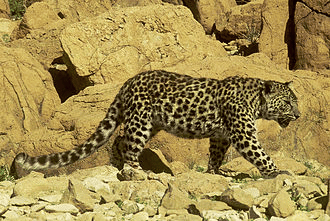
About the Arabian Leopard
- Scientific Name: Panthera pardus nimr
- IUCN Status: Critically Endangered
- Population: Only 100–120 individuals remain in the wild.
Once widespread across the Arabian Peninsula, the habitat of the Arabian leopard continues to decline due to human activity and habitat loss.
Habitat and Distribution
- Habitat: Rugged uplands, hilly regions, and mountainous terrains.
- Distribution: Found in parts of the Arabian Peninsula, including Saudi Arabia, Oman, Yemen, and possibly the Sinai Peninsula in Egypt.
Characteristics of the Arabian Leopard
- Size: The Arabian leopard is the smallest leopard subspecies.
- Males: Approximately 30 kg
- Females: Around 20 kg
- Appearance: They feature coats ranging from pale yellow to golden or tawny, adorned with distinctive rosettes.
- Behavior:
- Nocturnal Hunters: Arabian leopards hunt at night, preying on gazelles, ibex, and small rodents. They are known to store large prey in caves or lairs.
- Solitary Animals: Leopards are solitary creatures. Cubs remain with their mothers for up to two years.
Threats Facing the Arabian Leopard
The critically endangered Arabian leopard faces numerous threats, including:
- Habitat Loss: Urban development and human encroachment have led to the destruction and fragmentation of their natural habitats.
- Human-Wildlife Conflict: Retaliatory killings due to predation on livestock pose a major threat.
- Illegal Hunting and Trade: Poaching for the illegal wildlife trade and traditional practices further endanger the species.
- Prey Depletion: Decline in natural prey availability forces leopards to hunt livestock, intensifying conflicts with local communities.
Arabian Leopard Day
- Date: Celebrated annually on February 10.
- Purpose: Declared by the Saudi Council of Ministers in 2022, Arabian Leopard Day raises awareness about conservation efforts for the species.
- Conservation Efforts: On this day, initiatives are promoted to preserve and restore the dwindling Arabian leopard population.
Why Arabian Leopard Conservation Matters
The Arabian leopard plays a critical role in maintaining the ecological balance of the Arabian Peninsula's fragile ecosystems. Protecting this apex predator helps sustain biodiversity and natural prey populations.
Download the PREPP App and attempt FREE IAS Exam Mock Tests and get complete study material!

Live Test : UPSC CSE Prelims CSAT (Paper-II) (Oct 08 - 11)
Full Test - 04: UPSC CSE Prelims CSAT (Paper-II)
Full Test - 03: UPSC CSE Prelims CSAT (Paper-II)
UPSC CSE Prelims 2026 GS Paper 1 Question Paper (24-May-2026)
UPSC CSE Prelims 2026 CSAT Paper 2 Question Paper (24-May-2026)

17 February 2025 | The Hindu Must Read Articles | Current Affairs

16 February 2026 | The Hindu Must Read Articles | Current Affairs

13 February 2026 | The Hindu Must Read Articles | Current Affairs









Comments