APAAR ID: Understanding the Controversy and Implications
Why in the News?
Despite being officially voluntary, schools and state education authorities are pressuring for 100% enrollment under APAAR ID.
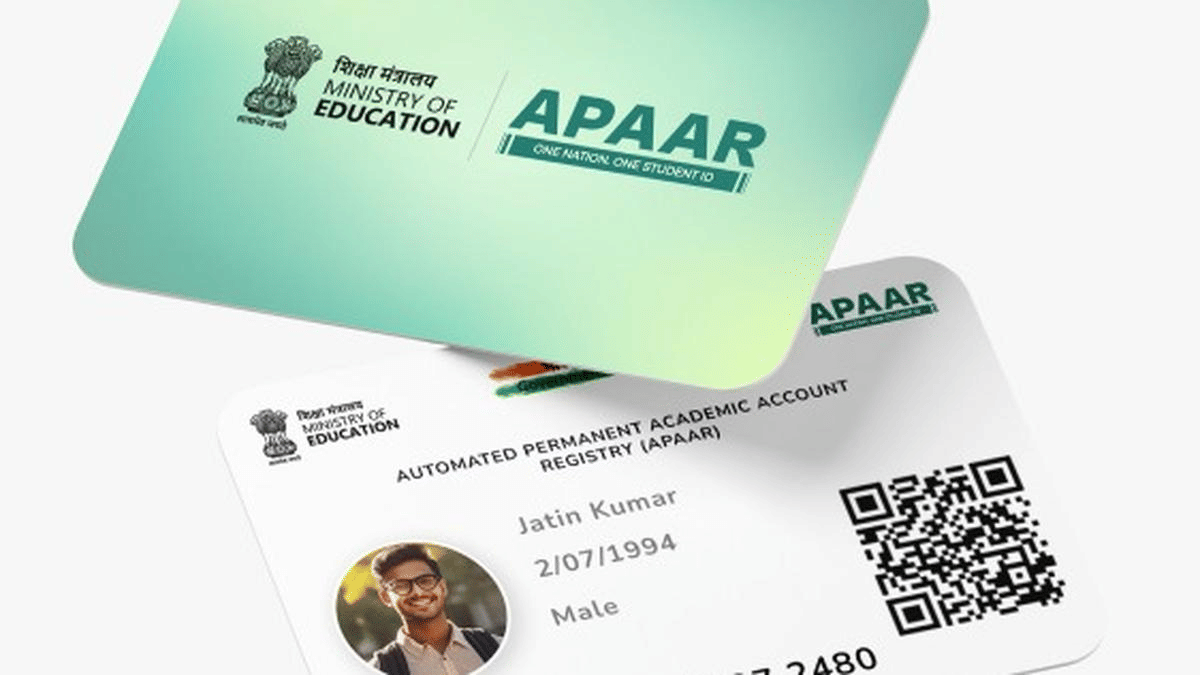
What is APAAR ID?
- Definition: APAAR ID (Automated Permanent Academic Account Registry) is a unique academic identification number assigned to students across India.
- Initiating Authority: Launched by the Ministry of Education under the National Education Policy (NEP) 2020.
- Function:
- Digitally stores students' academic records.
- Linked to Aadhaar and stored in DigiLocker.
- Academic Bank of Credits (ABC) Integration:
- Enables storage of academic achievements.
- Facilitates credit transfers between institutions.
- Coverage:
- Applicable from pre-primary to higher education institutions.
Benefits of APAAR ID
For Students
- Digital Record Keeping: Securely stores academic history.
- Ease of Transfers: Simplifies admission and institution transfers.
- Scholarship Tracking: Eases monitoring of scholarships and benefits.
- Recognition of Achievements: Stores awards, degrees, and academic credits.
For Educational Institutions
- Standardized Database: Creates a uniform student database.
- Reduction of Paperwork: Minimizes administrative tasks.
- Improved Accountability: Ensures transparency in academic records.
Is APAAR ID Mandatory?
- Official Stance:
- Not Mandatory: The Education Ministry states APAAR enrollment is voluntary and requires parental consent.
- Ground Reality:
- School Pressure: Reports suggest that schools and state authorities are pushing for 100% enrollment, making it de facto mandatory.
Privacy and Data Security Concerns
- Sensitive Data Collection:
- Personal details, Aadhaar linkage, academic records, and biometric data.
- Lack of Legal Safeguards:
- The Digital Personal Data Protection Act, 2023, is yet to be fully implemented.
- Risk of Data Misuse:
- Storage of minors’ sensitive data without robust security measures could lead to breaches and privacy violations.
Legal and Judicial Concerns
- Supreme Court Ruling:
- The Puttaswamy Judgment states Aadhaar cannot be mandatory for basic education, raising questions about APAAR’s Aadhaar integration.
- Coercion in Enrollment:
- Minority institutions and students may face pressure to register, potentially affecting educational access.
- Legal Advocacy:
- Organizations like Internet Freedom Foundation (IFF) and Software Freedom Law Centre (SFLC) are advocating for parental rights to opt out.
Conclusion
While APAAR ID offers benefits like digital academic records and seamless credit transfers, concerns about privacy, data security, and coercion need urgent attention. Proper safeguards and voluntary implementation are essential to ensure students' rights and data protection.
Download the PREPP App and attempt FREE IAS Exam Mock Tests and get complete study material!
*The article might have information for the previous academic years, please refer the official website of the exam.
How likely are you to recommend Prepp.in to a friend or a colleague?
Not so likely
Highly likely
UPSC CSE (IAS) 2027 Prelims Mock Test Series
Live Quizzes
Quizzes
Live Tests

• Live
Live Test : UPSC CSE Prelims CSAT (Paper-II) (Oct 08 - 11)
120 Minutes
80 Questions
200 Marks
English, Hindi
MEDIUM
Test will end in 05:30:59
Full Tests
Full Test - 04: UPSC CSE Prelims CSAT (Paper-II)
120 Minutes
80 Questions
200 Marks
English, Hindi
MEDIUM
Attempted by 19 aspirants in 12 hours
Full Test - 03: UPSC CSE Prelims CSAT (Paper-II)
120 Minutes
80 Questions
200 Marks
English, Hindi
MEDIUM
Attempted by 20 aspirants in 12 hours
Previous Year Papers
UPSC CSE Prelims 2026 GS Paper 1 Question Paper (24-May-2026)
120 Minutes
100 Questions
200 Marks
2,989 Attempted
English, Hindi
MEDIUM
Attempted by 12 aspirants in 12 hours
UPSC CSE Prelims 2026 CSAT Paper 2 Question Paper (24-May-2026)
120 Minutes
80 Questions
200 Marks
3,167 Attempted
English, Hindi
MEDIUM
Attempted by 13 aspirants in 12 hours
Videos

17 February 2025 | The Hindu Must Read Articles | Current Affairs
7,202 Views
•4
•7 months ago

16 February 2026 | The Hindu Must Read Articles | Current Affairs
6,962 Views
•4
•7 months ago

13 February 2026 | The Hindu Must Read Articles | Current Affairs
8,765 Views
•5
•7 months ago

12 February 2026 | The Hindu Must Read Articles | Current Affairs
5,788 Views
•4
•7 months ago






Also Check
IAS Exam Overview
IAS Exam Admit Card
IAS Exam Question Paper 2026
IAS Exam Mains Syllabus
IAS Exam Application Process
IAS Exam Eligibility
IAS Exam Result
IAS Exam Exam Pattern
IAS Exam CSAT Syllabus
IAS Exam Answer Key
IAS Exam Previous Year Paper
IAS Exam Current Affairs
IAS Exam Mains Question Paper
IAS Exam IAS Courses
IAS Exam UPSC Study Notes
IAS Exam Foundation Course 2024
IAS Exam Prelims Question Paper
IAS Exam Exam Center
IAS Exam Foundation Course 2025
IAS Exam Notification 2026
IAS Exam IAS Success Stories
IAS Exam Salary
IAS Exam Cutoff
IAS Exam Mock Tests
IAS Exam News


Comments